


A course is launched, people sign up, and for a while, it feels like things are working.
Then progress slows. Fewer lessons get completed. By the end, most people haven’t made it through.
What’s happening usually comes down to how the course fits into someone’s day. If keeping up with it starts to feel like something that needs planning, it’s easy to fall behind.
This is also where the choice of content delivery platform becomes more important. Tools like Hello Audio and Kajabi are widely used to deliver and structure online courses, but they approach the learning experience in very different ways.
This guide looks at what actually drives course completion and how each platform influences it.
What Drives Course Completion Rates in Online Courses
People finish courses when it’s easy to keep going.
That sounds obvious, but most drop-offs happen when a course starts to feel like something that requires planning instead of something that can be continued naturally.
What affects that consistency is pretty predictable:
- Access and time fit: If a course expects someone to sit down, log in, and focus for long stretches, then the completion rates drop. People are short on time. The more a course fits into small, in-between moments of the day, the more likely it is to get finished.
- Short, manageable lessons: Courses built in 10–15 minute segments tend to perform better. It’s easier to come back to something that feels quick than something that feels like a commitment.
- Staying mentally engaged: Passive watching doesn’t hold attention for long. Courses that include quizzes, prompts, or any kind of interaction give people a reason to stay involved instead of drifting off halfway through.
- Financial commitment: Paid courses see 15–40% completion, while free ones often sit around 5–15%. That gap usually comes down to commitment; people take action on what they’ve invested in.
- A sense of accountability: Completion tends to be higher in courses where learners are part of a group. Cohort-based or community-driven formats can improve completion by 60–90%.
This lines up with what people experience in practice as well. As a Reddit user, Standard_Science_862 pointed out:
“I think it’s cause of lack of accountability. When you take classes in a normal setting, you are somehow accountable to your peers, your teachers, etc. I think if a little personal touch is added wherein you create a community of active members who are doing an online course and/or the person who is running the course is also active in the community, you might get a higher retention rate.”
Courses tend to get finished when they either fit easily into everyday routines or have built-in structure, like deadlines and accountability.
Self-paced courses depend on flexibility to keep people moving, while cohort-based ones rely on scheduled sessions and group pressure.
In both cases, the format plays a big role in keeping people consistent.

Hello Audio vs. Kajabi: Core Difference in Learning Experience
Hello Audio and Kajabi take very different approaches to course delivery, where one prioritizes ease of use, and the other prioritizes structure.
The difference becomes clear when examining how each one works for the learner.
Here’s a side-by-side breakdown of Hello Audio and Kajabi:
Why Hello Audio Improves Course Completion Rates
Most completion issues come from a few predictable points: people don’t come back, they fall behind, or the format starts to feel like work.
Hello Audio is designed around those exact points of drop-off.
Here’s how that shows up in practice:
Fits Into Existing Routines
People already have very busy lives; the only gaps they have are while commuting, walking, and doing chores.
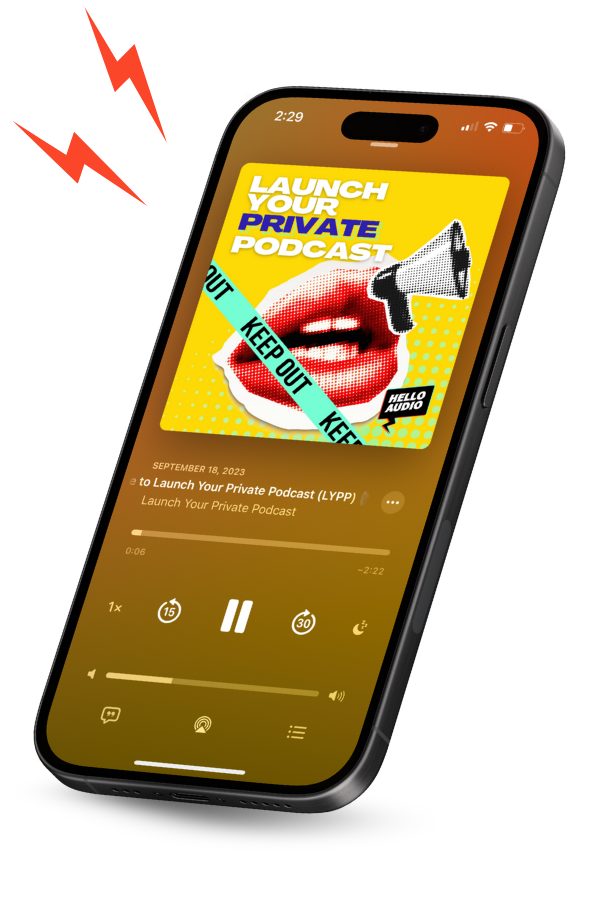
Since Hello Audio delivers lessons in an audio format, it encourages learners to press play during those moments. Over time, those small sessions add up, which helps them move through the podcast course without needing to plan for it.
Removes Access Friction
A lot of drop-off comes from small interruptions, like opening the platform, finding the next lesson, and figuring out where to resume.
With Hello Audio, once someone is subscribed, new lessons show up automatically in their podcast app. That makes it easier to pick things back up without thinking about it.
Aligns With Short-Form Learning Behavior
Audio is usually consumed in shorter stretches. That lines up with 10-15 minute learning patterns, which are easier to stay consistent with.
Instead of needing a long session, learners can keep making progress in small chunks throughout the week.
This is something most of the learners themselves point out as well. As a Reddit user, _minusOne shared:
“Minimize cognitive overload and avoid content repetition. Keeping sections short—ideally between 5 and 10 minutes—helps maintain engagement. Longer sections may discourage learners from continuing.”
Reduces Cognitive Load and Screen Fatigue
Most online courses rely heavily on video, which means more screen time. Audio removes that layer.
Learners can focus on the content without the added fatigue of watching and processing visuals, making it easier to complete more lessons over time.
Matches Real Learning Behavior
Progress usually builds through repeated, smaller sessions across the day.
When the format supports that kind of behavior, it becomes easier to stay consistent and continue through the course.
Hello Audio focuses on that. It turns existing content into audio lessons that can be picked up throughout the day, without needing to sit down for it.
Because of this, creators often see 3–4× higher completion rates compared to video-only courses. In some cases, student success rates have increased by up to 400% after switching to audio delivery.
Try Hello Audio to see how audio-based delivery changes course completion rates.
Where Kajabi Falls Short for Course Completion
Kajabi is built to deliver and manage courses, but a few parts of the learning experience make it harder for users to stay consistent and finish.
Here’s where that shows up:
Requires Active, Sit-Down Access
Courses on Kajabi live inside a dashboard. Getting back into a lesson means logging in, navigating modules, and setting aside time to go through it.
That added effort creates small delays. Over time, those delays can turn into skipped lessons and drop-offs.
Progress Feels Less Visible
In Kajabi, progress is tied to completing individual lessons or modules, but there’s little sense of ongoing movement between those points.
That makes progress feel slower and less visible over time. When it’s not clear how much has been covered or how far there is to go, it becomes easier to lose momentum and stop midway.
Less Reinforcement Built Into the Format
Most Kajabi courses rely heavily on video lessons. Once a lesson is watched, there’s usually no built-in way to revisit it naturally unless the learner chooses to go back.
That makes repetition less likely, which affects retention and long-term engagement, both of which influence completion.
Weaker Support for Ongoing Engagement
Kajabi includes quizzes and community features, but they are relatively basic compared to platforms focused on learning engagement.
- Quizzes are limited in format.
- Gamification elements such as points, badges, and leaderboards are minimal.
- Community features can feel separate from the course itself.
These elements help maintain momentum. When they’re limited, it becomes easier for learners to lose interest over time.
Less Control Over Learning Flow
Kajabi organizes courses into modules, but the navigation is largely flexible.
There are limited built-in mechanisms to guide learners through a consistent path or keep them moving in sequence. As a result, it becomes easier to skip sections or move through the course without a clear progression.
That’s usually how courses end up partially done instead of fully completed.
Engagement and Retention: Hello Audio vs. Kajabi
Engagement and retention show up in how often learners return and how much of the content they actually absorb over time.
Here’s how the two platforms compare:
How Learners Interact With the Content
The way content fits into daily behavior shows up in how learners engage with it:
- With Hello Audio, lessons can be played and continued while doing other activities. This makes it easier to return frequently, and the audio format supports ongoing consumption without requiring full attention.
- With Kajabi, interaction depends more on setting aside time to go through lessons. That works during focused sessions, but it becomes harder to maintain if a few sessions are missed and the routine is interrupted.
Consistency of Use
How easily learners can return to the course over time determines whether they stay consistent:
- Hello Audio shows up right in the podcast app, so coming back to it feels natural. Learners just need to press play and keep going, which makes it easier to maintain a steady pace.
- Kajabi requires going back to the platform each time, opening the course, and finding the next lesson. It’s simple enough, though those extra steps may make it easier to put off and lose momentum.
Retention and Recall
How naturally learners revisit content plays a role in how much they retain:
- Hello Audio makes it easy to replay lessons. People often listen again as they go about their day, so key ideas tend to stick without much effort. That kind of repetition helps with recall over time.
- In Kajabi, revisiting usually means going back into the course and rewatching a lesson. That extra step reduces repetition, which can affect how much information sticks.
Attention Span Over Time
The format of the content influences how well attention holds across sessions:
- Hello Audio works well in shorter listening sessions, which is how most people go through content. It’s easier to keep up when lessons can be picked up in small chunks during the day.
- With Kajabi, lessons are usually longer and need more focus. That’s fine at the start, though attention tends to drop as the sessions get longer, especially when there’s nothing reinforcing continued engagement.
Which Platform Should You Choose Based on Course Type
If the goal is to get people to actually finish the course, Hello Audio is the better choice in most cases.
It works especially well for:
- Coaching programs
- Memberships
- Content-heavy courses
- Anything where consistency and follow-through matter
The format makes it easier for people to keep up, which directly impacts completion.
Kajabi makes more sense when the course depends heavily on structure.
That usually comes up in courses where people need to:
- Watch how something is done on screen, like tutorials or walkthroughs.
- Follow a sequence, where one lesson builds directly on the previous one.
- Complete steps in order, like technical setups or software training.
In those cases, having everything clearly structured helps people move through the course the right way.

Frequently Asked Questions (FAQs)
Here are answers to some of the common questions that come up when comparing Hello Audio and Kajabi:
How Does Hello Audio Pricing Compare to Kajabi?
Hello Audio’s pricing structure is significantly more affordable than Kajabi, especially if the goal is content delivery and engagement.
- Hello Audio starts at $14/month (billed annually) and goes up to $81/month for advanced features like unlimited feeds, transcripts, and automation.
- Kajabi starts at $143/month (billed annually) and goes up to $399/month, as it includes a full suite of tools like website hosting, marketing, and course management.
Does Hello Audio Support Video Hosting?
No, Hello Audio does not host video content.
It converts existing video, webinars, or recordings into an audio format, which is then delivered as private podcast feeds. This makes it easier for learners to consume the content on the go.
If a course depends heavily on visuals, it’ll still need a platform like Kajabi or another video hosting solution.
How Secure is Content Delivery in Hello Audio?
Hello Audio delivers content through private podcast feeds accessible only to approved listeners.
The platform follows standard data protection and security practices, including compliance with frameworks like GDPR, along with secure delivery and user-level access management.
Does Hello Audio Support Course Certificates?
No, Hello Audio doesn’t offer course certificates.
It’s built more for delivering content and keeping people engaged, not for tracking completion or issuing certifications.
If certificates or formal assessments are the goal, then something like Kajabi or a dedicated LMS would make more sense.
Conclusion
Most courses don’t fall apart all at once. People start strong, miss a few lessons, and then gradually stop coming back. That pattern often comes down to how the course fits into a learner’s day.
Kajabi works well for structured, step-by-step courses that require focused attention.
Hello Audio takes a different approach. It turns existing content into audio lessons delivered through podcast apps, removes the need to log in repeatedly, and makes it easier to continue in small, everyday moments.
Features like private feeds, automated delivery, and on-the-go access help keep learners consistent and engaged over time.
Sign up with Hello Audio to deliver content in a way learners are more likely to follow through.