
Introduction
You built an audience on Substack, and now you want to hand them audio they can finish on the go. Maybe it’s a course, a members-only series, a coaching replay, or a lead magnet. Substack added private podcast feeds, so is that enough, or does a purpose-built platform fit the job better?
Hello Audio co-founder Nora Sudduth has watched thousands of creators move gated content into private feeds.
What follows is an honest, feature-by-feature look at Hello Audio and Substack for private podcasts, plus a simple way to tell which one fits your goal.
TL;DR: Hello Audio vs Substack for Private Podcasts
Here is the short version before we get into the details:
- ●Both platforms hand your listeners a private RSS feed that works in the podcast app they already use. Substack gives one to each paid subscriber, and Hello Audio gives one to each listener.
- ●Substack fits when your goal is a paid publication that bundles newsletter, podcast, video, and community in one place, with no monthly fee and a built-in audience network.
- ●Hello Audio fits when you want to deliver content you already sell, like courses, memberships, coaching, and lead magnets, with per-listener personalization, tagging, and automations.
- ●Substack charges no monthly fee but keeps a share of your paid revenue. Hello Audio is a flat monthly subscription, so you keep what you charge.
- ●Neither private feed plays inside Spotify. Both work in Apple Podcasts, Overcast, Pocket Casts, and similar apps.
How Private Podcast Feeds Work
A quick primer helps the rest of this comparison make sense.
Audio is a habit now. Edison Research’s latest figures put monthly podcast consumption at a record level, with well over half of Americans, and much of that listening happens during commutes, workouts, and chores. That’s exactly the moment you want a course lesson or coaching update to reach someone, rather than waiting for them to log into a portal.
A private podcast meets them there. In plain terms, what a private podcast is comes down to a private, unlisted RSS feed that only invited people can access. It delivers gated audio to the podcast app your audience already opens every day, and it stays off the public directories, so it reaches only the people you choose.
Here is how that feed reaches a listener, step by step.
- 1You add your audio: Upload a recording, or convert an existing video, and it becomes an episode in a feed.
- 2The platform issues a private feed: It generates personalized, authenticated RSS feeds unique to each listener and tied to their access.
- 3The listener subscribes in one tap: They add the feed to the app they already use, like Apple Podcasts, Overcast, or Pocket Casts.
- 4New episodes arrive on their own: Fresh audio downloads the moment you publish, with no login to remember.
- 5Access stays in your control: When someone’s access ends, the feed is revoked and stops delivering episodes.
Both Hello Audio and Substack work this way. The difference is what each one is built to do around that feed.
Hello Audio vs Substack at a Glance
Here is how the two stack up on the decisions that actually matter for gated audio:
| Capability | Hello Audio | Substack |
|---|---|---|
| Primary design focus | Private podcasts for creators delivering content they already sell | Subscription publishing that bundles newsletter, podcast, video, and community |
| Private feed per listener | Yes, a unique feed tied to each listener | Yes, a private feed for each paid subscriber |
| Works in podcast apps | Apple Podcasts, Overcast, Pocket Casts, and similar | Apple Podcasts, Overcast, Pocket Casts, and similar, plus the Substack app |
| Listener tagging and segmentation | Yes | Limited |
| Behavior-based automations | Yes, triggered by feed activation or specific listens | No |
| Dripped and expiring feeds | Yes | Limited |
| Video-to-audio conversion | Yes, with bulk upload | Import and native upload, plus text-to-speech narration |
| Multiple feeds per product | Yes | Per-section feeds |
| Built-in discovery network | Not the focus | Core strength |
| Revenue model | Keep 100% of what you charge through your own tools | Built-in paid subscriptions, keep about 90% of paid revenue |
| Hosting cost | Flat monthly subscription | Free to host, keeps about 10% of paid revenue |
One shared limit is worth calling out. Spotify’s private feed support does not extend to external RSS, so a private feed from either platform will not play natively in Spotify. Listeners use Apple Podcasts, Overcast, Pocket Casts, or the platform’s own app instead.
What Substack Does Best
Substack is strong when your whole business runs on a paid publication.
Here is where it shines:
- 1All in one place: Your newsletter, podcast, video, and community live under a single subscription, so a private podcast becomes one more format your paid subscribers receive.
- 2Built-in paid subscriptions: Free listeners can convert to paid in the same space. It’s free to host, and you keep about 90% of paid revenue after card fees.
- 3A discovery network: Recommendations and the wider Substack network can send you new subscribers, which a pure delivery tool does not do.
- 4Free previews: You can publish a free version of a paid episode, so non-subscribers hear a taste before they buy.
If you’re building a public, subscription-based media brand and you want audio to sit alongside your writing, Substack is a sensible home for it.
The podcast is part of a bigger publishing engine, and for a lot of writers, that bundle is the whole appeal.
What Hello Audio Does Best
Hello Audio was built for the other job: taking content you already sell and turning it into private feeds people actually finish.
Here is where that focus shows up:
- 1Listener Relationship Management: You get personalized feeds per listener, listener tagging, and automations that trigger when someone activates a feed or finishes an episode, so you can add them to another feed or send a nudge.
- 2Feeds you can pace: Dripped feeds release a course on a schedule, and expiring feeds time-box access to a bonus or a launch window.
- 3Fast content conversion: The audio inbox and drag-and-drop video-to-audio conversion turn existing recordings into episodes in minutes, with bulk upload for a full library.
- 4One feed per product: You can run separate private feeds for a course, a membership, coaching replays, and a lead magnet, each managed on its own.
- 5You keep what you charge: Hello Audio is a flat monthly subscription, so the revenue from your programs stays yours.
That focus on setup speed shows up in the numbers: over 70% of new users launch their first feed within 24 hours. And creators reach for it to simplify delivery.
Energetics and business coach Kaitlyn Kessler swapped her LMS for audio because a private feed made her content easier to consume than a login-gated portal. Her outcome is one creator’s experience rather than a guaranteed result, but the pattern is common: when content lands in the app someone already opens daily, more of it gets finished.
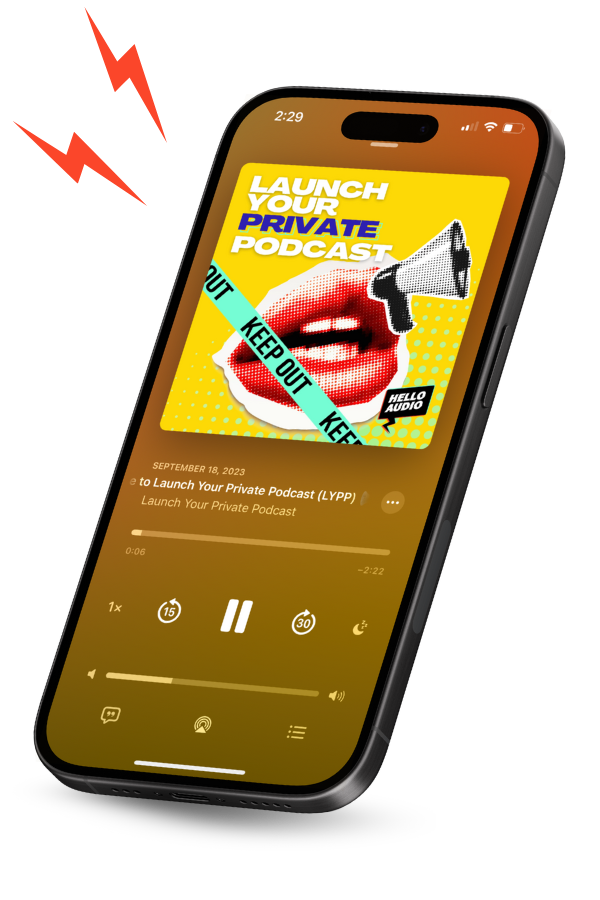
You can hear more of these stories on the Launch Your Private Podcast show, where real users walk through how they use private feeds.
Some creators even run an audio newsletter feed of their own, so their best writing reaches people who would rather listen than read.
If your goal is to deliver content your audience actually finishes, that’s what Hello Audio was built for. It lets you set up personalized private feeds, tag listeners, and automate what each person hears, then see who listens and for how long.
Try Hello Audio free for 7 days.
How to Choose Between Hello Audio and Substack
The right pick comes down to a handful of honest questions about your own business.
Run through these, and the answer usually gets clear:
- 1Your main goal: If you’re building a public paid publication, Substack fits. If you’re delivering content you already sell, Hello Audio fits.
- 2Personalization needs: If you want per-listener feeds, tagging, and behavior-based automations, that’s Hello Audio’s core. Substack keeps things simpler and more uniform.
- 3Timing and pacing: If you need to drip a course over weeks or expire access to a bonus, Hello Audio is built for that. Substack handles basic early access.
- 4How you want to pay: If a revenue share and no monthly fee suit you, Substack works. If you want to keep 100% of your program revenue for a flat fee, lean Hello Audio.
- 5What you’re delivering: For a paid subscription publication, Substack. For member-only audio feeds, gated course lessons, or a lead magnet, Hello Audio.
Plenty of creators land on both. You can keep your Substack publication for public writing and audio, and use Hello Audio for the gated feeds that need tighter control over who hears what.
Frequently Asked Questions
A few questions creators tend to ask while they weigh the two:
Does Substack Offer Private Podcast Feeds?+
Yes. Paid subscribers receive a unique private RSS feed they can add to their podcast app, and only active paid subscribers can access the paid episodes.
Does Substack Take a Cut of My Podcast Revenue?+
It does. Substack is free to host, but it keeps about 10% of your paid subscription revenue, plus payment processing fees.
Hello Audio charges a flat monthly subscription instead, so you keep what you charge.
Can I Use Hello Audio and Substack Together?+
Yes, and many people do.
Keep your Substack publication for public writing and audio, and use Hello Audio for gated delivery, like a course feed, a members-only feed, or a lead magnet that needs per-listener access and automations.
Which is Better for a Paid Membership?+
It depends on how your membership is structured. If the membership itself is a Substack subscription, keep the audio there.
If you already run your membership on another tool and want private, personalized feeds with tagging and automations, Hello Audio is the stronger fit.
Will a Private Feed Work in Spotify?+
No. Spotify does not accept external or private RSS feeds, so a private feed from either platform will not play there. Both work in Apple Podcasts, Overcast, and Pocket Casts.
Match the Tool to Your Goal
Both platforms do the same core thing well: they hand your listeners a private feed in the app they already use, so your best content reaches them wherever they are. The real difference is what you’re trying to build around that feed.
Substack is a strong home if your business is a paid publication and audio is one part of it. Hello Audio fits the moment you want to deliver content you already sell, with the personalization, pacing, and automations that help more of it get finished.
We give you a personalized feed for every listener, tagging and segmentation so you control who hears what, and behavior-based automations that move people to the next step on their own.
To see it in action before you commit, watch a quick demo.