

Introduction
You’ve built the content already. A course, a signature coaching program, a membership library, maybe a summit that ate up your spring.
The hard part is getting people to press play and finish it. Private podcasts solve that, and two names come up fast: Hello Audio and Supporting Cast.
They sound like the same thing, yet they were built for different jobs. One sells paid subscriptions to a large audience. The other gets the audience you already have to finish what you teach. Get that difference right, and the choice gets easy.
By the end of this guide, you’ll know which private podcast platform fits the way you create and sell.
TL;DR: Hello Audio vs Supporting Cast
Here’s the short version before we get into the details:
- ●Hello Audio is built creator-first, to turn the content you already have into private feeds your audience actually finishes.
- ●Supporting Cast is built for paid podcast subscriptions and memberships at scale, and it powers premium programs for some of the biggest publishers in the world.
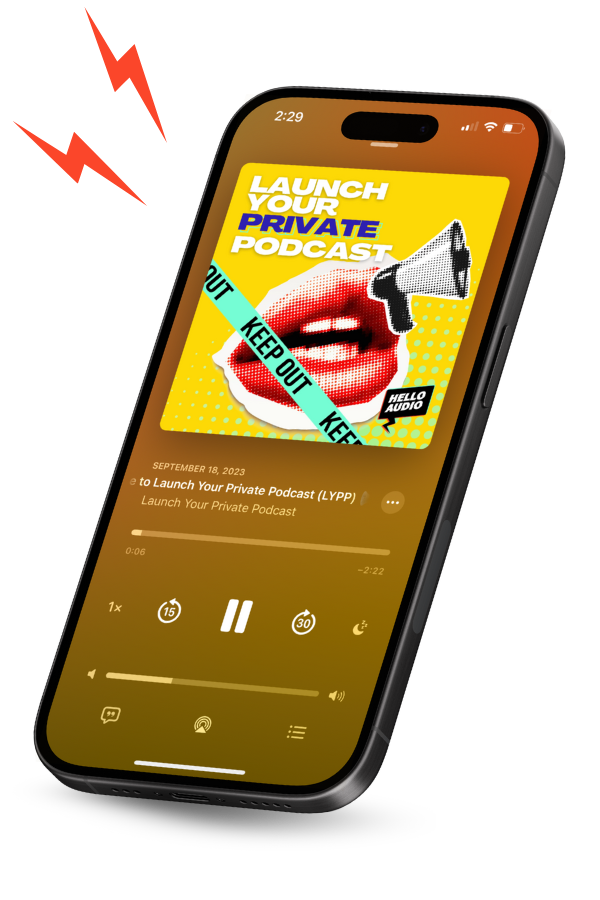
- ●Both hand your listeners a private feed that plays in the podcast app they already use, with an easy signup.
- ●Hello Audio adds Listener Relationship Management: personalized feeds, listener tagging, and behavior-based automations.
- ●Supporting Cast adds subscription billing, member community, newsletters, and enterprise internal delivery.
- ●Pricing works differently. Hello Audio charges a flat monthly subscription you can start yourself, while Supporting Cast takes a percentage of your subscription revenue on a custom, quote-based plan.
- ●Hello Audio fits individual creators, coaches, and course businesses. Supporting Cast fits networks, publishers, and large enterprises.
How Hello Audio and Supporting Cast Approach Private Podcasts
Both platforms deliver private audio, so the real question is what each one is trying to accomplish for you.
Your audience is already listening. Edison Research’s record podcast listening data shows that most Americans now consume a podcast every month, and a private feed drops your material into that same habit, no logins and no downloads.
On that much, Hello Audio and Supporting Cast agree. Where they split is the job each one was built to do.
Hello Audio Focuses on Consumption
Hello Audio exists to increase consumption of the content you already deliver. You take your courses, coaching call replays, memberships, and lead magnets, turn them into private feeds, and get more people to the finish line.
More consumption means higher engagement, better results, and more sales. Hello Audio reports 3X higher engagement than traditional content, a figure it attributes to its own platform data.
Supporting Cast Focuses on Subscriptions
Supporting Cast exists to sell and run paid podcast subscriptions. Built originally by Slate to power Slate Plus, it now runs premium membership programs for publishers like NPR, SiriusXM, and Vox Media. If your model is recurring subscriber revenue from a large listening audience, that is the ground Supporting Cast was built on.
It sits in the same paid-subscription category as tools you may already be weighing, so it can help to see Hello Audio versus Supercast for that lane.
If you are still deciding whether gated audio even suits you, this guide on private versus public podcasts is a good starting point before you pick a platform.
Compare Hello Audio and Supporting Cast Feature by Feature
Here is how the two platforms line up on the features creators ask about most:
| Capability | Hello Audio | Supporting Cast |
|---|---|---|
| Primary design focus | Private podcasts that boost consumption | Paid podcast subscriptions and memberships |
| Built for | Course creators, coaches, memberships, solopreneurs | Large networks, publishers, and enterprises |
| Core job | Turn content you already have into audio people finish | Sell and deliver premium subscriber content |
| Pricing model | Flat monthly subscription | Percentage of subscription revenue (custom quote) |
| How you start | Self-serve, free trial, no sales call | Request a demo, sales-assisted |
| Private feeds in existing apps | Yes | Yes |
| Per-listener personalized feeds | Yes | Limited |
| Listener tagging and segmentation | Yes | Supported for member management |
| Behavior-based automations | Yes | Limited |
| Dripped and expiring feeds | Yes | Limited |
| Video-to-audio conversion | Yes, with an audio inbox and bulk upload | Focused on subscriber audio and video delivery |
| Built-in subscription billing | Listener signup pages with Stripe | Core strength, full payment processing |
| Gated subscriber-only video in Spotify | Feeds push to Spotify | Yes, an early mover here |
| Enterprise internal delivery with SSO | Supported for private feeds | Core strength |
What Supporting Cast Does Well
Supporting Cast earns its reputation with publishers, and it is worth being clear about its genuine strengths.
It is enterprise-grade. The platform runs premium subscriptions for major networks, handles high volume, and pairs clients with a hands-on team that advises on subscription strategy, launch, and growth. If you are building a paid-subscriber business, that partnership model is a real advantage.
The listener experience is smooth. Subscribers can join in about two taps using Apple Pay or Google Pay, with no password to remember, and the content lands in the podcast app they already open. Supporting Cast was also an early mover on gated, subscriber-only video inside Spotify, which matters if premium video is part of your plan.
Your subscriber relationships are portable. Because Supporting Cast shares subscriber data with you, you keep the direct relationship and can reach listeners yourself. For a network monetizing a large audience through recurring subscriptions, that is a strong package.
What Hello Audio Does Well
Hello Audio is built for a different creator, and a few clear strengths follow from that focus:
- 1Consumption comes first: Hello Audio turns your existing courses, coaching replays, and member content into private feeds people can play on a commute or at the gym, because the goal is getting your audience to finish what you teach. One user, Jade Jemma, reported a 90% completion rate on a three-week bootcamp she ran through audio, an illustrative result rather than a typical one.
- 2Listener Relationship Management: You get personalized feeds for each listener, listener tagging to control who hears what, and behavior-based automations that fire when someone activates a feed or finishes an episode. Traditional hosting does not offer this.
- 3Pacing and easy uploads: Dripped and expiring feeds let you release a program on your schedule, and the audio inbox plus video-to-audio conversion drops your recordings in without a download-and-upload cycle.
- 4Fast, self-serve setup: You start a free trial with no sales call, and more than 70% of new users launch their first feed within 24 hours.
- 5Built for the way you sell: Hello Audio fits lead magnets that grow your email list, courses, and memberships where you want to add value to your memberships with audio your members will actually use.
Hello Audio is a private podcast platform built for creators who want their content actually consumed. It turns your existing courses, coaching calls, and memberships into private feeds, adds personalized delivery and listener tagging, and automates follow-up based on what each listener plays.
Start your free 7-day trial, no credit card required.
How to Choose Between Hello Audio and Supporting Cast
The right platform depends on you, so measure both against the same questions before you decide.
Start With the Job You Need Done
Ask what you are trying to accomplish first. If the job is selling recurring subscriptions to a large listening audience, Supporting Cast is purpose-built for that.
If the job is getting the audience you already have to consume and finish your content, and to convert from there, that is what Hello Audio is built around.
Match the Platform to Who You Are
Supporting Cast is aimed at networks, publishers, and enterprise teams with the audience size and staff to run a subscription program, and it is a natural fit for internal company shows.
Hello Audio is aimed at individual creators, coaches, course businesses, and membership owners who wear several hats, though it also supports private corporate podcast hosting for internal feeds. Be honest about which description fits you today.
Compare the Two Pricing Models
The models are fundamentally different. Hello Audio charges a flat monthly subscription across its Starter, Pro, and Powerhouse plans, so your cost is predictable no matter how much you sell. Supporting Cast charges a percentage of your subscription revenue, reported at around 10%, on a custom quote.
Both models can make sense. A revenue share can suit a large subscription business, while a flat fee suits a creator who wants costs that do not climb with every sale. For context, native Apple Podcasts subscriptions let creators keep 70% at first and 85% after a year, so revenue-share pricing is common in the paid-subscription lane Supporting Cast plays in.
Weigh Setup and Onboarding
Supporting Cast is sales-assisted. You request a demo, share your audience details, and get a custom plan, which comes with guidance but is not instant or self-serve.
Hello Audio is self-serve. You sign up, start a free trial with no credit card, and most new users have a feed live within 24 hours. If you want to test the fit yourself this week, that difference is significant.
Look at the Engagement and Personalization Tools
If personalization and engagement are the priority, compare the toolsets directly. Hello Audio leans into per-listener feeds, tagging, behavior-based automations, and dripped or expiring content. Supporting Cast leans into subscription billing, member community, newsletters, and detailed subscriber analytics.
Neither list is better in the abstract. If your content sits in a membership today, it is also worth seeing how private podcasts and membership sites compare on completion. The right one is the one that matches how you plan to keep listeners engaged.
Frequently Asked Questions
A few more questions creators ask when they weigh these two:
Is Hello Audio or Supporting Cast Better for Course Creators?+
For most course creators, Hello Audio is the closer fit, because it turns course and coaching content into private feeds that raise completion.
Supporting Cast is stronger when your model centers on selling podcast subscriptions to a large audience.
Can You Sell Paid Content With Hello Audio?+
Yes. Hello Audio offers listener signup pages with Stripe, so you can gate access and sell audio products.
Supporting Cast goes further on full subscription billing and payment processing, which is its core focus.
Does Supporting Cast Work for Solo Creators?+
It can, but it is designed for publishers and networks and uses a custom, contact-based plan rather than a self-serve signup.
A solo creator who wants to start today may find a self-serve platform easier to test.
Which Platform Is Easier to Set Up?+
Hello Audio is self-serve, with a free trial and most first feeds live within a day.
Supporting Cast is sales-assisted, so setup runs through a demo and a custom quote.
Do Both Deliver Private Podcasts in Apple Podcasts and Spotify?+
Yes. Both give listeners a private feed that plays in the apps they already use, including Apple Podcasts and Spotify.
Spotify also supports paid podcasts through its own subscription options and partner platforms.
Choose the Fit for How You Create
There is no single winner here, only the right fit for your work. Supporting Cast is a strong choice when you run a paid-subscription business at scale and want an enterprise partner to help you grow it. It handles the billing, the community, and even internal comms for large teams.
Hello Audio is the choice when you already have content and want more people to consume it, whether that is a course, a coaching program, a lead magnet, or a membership. The goal is simple: less content sitting unwatched, more of it finished, and more results for you.
Hello Audio is the creator’s cure for unconsumed content. We take the courses, coaching, and lead magnets you already have and turn them into on-the-go audio, with dripped and expiring feeds for pacing and an audio inbox that skips the download-and-upload cycle.
Watch our instant demo to see it before you commit.