

You already have the content. Courses, coaching replays, a membership library, maybe a summit that ate up your spring. The hard part is getting people to press play and finish it.
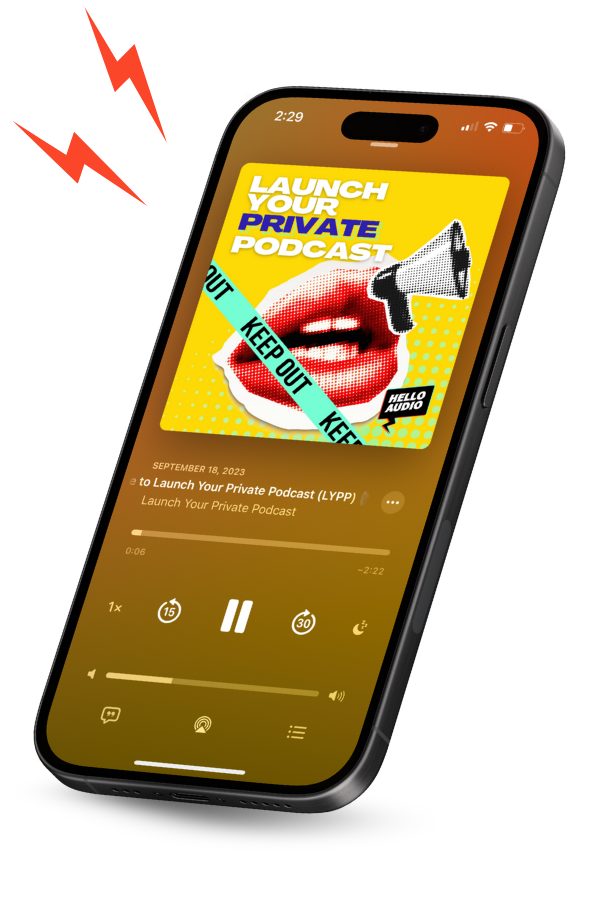
Audio is how busy people catch up. A private podcast drops your material into the app they already open on the commute or at the gym, no logins, no downloads.
Hello Audio and Podbean both deliver a private, unlisted feed that plays in any podcast app, but they come at the job from different directions. Here is how they compare and how to choose.
TL;DR
Here is the short version before the full breakdown.
- Podbean is a full podcast host built for public shows, monetization, and distribution, with a separate enterprise product for private, internal feeds.
- Hello Audio is built creator first, turning the content you already sell into private feeds your audience finishes.
- Both hand your listeners a private RSS feed that works in the podcast app they already use.
- Podbean fits when public reach, ad revenue, and company wide internal podcasts are the priority.
- Hello Audio fits when gated audio for courses, memberships, and coaching is the whole point.
- Hello Audio adds Listener Relationship Management: personalized feeds, listener tagging, and behavior based automations.
- Setup is fast on Hello Audio, with a median first feed published in about six minutes.
What a Private Podcast Platform Has to Get Right
Before you weigh two brands, get clear on the job you are hiring a platform to do.
The appetite for audio keeps climbing. Around 55% of Americans age 12 and older are now monthly podcast consumers as of 2025, an all time high. Just over half of US adults, 54%, have listened to a podcast in the past year.
Creators are building real businesses on that attention. US creator advertising spend reached about $37 billion in 2025, a sign of how much value now flows through independent creators.
So a private podcast platform has a short list of jobs to do well:
- Deliver a secure, unlisted feed your audience can trust.
- Gate access so only invited listeners or paying members subscribe.
- Make upload quick, even from long video recordings.
- Show you who is actually listening, and let you act on it.
Platforms that stop at hosting leave that last job on the table. The ones that help you respond to listener behavior are where engagement climbs.
How Hello Audio and Podbean Approach Private Podcasts
Both platforms deliver private feeds, yet they were designed for different people. Here is the contrast in four points.
Compare Hello Audio and Podbean Feature by Feature
Here is a side by side look at the capabilities that matter most for a private, creator led feed.
| Capability | Hello Audio | Podbean |
|---|---|---|
| Primary design focus | Private podcasts for creators | Podcast hosting and monetization |
| Public directory distribution | Not the focus | Core strength |
| Private, unlisted feeds | Core strength, creator facing | Supported, enterprise facing |
| Per listener personalized feeds | Yes | Limited |
| Listener tagging and segmentation | Yes | Limited |
| Behavior based automations | Yes | Limited |
| Fast upload and video to audio | Yes, audio inbox and bulk upload | Standard audio upload |
| Dripped and expiring feeds | Yes | Limited |
| Built in ad and patron monetization | Not the focus | Core strength |
| Best fit | Creators leading with gated audio | Podcasters and internal teams |
A table flattens the nuance, so read the two fit sections next and find the column that sounds like you.
Choose Podbean When Public Reach and Monetization Lead
Podbean earns its place when your public show and its revenue are the main event.
Pick Podbean when:
- A directory listed podcast is your primary channel.
- You want an ad marketplace, dynamic ads, and a patron program in one place.
- A private feed mostly serves internal communications or training.
For an organization that needs SSO and SOC 2 level security around an internal broadcast, that enterprise focus is a real strength. A public creator who already monetizes with ads will feel at home there too.
Choose Hello Audio When Creator Engagement Leads
Hello Audio earns its place when gated, private audio is the product and finishing the content is the goal.
Pick Hello Audio when your audience lives inside a course, a membership program, a mastermind, or a coaching container, and public directories are beside the point. The platform is built to deliver audio for your course as a private feed people get through. Recorded coaching call replays become episodes your clients can catch on the go.
Speed matters here. That kind of head start lets members hear something valuable this week, instead of waiting out a long setup.
Engagement is where the creator first design pays off. Personalized feeds, listener tagging, and behavior based automations let you send the right episode to the right person and follow up when someone finishes a key lesson. Results vary by creator and audience, and the range runs high: one course creator, Jade Jemma, reported a 90% completion rate on a three week bootcamp delivered by audio.
For a closer look, see how one course creator ditched her LMS for private feeds. Browse the platform’s core features to see how the pieces fit together.
How to Choose Between Hello Audio and Podbean
Run your decision through a few plain questions and the answer usually sorts itself out.
- What is your main act? A public, directory listed show points to Podbean; a gated program points to Hello Audio.
- Who is the private feed for? Company teams and internal training lean Podbean; paying clients and students lean Hello Audio.
- Do you need engagement data and automations? Heavy engagement needs favor Hello Audio’s listener tools.
- How fast do you want to launch? A same week start favors Hello Audio’s quick setup.
- Does ad and patron revenue drive your model? Built in monetization favors Podbean.
Weigh your answers. If most of them lean private, gated, and engagement heavy, Hello Audio is the safer bet. If your world revolves around a public feed, ad revenue, or an internal company broadcast, Podbean will feel natural.
Frequently Asked Questions
Here are the questions we hear most from creators weighing a private podcast platform.
Can I Run a Private Podcast Without Listing It on Apple or Spotify?
Yes. A private feed stays off the public directories and reaches only the people you invite or who join through your program. Your listeners subscribe with a unique link and hear new episodes in the app they already use.
Do My Listeners Need a Special App to Listen?
No. Both platforms hand out a standard RSS feed that works in common podcast apps. Hello Audio also offers its own player for listeners who want one.
Can I Connect a Private Feed to My Course or Membership?
Yes. Both platforms can tie feed access to your membership or course tool, so people get in when they join and lose access when they leave. Hello Audio layers on listener tagging and automations to tailor what each member hears.
Is Podbean or Hello Audio Better for Internal Company Podcasts?
Podbean has the stronger internal fit, with an enterprise product built around SSO and SOC 2 security for teams and training. Hello Audio is aimed at creators delivering gated content to an audience of clients and students.
How Fast Can I Launch a Private Feed?
Quickly on either platform, though speed is a Hello Audio hallmark. Most Hello Audio creators publish a first feed in about six minutes, and the large majority launch within a day of signing up.
Conclusion
Both run private podcasts, so pick the one built for your situation. Podbean suits a public show chasing ad revenue, or an organization needing a secure internal feed. Hello Audio is built for creators who lead with gated audio and want engagement tools.
If you want higher consumption of what you already sell, Hello Audio was made for it.