
Introduction
Your course modules, coaching replays, and membership library are sitting there half-consumed. Audio fixes that, which is why private podcast platforms are on your shortlist.
Hello Audio and Hiro.fm both put gated audio into the podcast app your audience already uses. The difference shows up after someone presses play.
One disclosure first: I co-founded Hello Audio. So this comparison sticks to what both platforms publish, and it credits Hiro.fm where Hiro.fm is stronger.
Here is how the two compare on features, pricing, and fit.
TL;DR: Hello Audio vs Hiro.fm
Here is the short version:
- ●Same core job: Both create private audio feeds that play in a normal podcast app.
- ●Hello Audio’s focus: Delivery and consumption, built on listener tags and behavior-triggered automations.
- ●Hiro.fm’s focus: Selling audio, with SMS, WhatsApp, and one-click sales pages built in.
- ●Pricing basis: Hello Audio charges by private feed; Hiro.fm charges by audio show.
- ●Entry plan limits: Hello Audio plans carry unlimited listeners and episodes; Hiro.fm’s entry plan caps downloads and contacts.
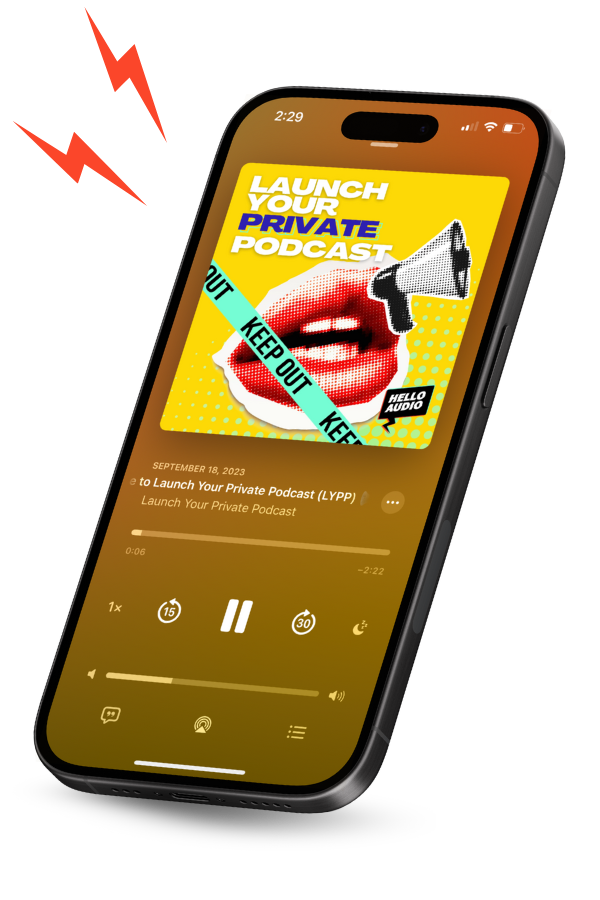
- ●Listener app: Hello Audio delivers to the listener’s own player, with no app to install.
- ●Best fit: Hello Audio for course, membership, and coaching delivery. Hiro.fm for selling low-ticket audio with texting attached.
How Hello Audio Approaches Private Podcasts
Hello Audio treats the private feed as a delivery system for content people already paid for.
The platform converts video and audio files into podcast episodes, drops them into a private feed, and hands each listener a unique link. That link opens in Apple Podcasts, Spotify, Pocket Casts, or whatever app is already on their phone. Over 70% of new users launch a first feed in under 24 hours.
Here is what creators lean on most:
- 1Listener tags and personalized feeds: Access and release can be controlled per listener, so one feed serves several segments instead of forcing you to build several.
- 2Automated actions: Activating a feed or finishing a specific episode can trigger the next step, such as adding that person to another feed.
- 3Audio inbox and video conversion: Recordings arrive ready to drop into a feed, and video files convert to audio in bulk.
- 4Dripped and expiring feeds: Content can be paced over weeks or pulled after a deadline, which matters for cohort programs.
- 5Public feeds on every plan: A public show and a private show live in the same account.
Dani Sheriff swapped the video replays in her membership for a private podcast and reported cutting churn to around 1%, which she unpacks in her membership churn case study. Treat that as one creator’s result rather than a typical one.
Worth knowing before you commit: there is no native SMS or WhatsApp layer, and the Starter and Pro tiers cap how many private feeds you can run. Private podcasting also takes a little listener education the first time, whichever platform you pick.
How Hiro.fm Approaches Private Podcasts
Hiro.fm treats the private feed as a product you sell, and packages the selling tools in the same place.
Each show comes with a one-click sales page, tiered pricing, and a messaging layer most audio tools leave to a separate subscription. The platform states that it takes no cut of your sales.
Its strongest points:
- 1Built-in SMS and WhatsApp: You can reach listeners by text, and a keyword opt-in grows that list without a separate messaging tool.
- 2Instant sales pages: Each show gets a storefront with tiered pricing, so a low-ticket audio product can go live without a funnel build.
- 3No transaction fees: Sales run against your plan fee rather than a percentage of each purchase.
- 4Flexible import: Content can arrive by RSS, from a YouTube channel, or automatically from Google Drive or Dropbox.
- 5Its own player app: Listeners can play in a browser, in the Hiro app for iPhone and Android, or in a compatible podcast player.
- 6AI assistance: The platform drafts titles and descriptions and transcribes episodes.
Worth knowing: The entry plan caps monthly downloads and stored contacts, and plans are tiered by how many audio shows you run. A creator with several programs moves up tiers quickly.
4 Differences That Decide Your Choice
Four differences do most of the work in this decision, so here is what each one looks like side by side:
1Listener Experience and App Choice
Both platforms get audio onto a phone, and they take different routes there:
- ●Hello Audio: Each listener gets a private link that opens in the podcast player they already use. There is no proprietary app in the path, and Apple’s own distribution notes confirm that a feed followed by URL syncs across iPhone, Mac, Apple Watch and CarPlay like any other show.
- ●Hiro.fm: Listeners choose between browser playback, the Hiro player app for iPhone and Android, or a compatible podcast app.
Browser playback removes a setup step for less technical audiences. A dedicated app is also one more icon to remember.
2Feed Control and Personalization
This is the widest gap between the two:
- ●Hello Audio: Listener tags, personalized feeds, dynamic content, and behavior-triggered actions mean one feed can behave differently for a brand-new buyer than for someone six weeks into a program.
- ●Hiro.fm: Drip, scheduled release, and expiring content handle the timing side, with analytics on devices, players, and episode playthrough.
If your content is identical for everyone, that gap costs you nothing. If your programs have cohorts, tiers, or upsell paths, it changes your workflow.
3Payments and Fees
Both platforms let you sell audio directly, and the money moves differently:
- ●Hello Audio: Sign-up pages and checkout run through your own account, and Stripe’s connected account setup means payouts land somewhere you control.
- ●Hiro.fm: The platform advertises no cut of your sales, so your cost is the subscription.
Check the current fee on paid feed sales for the plan you choose, because the Hello Audio fee varies by tier.
4Automation, Integrations and Messaging
Both connect to Zapier, so neither one strands you:
- ●Hello Audio: The automation weight sits on listener behavior, and the platform connects out to the tools you already run, including email platforms, ManyChat, and course and membership tools.
- ●Hiro.fm: Messaging stays in-house with SMS and WhatsApp, which removes a tool from your stack if texting is how your audience responds.
Taken together, those four differences sort the two platforms by job. Hiro.fm keeps the storefront and the text messages in the same place as the audio, which shortens the path from stranger to buyer.
Hello Audio, our private podcast platform, puts the weight on the other end: who listened, what they finished, and what should happen next.
If that is where your content stalls, step through our instant demo walkthrough and watch a feed go from upload to listener link.
How the Pricing Models Compare
The two platforms count different things, which makes a straight price-per-month comparison misleading.
Here is how the published plans line up:
| Plan level | Hello Audio | Hiro.fm |
|---|---|---|
| Priced by | Number of private feeds | Number of audio shows |
| Entry | Starter, $14 per month billed annually or $17 monthly: 1 private feed, 1 public feed | Solo, $57 per month or $570 per year: 3 podcasts, 5,000 downloads per month, 1,000 contacts |
| Middle | Pro, $39 per month billed annually or $47 monthly: 3 private feeds, dripped feeds, listener tags, expiring feeds | Business, $97 per month or $970 per year: unlimited podcasts, downloads, opt-ins and automations |
| Top | Powerhouse, $81 per month billed annually or $97 monthly: unlimited private feeds, 2 public feeds, automated actions, dynamic content | Agency, $125 per month or $1,197 per year: five Business accounts |
| Listeners and episodes | Unlimited on every plan | Capped on Solo, unlimited from Business up |
| Free trial | 7 days with Powerhouse features, no credit card | Free trial, no credit card required |
Two notes on the numbers. Annual billing saves 20% on the published Hello Audio plans, and Hiro.fm runs promotional lifetime offers on its entry plan from time to time, so the standard rate is the one to plan around.
5 Factors That Point to One Platform
Run your own situation through these five factors, and the answer usually gets obvious:
1Delivery Work Versus Sales Work
Content people already bought needs reliable delivery, access control, and completion. Content you are selling cold needs a storefront, a price point, and follow-up.
Hello Audio was built for the first job and supports the second through Stripe. Hiro.fm builds the storefront into the product.
Most creators do both, so weigh which one is the bottleneck right now.
2The Number of Feeds You Will Run
Both platforms tier by volume, which is what sets your real monthly cost.
One show for everyone fits the entry tier either way. Several distinct audiences push you up, and a creator with a lead magnet feed, a course feed and a call-replay feed is already at three.
Steph Gaudreau runs that kind of setup, with separate feeds for course delivery, lead generation, and live call recordings, which she walks through in her private podcast case study. Results like hers are one creator’s experience rather than a typical outcome, though the structure is worth copying.
3Your Audience’s Preferred Channel
Some audiences open texts and ignore email. If yours is one of them, Hiro.fm’s built-in SMS and WhatsApp are a real advantage and could replace a separate messaging subscription.
If your list lives in your email platform and converts there, that layer adds cost without adding results.
4The Value of Listener Behavior Data
Knowing who finished module three changes what you send next, which offer you make, and which clients you check on.
Hello Audio’s tagging, personalized feeds, and behavior-triggered actions are built for exactly that. Hiro.fm reports on listening, and the per-listener targeting is lighter.
Ask whether you would act on that information. If the honest answer is no, do not pay for it.
Creators who do act on it talk through their setups on the Launch Your Private Podcast show, which is a faster way to see the workflow than any feature list.
5Room to Grow at the Top Tier
The useful question is which platform gets better as you grow rather than cheaper.
Growth means more feeds, more segments, and more automation, so compare the top tiers rather than the entry ones. Dynamic content, automated actions, and advanced drip feeds all sit on Powerhouse, and the full feature breakdown covers how those pieces work together.
Frequently Asked Questions
Here are the questions creators ask most while deciding between the two:
Can My Listeners Use Their Own Podcast App with Both Platforms?+
Yes. Both deliver a private RSS feed that works in most podcast players.
Hello Audio delivers only that way, with no proprietary app. Hiro.fm adds browser playback and its own app as extra options.
Do I Need a Public Podcast to Run a Private One?+
No. A private feed stands on its own and stays hidden from podcast directories.
Every Hello Audio plan includes a public feed too, if you want to run both from one account.
Which Platform Is Better for Selling a Low-Ticket Audio Product?+
Hiro.fm has the edge on setup speed, because the sales page and pricing tiers are built in and sales carry no platform fee.
Hello Audio sells through signup pages and your own Stripe account, which suits creators already running a checkout.
Can I Move a Private Podcast from One Platform to Another?+
Usually yes, since both work from standard audio files and RSS. The friction sits on the listener side, because everyone resubscribes with a new private link.
Plan a migration around a natural break, such as a new cohort or a relaunch.
How Long Does It Take to Launch a Private Feed?+
Faster than most creators expect. Over 70% of new Hello Audio users have a first feed live within 24 hours, and both platforms convert video files to audio so you can start from content you already recorded.
Pick the Platform That Matches How You Deliver
Both tools do the core job well, so this comes down to where your bottleneck sits.
If people buy your content and never finish it, you need delivery, pacing, and listener-level visibility. If nobody has bought it yet, you need a storefront and a direct line to your audience, and Hiro.fm packages that neatly.
We built Hello Audio for the first problem. Our platform turns courses, replays, and memberships into feeds people finish:
- 1Unlimited listeners and episodes: Every plan carries them, so audience growth never changes your bill.
- 2Video to audio conversion: Drag in the files you already recorded, and we handle the rest.
- 3Dripped and expiring feeds: Pace a cohort over weeks, or close access when a program ends.
Our free 7-day trial opens every Powerhouse feature and asks for no credit card.