

As a creator, coach, or educator, you know how hard it is to get people to listen. Your audience’s attention is important for you, and how you deliver audio, either privately or publicly, shapes engagement and impact.
Podcast listening has become mainstream; over 158 million Americans tune in monthly.
With private podcasts, you have more control over your content, you decide the structure, and maintain a deeper connection with a defined group. Whereas paid public podcasts focus more on reaching the largest possible audience, discovery, and listeners’ growth.
This guide breaks down both models, highlights their strengths, and shows when to use each so you can decide what works best for your audio.
TL;DR – Private Podcast vs. Paid Public Podcast
Before diving into the details, here’s a quick snapshot of how private podcasts and paid public podcasts stack up:
| - Full control over access and distribution - High engagement from targeted listeners - Works well for courses, memberships, and internal communication - Detailed listener-level analytics | - Built for audience growth and discovery - Monetizes an existing public audience easily - Simple setup for creators already publishing publicly - Offers recurring revenue through subscriptions |
| - Smaller audience by design - Requires building your own listener base - Discovery outside your network is limited - Production and distribution rely on your platform choice | - Revenue depends heavily on audience size - Limited control over who listens - Less flexibility for structured content delivery - Engagement insights are usually surface-level |
What is a Private Podcast?
A private podcast is an audio series restricted to a specific group of listeners, rather than being publicly available on the podcast directories like Apple Podcasts or Spotify.
Instead of being discoverable through public search or charts, a private podcast is delivered through controlled access, usually via a private RSS feed, secure invite link, or password-protected platform. Only people you approve can subscribe and listen.
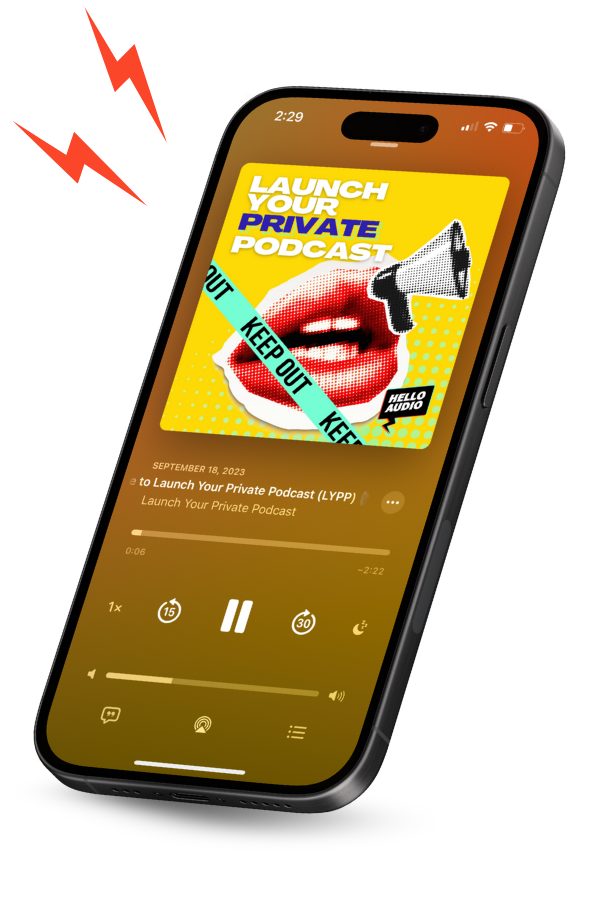
In simple terms, a private podcast works just like a regular podcast from the listener’s point of view. Episodes show up in their favorite podcast app and can be streamed or even downloaded as usual. The only difference is who gets access.
Private Podcast Benefits
Private podcasts offer a set of benefits that make them well-suited for targeted audio experiences:
- People actually finish your audio because it lives in the apps they already use every day, without any new logins or dashboards.
- You can charge for content, bundle episodes, or keep it free. Some teams use private podcasts just for onboarding, training, or keeping their members engaged.
- The audience is well defined, so your content hits where it matters. The audience appreciates that focus and listens more and retains it better.
- You control who gets access, how long they stay, and when it ends, so nothing leaks into public directories.
- You can see exactly what people listen to, what they skip, and where they tune out. That data makes it easy to improve future episodes without guessing.

Private Podcast Use Cases
Private podcasts are most effective when the audio is meant for a specific group, not the public. In practice, they show up in a few common scenarios:
Courses and Education
Private podcasts are most commonly used to deliver all the lessons or training material. Learners get to listen to the content without logging into a platform or watching long videos, and revisit episodes anytime, making ongoing learning easier.
Memberships and Paid Communities
Membership businesses share exclusive discussions, updates, or bonus content through private feeds. Since all the episodes will land directly in a podcast app, members don’t have to check a separate dashboard to stay engaged.
Premium Content
The creators use private feeds for bonus episodes, ad-free versions, or standalone premium series. Access is limited to subscribers, keeping distribution controlled.
Internal Communication
Companies rely heavily on private podcasts for updates, onboarding, and training. Teams can listen on their own time, which works especially well for remote or distributed setups.
Sales and Team Training
Private podcasts are a valuable asset for sales teams, as they can share product updates, provide messaging guidance, or offer insights in short episodes. It fits naturally into commutes or downtime between calls.
Confidential or Small-Group Content
Private podcasts are an ideal option to deliver leadership updates, all client-only communication, or internal discussions. The access stays limited and intentional.
How to Create a Private Podcast
Creating a private podcast is mostly about setup, not production. If you already have audio or video content, you’re often closer than you think.
Here’s what the process typically looks like:
Set Up a Private Feed
The first step is creating a private podcast feed on your hosting platform.
This is where you define the basics: the podcast name, description, artwork, and whether episodes are released all at once, scheduled, or dripped over time. On platforms like Hello Audio, this setup is designed to be quick, even if you’ve never launched a podcast before.
Upload or Repurpose Your Content
Episodes can be added by uploading the audio files directly.
If you already have your content in different formats like video recordings, coaching calls, or course sessions, those can usually be repurposed. Hello Audio automatically converts video into audio, which makes it easy to turn existing material into podcast episodes without extra editing steps.
Control Listener Access
Private podcasts rely on controlled access.
Listeners are invited through private or universal links, which keep the feed limited to the right people, whether that’s members, students, clients, or internal teams. Access can also be automated through integrations, so listeners are added or removed as subscriptions change.
Not all private setups are equally secure. As Reddit user _podcastpage points out:
“Sure, the link may not be crawled by search engines, but it’s still accessible by anyone who has the link, and it can be shared online. Using unique RSS feed tokens per subscriber gives more granular control and the ability to revoke access if needed.”
Deliver Episodes Through Podcast Apps
Once subscribed, listeners receive episodes in the podcast apps they already use.
There’s no separate platform to log into or dashboard to check. New episodes simply appear alongside the rest of their podcasts, which makes the content easier to keep up with.
Review Engagement and Adjust
Most private podcast platforms include listener analytics.
You can see how episodes are being consumed and use that feedback to refine future content. Instead of guessing what works, you’re making decisions based on how people actually listen.
How to Find the Best Private Podcast Platform
Choosing a private podcast platform comes down to how you plan to use audio and how much control you need over access and delivery.
Here’s what to look for:
- Private feed support: The platform should offer secure, non-searchable feeds where you control exactly who has access and can revoke access at any time.
- Listener access and ease of use: Your audio should be delivered through a familiar app like Apple Podcasts or Spotify, so listeners don’t need new logins or interfaces.
- Access control and automation: Look for automated access management that adds or removes listeners based on purchases or enrollment.
- Content flexibility: Uploading audio should be simple, and converting video into audio shouldn’t require extra tools or complicated steps.
- Structured content delivery: If your content needs to follow a sequence, the platform should support drip releases or time-based access.
- Listener insights: Strong analytics should show real engagement data, not just downloads, so you can see what’s working and what isn’t.
When you compare platforms using these criteria, you’ll notice that many tools focus mainly on hosting or subscriptions. Platforms like Hello Audio are built specifically for private delivery, combining controlled access, automation, structured releases, and listener-level insights in one place.
If private audio is part of a course, membership, or paid experience, Hello Audio makes it easy to deliver content in a format people actually finish.
Try it free for 7 days and set up your first private podcast in minutes.

What is a Paid Public Podcast?
A paid public podcast is still a public podcast at its core.
The main show is available to anyone on platforms like Apple Podcasts or Spotify. Anyone can find it, follow it, and listen to free episodes. The difference is that some content lives behind a paywall.
Typically, creators use paid public podcasts to offer extras like bonus episodes, early access, ad-free listening, or exclusive series. Listeners subscribe to unlock that premium layer, while the public feed remains open and discoverable.
So instead of restricting who can find the podcast, this model restricts what they can access.
Pros and Cons of Paid Public Podcasts
Paid public podcasts can work well in the right situation. They’re familiar to listeners, easy to explain, and fit neatly into the traditional podcast ecosystem. But they also come with trade-offs that aren’t always obvious at first.
Let’s break it down:
Pros of Paid Public Podcasts
- Built on familiar listener behavior: Listeners already understand the flow. They discover the show in their usual apps, listen for free, and upgrade if they want more. There’s almost no education required.
- Strong discovery and growth potential: Because the core podcast stays public, episodes can be indexed, shared, and recommended by platforms. This makes it easier to grow an audience compared to fully gated content.
- Recurring revenue from loyal fans: Subscriptions create a predictable monthly income. If you have a consistent, engaged audience, even modest conversion rates can add up.
- Easy to layer onto an existing show: For established podcasters, this model feels like an extension rather than a rebuild. You keep publishing publicly and add monetization without changing your core workflow.
Cons of Paid Public Podcasts
- Revenue depends on scale: Most of the listeners won’t pay. And without a large, engaged audience, subscriptions often don’t generate any meaningful revenue.
- Limited control over audience and delivery: The content is still designed as per a public podcast. That makes it harder to tailor episodes for specific use cases, such as training, education, or internal communication.
- Platform fees can grow quickly: Many tools charge per subscriber or take a revenue cut. As your paid audience grows, so do your costs.
- Surface-level engagement insights: Analytics tend to focus on downloads and revenue, not on how individuals actually listen. You know who paid, but not always what resonated.
- Not built for structured or time-bound content: Paid public podcasts work best for ongoing, casual listening. They’re a poor fit for step-by-step programs, cohorts, or content that needs controlled access over time.
Use Cases of Paid Public Podcasts
Paid public podcasts work best when the podcast itself is presented as the product. With the free feed, you bring people in, and the paid tier gives your most loyal listeners more of what they already enjoy.
Here are the situations where this model tends to work well:
Bonus Episodes for Loyal Listeners
The main show stays free, while subscribers get extra episodes, with longer conversations, deeper dives, or niche topics that don’t fit the public feed. It’s a simple exchange: access for everyone, more value for paying fans.
Ad-Free Listening Experiences
Some listeners don’t want more content, just fewer interruptions. Offering the same episodes without ads can be enough to turn regular listeners into subscribers.
Early Access to Episodes
Your paid subscribers get episodes before they even get on any public platforms. This works really well for your time-sensitive content or those highly engaged communities that like to get their hands on episodes early.
Behind-the-Scenes and Commentary
As a creator, you can use paid feeds for adding any production notes, reflections, or follow-ups that don’t belong in the main show. It adds depth without changing the public format.
Fan-Supported Creator Models
Independent podcasters often use paid tiers as a listener-supported model. Instead of relying only on ads, the audience directly funds the show in return for added value.
Niche or High-Value Extensions
Some podcasts keep the main feed broad and free, then charge for more specialized episodes tailored to a smaller, high-value segment.

How to Choose the Right Paid Public Podcast Tool
If you decide on a paid public podcast, the next step is to choose a tool that fits your actual use. Here are the main things to look at:
Support for Public and Paid Content
Some platforms make you choose between free and paid podcasts. Others let you run both from the same place. Choose one that lets you publish to the public feed and gate premium content without juggling separate tools.
Payment and Subscription Management
Look for a tool that takes care of payments, renewals, and subscription management for you. The smoother the checkout and billing process is, the fewer barriers you put between people and subscribing.
Listener Experience Inside Podcast Apps
Paid content should feel just as easy to access as free episodes. Look closely at how subscribers follow the feed and listen inside Apple Podcasts, Spotify, and other major apps. A smooth experience reduces support issues and churn.
Analytics for Growth and Monetization
Beyond basic downloads, it’ll be a great help for you to see how those subscriptions are performing. You’ll gain insights on subscriber trends, engagement patterns, and revenue data, giving you a better view of what’s working and what needs adjustment.
Content Access and Release Control
Some platforms give you limited control over how paid content is released. Others let you choose which episodes are gated and how access is granted. Pick a tool that aligns with how structured or flexible you want your paid offering to be.
Pricing Structure That Makes Sense Long Term
Many paid podcast platforms charge per subscriber or take a percentage of revenue. That model can work, but it’s important to understand how costs scale as your audience grows, so the audience doesn’t find unwanted surprises later.
As mentioned, not all of the paid content strategies sit well with listeners. As Reddit user ejh3k puts it:
“I will tell you that if a podcast starts free or ad-supported, and then goes entirely behind a paywall or to an exclusive service/app, they are dead to me.”
Detailed Comparison Between Private Podcast and Paid Public Podcast
The table below breaks down those differences between private and paid public podcasts across the areas that matter most when you’re deciding which approach fits your goals:
| Access and Distribution Model | Access is intentionally limited through private RSS feeds or invite links. Episodes are not indexed or discoverable in public podcast directories. | The core podcast is public and searchable on platforms like Apple Podcasts and Spotify, with certain episodes or benefits gated behind a subscription. |
| Audience Reach | Designed for a known audience such as members, clients, students, or employees. The goal is depth, clarity, and usefulness rather than reach. | Designed to reach a wide audience first, then convert a portion of listeners into paying subscribers over time. |
| Pricing Control | Full control over pricing and access terms. Creators can charge one-time fees, subscriptions, or bundle audio into courses, memberships, or programs. | Pricing is usually limited to platform-defined subscriptions, with less flexibility for custom offers or time-based access. |
| Content Ownership and Data Access | Creators retain ownership and typically see listener-level engagement, including who listened, how long, and where attention dropped. | Creators own the content, but analytics are usually limited to downloads, subscriber counts, and revenue metrics. |
| Community Building | Works well for smaller, high-trust communities where audio supports ongoing engagement, learning, or internal communication. | Best for entertainment, commentary, or ongoing shows where the podcast itself is the primary product. |
Similarities and Differences
At a glance, private podcasts and paid public podcasts can feel similar. Both use podcast apps, both can be gated, and both can generate revenue. But the difference shows up once you look at why each one exists and who it’s really for.
Private Podcast and Paid Public Podcast Similarities
Despite being built for different goals, these two models still overlap in a few important ways:
- Delivered through podcast apps: Both models let their listeners use apps they already know, like Apple Podcasts or Spotify, reducing friction and making audio easier to consume.
- Monetization is built in: Whether it’s a private feed or a paid subscription, in both approaches, creators can charge for access without relying on ads.
- Exclusive content can live in either model: All bonus episodes, premium series, or members-only content. The distinction is less about format and more about intent.
Private Podcast and Paid Public Podcast Differences
This is where the decision usually becomes clear. The two models are built around very different priorities:
- Audience intent and size: Private podcasts are built for a specific group, such as clients, members, students, or employees. Paid public podcasts are designed to reach a broad audience first, then monetize a portion of it.
- Level of access control: Private podcasts give you direct control over who gets access to your content and for how long. Whereas paid public podcasts usually offer access to anyone who subscribes to their channel, the segmentation is also limited.
- Content structure: Private podcasts often support structured releases, time-based access, or program-style delivery. Paid public podcasts typically follow a standard, ongoing release schedule.
- Listener data: Private podcast platforms tend to offer deeper, listener-level insights. Paid public podcasts focus more on aggregate metrics like downloads and subscriptions.
- Role in your business: Private podcasts usually support something larger, such as a course, membership, or internal initiative. Paid public podcasts are often the product itself.
Which Model is Better for You?
There’s no universal winner here. The right model depends on what you’re actually trying to do with audio.
A private podcast is a better fit if:
- You’re serving a defined group: If your desired listeners are students, clients, members, or employees. When the audience already exists, and the goal is delivery, not discovery, a private podcast is your best bet.
- Audio supports more than just audio: Courses, coaching programs, memberships, and internal updates. The podcast reinforces an offer instead of being the offer.
- Engagement matters more than reach: You want to know who listened, what landed, and where people dropped off.
- You need control: Access rules, time-limited content, structured releases, and the ability to add or remove listeners as needed.
A paid public podcast is a better fit if:
- You’re focused on growth and discovery: Public platforms help you reach new listeners, then convert a portion of them into paying subscribers.
- The podcast is the product: Ongoing content, premium episodes, or bonus feeds are the main value being sold.
- Simple access is enough: If all you need is a paywall and recurring access, a paid public model can work well.
Can You Combine Private and Paid Public Podcasts?
Yes. And for many creators and businesses, this is where things start to make sense.
Private and paid public podcasts aren’t competing models. They just do different jobs, which means sometimes they work better together than apart.
Used together, they create a clear flow.
Your public or paid public podcast attracts and qualifies the listeners. Whereas your private podcast serves those who want to opt in for your content.
In practice, that might look like:
- A public show with paid bonus episodes, plus a private feed for a course or membership
- A company running a public podcast for brand storytelling and a private one for training or leadership updates
- Coaches using public episodes to share ideas and private podcasts to support paying clients
What this really comes down to is control. Public and paid public podcasts help you grow an audience. Private podcasts help you serve the right one.
The Bottom Line
Paid public podcasts are great if your goal is reach, getting your ideas out there, and turning listeners into subscribers. But if your goal is engagement and control, private podcasts usually win. You know exactly who’s listening, how they’re consuming content, and can deliver it on your schedule.
That’s why creators and businesses love Hello Audio. Most people set up their first private feed in under a day, and features like automatic video-to-audio conversion, drip scheduling, and detailed listener analytics make it easy to turn content into something your audience actually finishes.
The smart approach isn’t picking one over the other. Use paid public podcasts to attract listeners, and private podcasts to serve them deeply.
Get started today and see how quickly you can turn your content into a private podcast with Hello Audio.
Frequently Asked Questions (FAQs)
Here are some of the most common questions creators and businesses ask:
Are Private Podcasts Better for Lead Generation Than Paid Public Podcasts?
Often, yes. Private podcasts work well for nurturing a defined audience like students, members, or clients with high-value content. Paid public podcasts are usually better at monetizing listeners you already have.
How Do Refunds and Cancellations Work for Each Model?
With private podcasts, you control access directly, so removing a listener is simple. Paid public podcasts rely on the platform’s subscription system, which means refunds and cancellations follow its rules.
Do Private Podcasts Work Well for Employee Communication?
Yes. They’re a strong fit for internal updates, training, and leadership messaging because access is restricted and engagement can be tracked.
Are Paid Public Podcasts Easier to Market Than Private Podcasts?
In terms of discovery, yes. Public podcasts benefit from search and recommendations in podcast apps. Private podcasts rely on direct promotion but often see higher engagement within the right audience.