

If you’re choosing between podcast hosting platforms, you’re likely narrowing it down to a couple of strong options like Buzzsprout and Hello Audio. While both distribute audio through major podcast apps, they’re built for very different goals.
Buzzsprout is designed for publishing a public podcast and growing reach. Hello Audio is built for delivering private, paid, or structured audio experiences to a specific audience.
This guide walks through how Hello Audio and Buzzsprout compare across features, pricing, and real-world use cases, so you can decide which one fits how you use audio.
TL;DR – Hello Audio vs. Buzzsprout
If you’re short on time, this quick comparison highlights the core differences between Hello Audio and Buzzsprout:
| - Private and public podcast feeds - Built-in monetization, gating, and access control - Drip releases, expiring content, and listener management - Easy repurposing of existing audio and video content | - Simple setup for public podcasts - Reliable distribution to major podcast apps - Beginner-friendly interface - Helpful documentation and support |
| - Higher pricing as you scale into advanced plans - Private podcasting may require light audience education | - No private or gated feeds - Limited monetization options - Monthly upload hour limits - Analytics are download-focused only |
What is Hello Audio?
Hello Audio is a private podcasting platform designed for creators, coaches, and businesses who want their content to actually get consumed. Instead of asking people to sit down and watch videos or click through course dashboards, Hello Audio turns your audio and video content into podcast feeds your audience can listen to on the go, right inside apps they already use like Apple Podcasts, Spotify, and Overcast.
One of Hello Audio’s users mentions:
“Hello Audio is perfect for course creators, those who have memberships, group coaching programs, masterminds, basically anyone looking to uplevel their content consumption experience.”
The big difference is that these aren’t public podcasts. Hello Audio is built around private distribution. You get to decide who gets the access, whether that’s students in a course, members in an online community, clients, or your paid subscribers. Apart from hosting files, Hello Audio focuses on helping people follow through and listen, with tools that support controlled access, personalized delivery, and smarter content engagement.
Hello Audio Features
Hello Audio’s feature set is designed to support creators at every stage of content distribution and listener engagement:
- Private podcast delivery: Create invite-only podcast feeds that listeners can follow in their favorite podcast apps. Access is controlled by you, so only the right people hear the content.
- Video-to-audio conversion: Upload audio or video files and automatically turn them into podcast episodes. This makes it easy to repurpose existing content without extra tools or manual work.
- Easy listener access: Listeners don’t need to log into a new platform. They receive a simple link and can start listening in their preferred podcast app within minutes.
- Dripped and expiring content: You can easily schedule episodes to release over time or set content to expire on Hello Audio. This is really useful for all the structured programs, cohorts, and time-bound offers.
- Built-in payments and monetization: Sell access to private feeds directly through Stripe, without needing a separate checkout or membership tool.
- Listener management and tagging: Track your subscribers accurately, apply tags, and organize your listeners by access level or engagement.
- Personalized content delivery: This feature allows you to customize your intros, outros, and delivery logic. You can create a more tailored listening experience for different audiences.
- Integrations and automation: Connect Hello Audio with tools like Zapier, email platforms, and course software to automate access and workflows.
- Audio quality enhancement: Improve sound quality using built-in audio remastering powered by Dolby.io, included with each plan.
Book your free trial to experience these features and start your private podcasting journey.
Hello Audio Pricing
The platform offers a 7-day free trial, no credit card is required. You get full access to the core features before deciding to commit.
Here’s a snapshot of the pricing tiers (billed annually):
Starter – $14/month
- 1 private feed + 1 public feed
- Unlimited episodes and listeners
- Automatic video-to-audio conversion
- Listener signup pages with Stripe
- Zapier steps and basic integrations
- Audio remastering credits
Pro – $39/month
- Everything in Starter
- 3 private feeds
- Dripped feeds & expiring content
- Listener tags and advanced release controls
Powerhouse – $81/month
- Unlimited private feeds
- 2 public feeds
- Unlimited transcripts
- Dynamic content and automated actions
- Custom branding options and premium support
All plans include core features like listener management, unlimited storage, integrations, and basic analytics. Dolby-powered audio remastering credits are included each month based on your plan level, with the ability to buy additional credits if needed.
Hello Audio Reviews
There’s broad appreciation for how Hello Audio changes the way creators distribute content:
What users like
- The idea of private podcast feeds makes the consumption of course and membership content feel effortless and natural, increasing completion and engagement rates.
- Features like expiring feeds, Stripe payments, and audience tagging give creators real control over delivery and content monetization without juggling multiple tools.
- The support ecosystem, like a knowledge base, chat support, and community group, helps users get up and running faster and troubleshoot as they go.
As mentioned by dajon_love:
“HA allows you to add a simple link to a confirmation page, which grants access to the private podcast.
I’ve set up private podcast feeds for course creators, and Captivate is a huge miss here. Yeah, you can set up Zapier, etc., but why mess with all of that when HA is more user-friendly to begin with?”
Points to keep in mind
- Some creators note that pricing can feel high as you scale into advanced plans (especially if you use more feeds or advanced automation).
- Private podcasting is still a concept many listeners aren’t familiar with, so there can be a learning curve when onboarding audiences.
Overall, Hello Audio is seen as a strong tool for creators who want to increase content consumption and engagement. It delivers content in a format people actually finish, audio that fits into the listener’s schedule.
What is Buzzsprout?
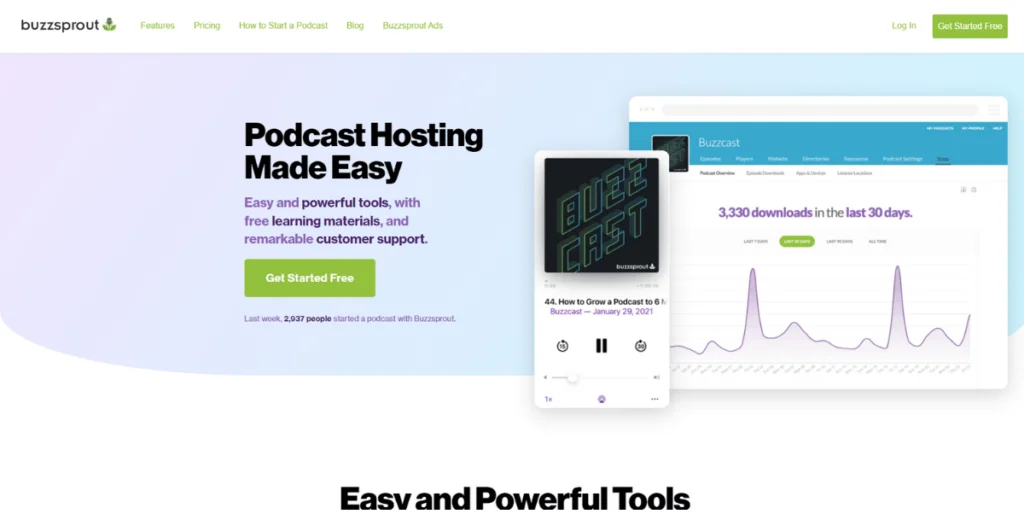
Buzzsprout is a traditional podcast hosting platform that is built to help podcasters get their shows online and into some of the major directories like Apple Podcasts, Spotify, and Google Podcasts. It handles all the technical bits, file optimization, feed generation, distribution, and analytics, so creators can focus on recording and publishing without wrestling with backend systems.
Buzzsprout Features
Buzzsprout offers a solid set of tools that cover the core needs of most podcasters:
- Easy upload and distribution: Upload your audio files, and Buzzsprout prepares them for playback and pushes them out to all major podcast platforms.
- Podcast stats and analytics: Track downloads, listener trends, and performance across platforms so you can understand how your show is doing.
- Custom podcast website: Every show gets a dedicated website you can customize to share your episodes and show notes.
- Advanced promotion tools: Features like visual soundbites and custom embed players make it easier to promote episodes on social media or websites.
- Monetization options: You can accept listener support, launch paid subscriptions, or control ad placements through Buzzsprout’s tools.
- Team support and collaboration: Add unlimited team members to your account, making it easier to manage shows if you’re working with others.
- Optional audio enhancement tools: Add-ons like Magic Mastering and Cohost AI help polish your audio or generate transcripts and show notes.
Is Buzzsprout Free?
Yes. Buzzsprout offers a free plan you can start with right away. It’s a way to test the platform and get familiar with how episodes are uploaded and distributed.
On the free plan, you can upload up to two hours of content each month, but episodes are only hosted for 90 days before they’re removed from your feed. This makes it more of a starter tier than a long-term hosting solution.
Buzzsprout Pricing
Buzzsprout’s pricing is structured around how many hours of new audio you want to upload each month, not around listener counts or features. Every paid tier includes key podcasting tools like analytics, a hosted podcast website, directory distribution, listener support options, and unlimited team members.
Here’s how the current paid plans stack up (billed monthly):
$19/month
- Upload up to 4 hours of audio per month
- Episodes hosted indefinitely
- Podcast website included
- Advanced statistics and analytics
- Unlimited team members
- Dynamic content and custom embed players
$39/month
- Upload up to 15 hours of audio per month
- Everything in the $19 plan
- More monthly upload allowance for frequent or longer episodes
$79/month
- Upload up to 35 hours of audio per month.
- Everything in the $39 plan
All paid plans let you switch, upgrade, or cancel anytime; there’s no long-term contract. If you prefer to pay annually, Buzzsprout offers discounted yearly pricing as well.
Buzzsprout Reviews
Buzzsprout is often described as a reliable, no-frills podcast hosting platform. Reviews tend to agree on one thing: it does what it promises, but it doesn’t try to do much beyond that.
What users like:
- Users often point out that Buzzsprout is easy to set up and navigate, particularly for first-time podcasters who want a straightforward publishing process.
- Customer support receives consistent mentions for being responsive and helpful when issues come up.
- On G2, Buzzsprout maintains an overall rating of around 4.5 out of 5, largely driven by its ease of use and dependable core features.
- TechRadar gives Buzzsprout a 4 out of 5, noting it as a solid and trustworthy option for hosting public podcasts.
Points to keep in mind:
- One of the most common concerns is the pricing structure. Because plans are based on monthly upload hours, podcasters with longer or more frequent episodes may need to upgrade plans sooner than expected.
- Reviews frequently mention the lack of advanced features, particularly around private feeds, gated content, or audience-level controls.
- Customization options are fairly limited, especially when it comes to branding, content delivery, and listener experience.
- It may feel restrictive for creators who want more flexibility or plan to grow beyond a simple, public podcast format.
One Reddit user, StragatePioneer, mentions:
“We did a review of most of the major podcast media host providers earlier this year in season 4 of Better Podcasting.
We couldn’t recommend Buzzsprout because of their download limits, high pricing, and audio file encoding.”
Detailed Comparison Between Hello Audio and Buzzsprout
Both Hello Audio and Buzzsprout help creators distribute audio content, but they’re built for very different goals. This comparison breaks down key features so you can see where the differences really matter:
| Audio Hosting & Distribution | Supports private and public podcast feeds with controlled access. Content is delivered through standard podcast apps, but is limited to approved listeners. | Focused entirely on public podcast hosting. Episodes are distributed to major directories, with no native support for private or restricted access. |
| Monetization & Gating | Built for gated audio. Creators can sell access to private feeds, manage subscriptions, and revoke access when needed, all within the platform. | Monetization is limited to public listener support and subscriptions. No built-in way to gate content or manage private audiences. |
| User Experience | Designed for structured and intentional listening. Supports dripped releases, expiring content, and personalized delivery based on access or behavior. | Designed for basic publishing. Upload episodes, publish publicly, and track downloads. Limited flexibility in how content is delivered. |
| Analytics & Listener Insights | Offers listener-level data, tagging, and engagement signals, helping creators understand who is consuming their content. | Provides download and episode-level stats only. No insight into individual listeners or audience segmentation. |
| Branding & Customization | Focuses on content experience and access control, with customization around feeds, delivery logic, and signup flows. | Branding is mostly limited to a public podcast website and embed players, with minimal customization beyond appearance. |
| Pricing | Pricing is based on features and the number of feeds. All plans include unlimited listeners, episodes, and storage. | Pricing is tied to monthly upload hours. Higher content volume requires higher-tier plans, regardless of audience size. |
Use Cases: Which Tool Fits Which Goal?
Hello Audio and Buzzsprout both work well in the right context. The key difference comes down to how you plan to use audio and who it’s for.
When Hello Audio Makes More Sense
Hello Audio is a better fit when audio is part of a broader business, program, or paid experience.
It makes sense if you’re:
- Delivering courses, memberships, or coaching programs, and want content to be easy to consume without forcing people into dashboards or logins.
- Selling private or paid audio content, such as premium training, exclusive podcasts, or client-only resources.
- Repurposing existing video or long-form content into audio so your audience can listen on their own schedule.
- Running time-bound programs or cohorts where content needs to drip over time or expire after access ends.
- Managing multiple audiences and needing control over who gets access to what, and when.
- Focused on engagement and completion, not just downloads.
Hello Audio works best when audio serves as the delivery layer for your courses, memberships, or paid content, helping your audience actually consume and complete the material, especially as podcast listening continues to grow rapidly, reaching 773 million hours per week in 2025.
When Buzzsprout Makes More Sense
Buzzsprout is a better fit when your goal is simple, public podcast distribution.
It makes sense if you’re:
- Launching a public podcast that is meant for wide distribution across platforms like Apple Podcasts, Spotify, and other directories.
- Looking for a straightforward hosting platform with minimal setup and no learning curve.
- Publishing episodes on a regular schedule without needing gated access or advanced delivery logic.
- Focused primarily on downloads, reach, and audience growth, rather than structured content consumption.
- Monetizing through ads, listener support, or sponsorships, rather than private subscriptions or paid access.
Buzzsprout works well when podcasting is the product itself, not a layer added to an existing business or program.
Similarities and Differences
While Hello Audio and Buzzsprout overlap in some of the core podcast hosting capabilities, they’re built for very different outcomes. They share basic infrastructure, such as audio hosting and distribution, but differ significantly in how content is accessed, delivered, monetized, and managed.
Let’s closely review their similarities and differences:
Hello Audio and Buzzsprout Similarities
Both platforms cover the basics of audio hosting and distribution:
- Audio hosting and storage: Both Hello Audio and Buzzsprout host your audio files and deliver them via podcast feeds.
- Distribution to podcast apps: Content from both platforms can be listened to on widely used podcast apps like Apple Podcasts and Spotify.
- Simple publishing workflows: Both platforms make it easy to upload audio, organize episodes, and keep content libraries tidy.
- Analytics and performance data: Each platform provides insights into how content is performing, such as downloads or listening activity, though the depth of data differs.
- Creator-focused support resources: Both offer documentation, help centers, and customer support to help users get set up and troubleshoot issues.
Hello Audio and Buzzsprout Differences
This is where the two platforms clearly diverge:
- Public vs. private content: Hello Audio is built specifically for private and controlled access, but when it comes to Buzzsprout, it is designed almost entirely for public podcast distribution.
- Content delivery flexibility: Hello Audio supports dripped releases, expiring content, and personalized delivery. Whereas Buzzsprout focuses mostly on standard episode publishing without any delivery logic.
- Monetization model: Hello Audio enables you to directly monetize your content through paid access to private feeds. Buzzsprout’s monetization options are limited to public listener support and subscriptions.
- Audience insight and control: Hello Audio offers listener-level insights and access management. Buzzsprout provides download-based analytics with no individual listener control.
- Pricing structure: Hello Audio pricing is based on features and feeds, with unlimited listeners and episodes. Buzzsprout pricing is based on monthly upload hours.
- Primary use case: Hello Audio is designed for creators using audio as part of a business, program, or paid offering. Buzzsprout is mainly designed for creators who just want to publish a public podcast, which is also their primary product.

The Bottom Line
Hello Audio and Buzzsprout both get audio into podcast apps, but they’re built for very different outcomes.
If your goal is to publish a public podcast and track downloads, Buzzsprout will work really well. The platform keeps things very simple, but that simplicity also limits your control over access, delivery, and engagement.
Hello Audio is designed for creators and businesses who use audio as part of a larger offering. It goes beyond hosting by enabling private feeds, paid access, content dripping, and expiring episodes, all delivered through the podcast apps people already use. Over 70% of users set up their first feed within 24 hours, which speaks to how quickly creators can turn existing content into a listenable experience.
If you’re focused on reach alone, Buzzsprout can do the job. If you care about how, when, and why your audience actually listens, Hello Audio is the more strategic choice.
Curious how it would work for your content? Try Hello Audio free for 7 days and see how easily your audio fits into your audience’s daily routine.
Frequently Asked Questions (FAQs)
These are some of the most common questions creators have when comparing Hello Audio and Buzzsprout:
Can I Switch From Buzzsprout to Hello Audio Easily?
Yes. You can export your audio files from Buzzsprout and upload them to Hello Audio without needing to rebuild everything from scratch.
Many creators use the move as a chance to reorganize content into private or segmented feeds that better match how their audience listens.
Is Hello Audio Suitable for Internal Team Podcasts?
It is. Hello Audio works well for internal podcasts used for team updates, onboarding, training, or leadership communication. Private feeds ensure content stays restricted to the right listeners, without relying on public platforms or internal portals.
Is Hello Audio GDPR Compliant?
Yes. Hello Audio is GDPR compliant and built with privacy and data protection in mind. This is especially important for creators and businesses working with clients, students, or teams in the EU or handling personal listener data.
What Are Buzzsprout’s Limits on Episode Storage?
Buzzsprout allows unlimited storage for published episodes on paid plans, but limits how much new audio you can upload each month based on your plan. If you exceed your monthly upload limit, you’ll need to purchase additional hours or upgrade your plan.