If you’re comparing Transistor with other podcast hosting platforms, you’re probably asking one simple question: Is there a better fit out there for the way I podcast? The right answer mainly depends on what matters most to you and what future you want for your podcast.
Some platforms make it easier to grow a public show, others focus on monetization, and a few are built specifically for private podcast delivery.
This guide compares 6 of the best Transistor alternatives so you can find the one that matches your goals.
TL;DR: Top 6 Transistor Alternatives
Looking for the right alternative to Transistor? Start with this quick comparison table:
Platform
Best For
Notable Feature
Hello Audio
Private feeds for courses and memberships
Behavior-based personalization and drip feeds
Buzzsprout
Beginners who want a simple setup
Clean interface and free website
Captivate
Marketing and audience growth
Built-in calls-to-action and IAB certification
Podbean
Early monetization
Native ads, subscriptions, live streaming
Riverside
All-in-one record, edit, and host
Recording plus hosting in one platform
Spotify for Creators
Free public hosting
No cost with wide distribution
Why Podcasters Look for a Transistor Alternative
Transistor is a solid podcast hosting platform, particularly for creators managing public shows. Still, no single platform is the right fit for everyone. With 7 in 10 podcasters saying audience growth is one of their biggest challenges, many creators start looking for tools that better support their long-term goals.
Common reasons creators explore alternatives include:
Pricing based on downloads: As your audience grows, you will need to upgrade to a higher-priced plan that can cater to a larger group. There are other hosts that offer unlimited downloads or pricing that isn’t tied to download volume.
No free plan: Transistor doesn’t offer a free hosting tier, which may be a hurdle for new podcasters or those testing a new show.
Private podcast needs: If you sell courses, memberships, or premium audio, you may want features like personalized feeds, automated access, and dripped content.
Video podcast support: Creators producing video podcasts often prefer platforms with built-in recording, editing, and hosting.
Monetization and marketing tools: Depending on your strategy, you may need native subscriptions, ad tools, or audience growth features that Transistor doesn’t prioritize.
Concerns about download-based pricing come up frequently in community discussions as well. As one Reddit user, StargatePioneer, put it:
“The two things I see against Transistor right away are that I cannot tell if their stats are IAB Podcast Measurement Guidelines 2.0 compliant or not, and (more importantly) they cap downloads per month at a limit. The $20/month plan only allows 5,000 downloads per month.”
What to Look for in a Transistor Alternative
The right podcast hosting platform depends on how you plan to publish, grow, and share your content. Since 46% of podcasters say growing an audience is their primary goal, comparing these key areas can help you choose a platform that fits your needs:
Pricing Model and Show Limits
There are some platforms that will increase your bill as your downloads grow, while others offer unlimited downloads or support multiple shows under a single plan.
If you expect your audience or podcast network to grow, it’s worth checking how pricing changes before you commit.
Public vs Private Feed Support
Make sure to decide how you plan to deliver your content beforehand. If you’re building a public podcast, reliable distribution to Apple Podcasts, Spotify, and other listening apps is essential.
If your episodes are meant for paying customers, students, or community members, look for features like private podcast feeds, automated access, and the ability to control who can listen.
Analytics, Video, and Monetization
The best platform is the one that supports your long-term goals. Some creators want to track listener engagement in more detail, while others need built-in video podcast hosting or ways to earn revenue through subscriptions and ads.
Choosing a platform with the features you’ll actually use makes it less likely you’ll need to migrate again later.
Top 6 Transistor Alternatives for Podcast Hosting
Podcast hosting platforms have taken very different paths over the past few years. A good podcast host should fit the way you work. Whether you’re publishing a public show, building a paid membership, or creating audio for clients, there are platforms designed around those specific needs.
Here are 6 alternatives to Transistor:
1. Hello Audio
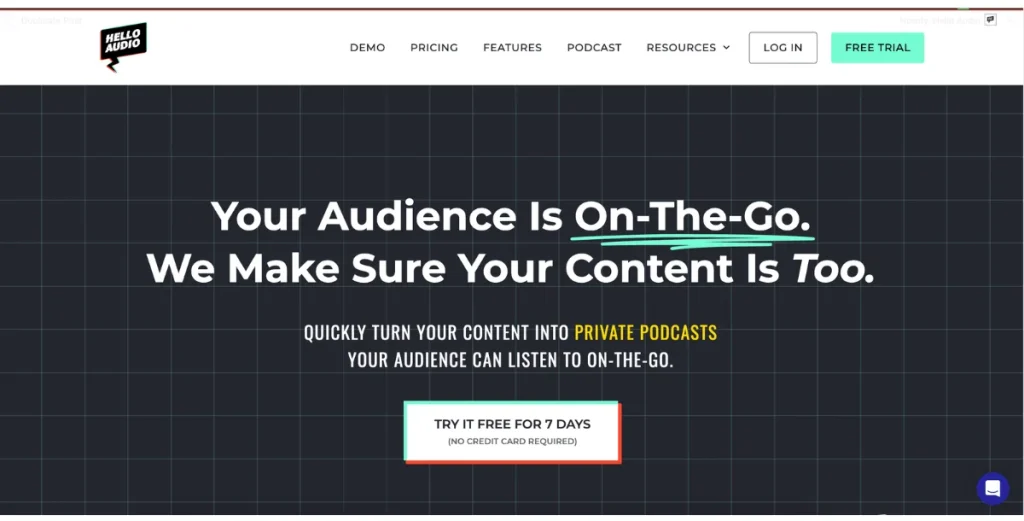
Hello Audio is a private podcast hosting platform built for creators who want to deliver exclusive audio through private podcast feeds. Rather than focusing on public podcast distribution, it helps coaches, educators, membership owners, and businesses share premium content through the podcast apps their audience already uses.
Key Features:
Deliver exclusive audio that listeners can access from their favorite podcast apps.
Give each subscriber their own private feed, making access easier to manage and more secure.
Release episodes over time with dripped content.
Grant or remove podcast access automatically based on purchases, email tags, or other triggers.
Track engagement at the individual listener level to see who’s tuning in and how they’re interacting with your content.
Connect with platforms like Kit, ActiveCampaign, Thinkific, Kajabi, Stripe, and Zapier to automate your workflow.
The table below highlights the reasons creators choose Hello Audio, along with a few limitations to keep in mind:
Pros
Cons
Built specifically for private podcast delivery
Fewer public podcast marketing features than traditional hosts
Delivers content through popular podcast apps
No built-in recording or editing studio
Automates listener access for courses, memberships, and premium content
Pricing:
Starter: $14/per month
Pro: $39/per month
Powerhouse: $81/per month
2. Buzzsprout
Buzzsprout is one of the easiest podcast hosting platforms that you can get started with. Its clean dashboard, straightforward publishing process, and extensive learning resources make it a popular choice for first-time podcasters.
If you’re looking for a simple way to publish, distribute, and manage a public podcast, Buzzsprout covers the essentials without a steep learning curve.
Features
Publish unlimited episodes on every plan.
Distribute your podcast to major listening apps from one dashboard.
Track podcast performance with built-in analytics.
Create a free podcast website for your show.
Generate episode transcriptions with paid add-ons.
Monetize the podcast through subscriptions, an affiliate marketplace, and dynamic content.
Here’s a quick look at where Buzzsprout stands out and where it may not be the best fit:
Pros
Cons
Easy to learn and use, even for first-time podcasters
Monthly upload limits apply on each plan
The setup overhead cost is low
Private podcast features are more limited than dedicated platforms
Offers SEO features
Has limited monetization options
Pricing:
Audio: $15/month
Audio+Video: $25/month
Multi-Podcast: $30/month
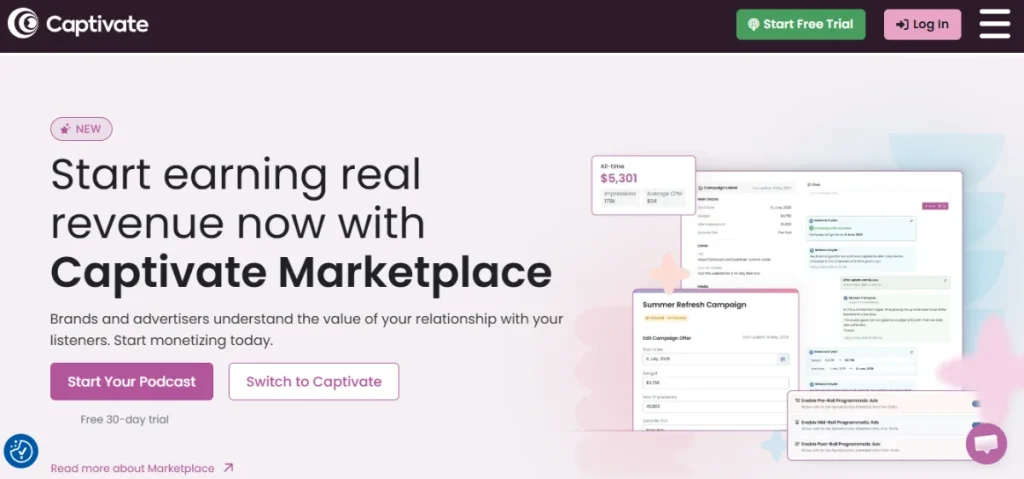
3. Captivate
Captivate is a podcast hosting platform that combines hosting with marketing and audience growth tools. Along with publishing and distribution, it includes features like calls-to-action, email capture, and listener engagement tools, making it a good fit for creators who want to grow their audience alongside their podcast.
Features
Host unlimited podcasts and episodes on every plan.
Publish to all major podcast directories from one dashboard.
Add built-in calls to action to your podcast player.
Capture email subscribers with integrated marketing tools.
Access IAB-certified podcast analytics.
Support multiple team members with collaboration features.
Here’s a quick look at where Captivate stands out and where it may not be the best fit:
Pros
Cons
Includes marketing tools alongside podcast hosting
No permanent free plan is available
Unlimited storage on every plan
Some advanced features have a learning curve
30-day free trial with access to all features
Few native mobile apps
Pricing:
Personal: $17/per month
Professional: $44/per month
Business: $90/month
4. Podbean
Podbean is a podcast hosting platform that goes beyond publishing by offering multiple ways to earn revenue from your content. Along with reliable hosting and distribution, it includes built-in tools for subscriptions, advertising, live streaming, and listener donations, making it a good choice for creators who want to monetize as their audience grows.
Features
Publish both audio and video podcasts from one platform.
Earn revenue through the PodAds Marketplace and dynamic ad insertion.
Offer premium podcast subscriptions and listener donations.
Live stream podcasts and interact with your audience in real time.
Track downloads and listener trends with built-in analytics.
Create a customizable podcast website for your show.
Here’s a quick look at where Podbean stands out and where it may not be the best fit:
Pros
Cons
Works well for audio and video podcasts
Some advanced features are only available on higher-tier plans
Offers enough built-in tools that many creators won’t need extra services
The interface can feel overwhelming for new podcasters
The setup is easy to learn and adapt
Pricing
Unlimited Audio: $12/month
Unlimited Plus: $29/month
Network: $79/month
Business: $99/month
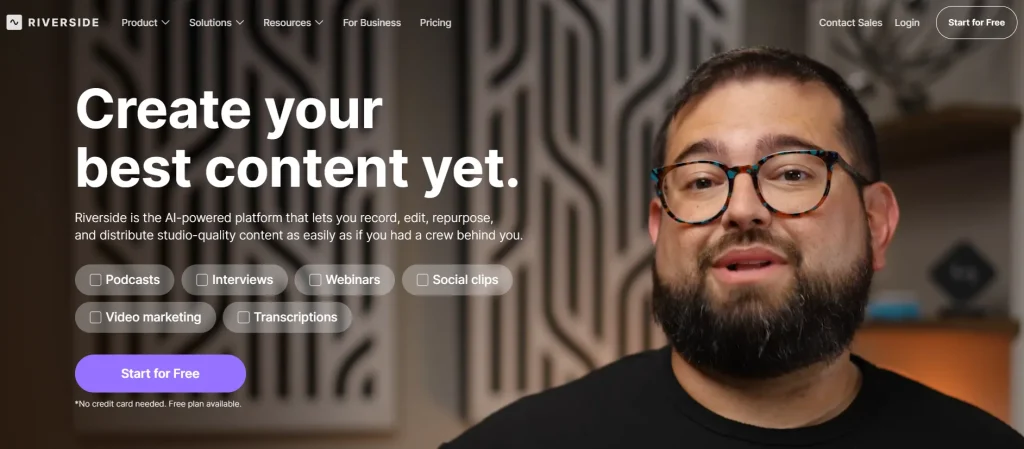
5. Riverside
Riverside started as a remote recording platform and has since expanded into a complete podcast creation suite. In addition to hosting, it offers high-quality audio and video recording, AI-powered editing tools, live streaming, and publishing features.
Features
Record high-quality audio and video remotely.
Edit episodes with AI-powered transcription and editing tools.
Host and distribute podcasts to major listening platforms.
Record separate audio and video tracks for every participant.
Live stream interviews and podcast recordings.
Create short video clips for social media.
Here’s a quick look at where Riverside stands out and where it may not be the best fit:
Pros
Cons
Keeps the entire podcast production workflow in one platform
Some advanced tools take time to learn
Produces reliable, high-quality recordings for remote guests
Editing isn’t as robust as dedicated editing software
Saves time with AI-powered production tools
Pricing:
Pro: $12/month
Grow: $16/month
Webinar: $39/month
Business: Custom pricing
6. Spotify for Creators
Spotify for Creators (formerly Spotify for Podcasters) is a free podcast hosting platform that makes it easy to publish and distribute public podcasts. It also provides insights into how your show performs on Spotify, making it a practical choice for creators who want to launch a podcast without paying for hosting.
Features
Host and distribute podcasts for free.
Publish episodes to Spotify and other major podcast directories.
Track audience growth and listener engagement through Spotify analytics.
Upload both audio and video podcast episodes.
Interact with listeners through comments and polls.
Monetize eligible podcasts through Spotify’s available programs.
Here’s a quick look at where Spotify for Creators stands out and where it may not be the best fit:
Pros
Cons
Free hosting makes it easy to launch a podcast with minimal upfront costs
Advanced hosting and customization options are more limited than paid platforms
Works well for creators already building an audience on Spotify
Some monetization features are only available in supported regions
Includes audience engagement tools within the Spotify ecosystem
Spotify for Creators is completely free.
How Transistor Compares to Hello Audio for Private Podcasts
At first glance, Hello Audio and Transistor both support private podcasts. The difference is what happens after someone subscribes.
Let’s understand better with this table:
Category
Hello Audio
Transistor
Primary use case
Built around private podcast delivery for courses, memberships, coaching, and premium content
Built primarily for podcast hosting, with support for both public and private podcasts
Podcast hosting
Supports both public and private podcasts
Host unlimited public and private podcasts from one account
Private podcast experience
Personalized feeds, drip scheduling, behavior-based automations, and expiring feeds
Each subscriber receives a unique RSS feed, with individual access that can be added or revoked
Listener analytics
Tracks listener-level engagement, including Super Listener Score and listening activity
Episode, download, and subscriber analytics, including individual listening activity for private subscribers
Workflow
Integrates with tools like Kit, Stripe, Kajabi, Thinkific, ActiveCampaign, and Zapier to automate access
Supports integrations, email notifications, dynamic ads, and podcast publishing workflows
Podcasters managing one or more public shows with occasional private podcast needs
Both platforms support private podcasts, but they’re built with different goals in mind. If private audio is a core part of your business, such as a course, membership, coaching program, or subscriber community, Hello Audio offers more tools to personalize, automate, and measure the listener experience.
Public podcasts are designed to reach as many listeners as possible. A private podcast works differently. Instead of attracting a broad audience, it gives you complete control over who can access your content and when.
A private podcast feed is often the better choice if:
Your audience is already defined: If you’re creating content for members, customers, employees, or students, a private feed keeps everything in one place without making it publicly available.
Your podcast supports a larger product or service: Courses, coaching programs, memberships, paid newsletters, and client onboarding all become easier to consume when the content is available through a podcast app.
You want more control over access: Private podcast platforms let you add or remove listeners, schedule episode releases, and keep premium content exclusive to your audience.
Listener engagement matters more than download numbers: Instead of focusing only on reach, you can see how people interact with your content and use those insights to improve future episodes.
How to Switch Podcast Hosts Without Losing Listeners
If you’ve decided a private podcast is a better fit for your content, the next step is moving your show. Switching podcast hosts is a straightforward process when you migrate your RSS feed correctly.
Here’s what you need to do:
Export Your Existing Feed
Before you move anything, make sure your current podcast feed is up to date. Check that your latest episodes, artwork, and podcast information are all in place, and don’t cancel your existing hosting account yet.
Import to Your New Host
Most podcast hosts let you migrate a show by importing its RSS feed. The platform will just pull in your existing episodes and podcast details, so you don’t have to upload everything again.
Once all the imports finish, take a few minutes to make sure that your episodes, descriptions, and artwork are all transferred correctly.
Redirect and Confirm Distribution
Once your podcast is live on the new host, add a 301 redirect from your old RSS feed to the new one. You need to do this because it tells all the podcast directories to look for future episodes at the new address instead of the old one.
Before closing your previous hosting account, check Apple Podcasts, Spotify, and a few other apps to confirm your latest episode is pulling from the new feed.
“Switching your podcast hosts isn’t difficult. It is just about putting a redirect in place with your old host, and pretty much all hosts do it for their customers.”
Frequently Asked Questions (FAQs)
Here are answers to some of the most common questions people ask when comparing Transistor alternatives:
Does Transistor.fm Offer a Free Plan?
No. Transistor doesn’t offer a free plan, but it does provide a free trial. If you’re looking for free podcast hosting, platforms like Spotify for Creators are worth considering.
Which Transistor Alternative is Best for Multiple Shows?
It depends on how you manage your podcasts. Captivate is a strong choice for hosting multiple shows thanks to its unlimited podcast support, while Podbean is a good fit if monetization is part of your strategy.
If your focus is private podcasts instead, Hello Audio is better suited for member-only and subscriber-exclusive content.
Do Transistor Alternatives Support Video Podcasts?
Many do. Platforms like Riverside, Podbean, and Spotify for Creators support video podcasts alongside audio. The exact recording, hosting, and distribution features vary by platform, so it’s worth comparing them before you choose.
Which Podcast Apps Work With Private Feeds?
Most of the private podcast platforms support popular podcast apps, including Apple Podcasts, Spotify, Overcast, Pocket Casts, and Podcast Addict. Supported apps vary by provider, so it’s always better to check compatibility before migrating your podcast.
Conclusion
By now, you have a clearer idea of which Transistor alternative fits your podcast. If you’re building a public show, several of the platforms on this list are strong options. But if your goal is to help people actually consume your content, a private podcast offers a different experience altogether.
Hello Audio makes it easy to turn the content you already have into a private podcast your audience can listen to wherever they are. With video-to-audio conversion, simple setup, and a platform built around content consumption, it’s designed to help your content fit into people’s daily lives instead of competing for more screen time.
Sign up today and see how easy private podcasting can be.
Tune in to Launch Your Private Podcast, where real Hello Audio users share how they’re using private podcasts to increase audience engagement and drive more leads and sales.
Upgrade to Powerhouse and save 50% for a full year during our Black Friday event. This exclusive offer is available to current Starter and Pro users only. Join the waitlist to get notified when it goes live.
This is our biggest upgrade deal of the year — don’t miss your chance to lock it in!
Don’t Miss Our Black Friday Sale
Get notified as soon as our Black Friday sale goes live. New and returning users save 40% on Hello Audio for one full year.