
If you’re a creator, coach, educator, or business using private podcasts for courses, memberships, client content, or internal training, understanding how listeners engage with the content is just as important as publishing the audio.
Over the last decade, podcast listening has grown fast. In 2014, only 2% of daily audio listening time was spent on podcasts, but by 2024 that number had climbed to 11% of total daily audio time, showing how much people rely on audio for learning and communication.
As private podcasts become more common in these workflows, listener analytics give you a clearer view of what’s happening once the content is delivered.
This guide explains how private podcast listener analytics work and what to consider when choosing the right solution.
What Makes Private Podcast Analytics Different from Public Podcasts
Public and private podcasts are built for different purposes, so the analytics they provide are different, too. Public podcast analytics focus on reach and audience growth, which means the data is mostly anonymous and aggregated across listening apps.
Many podcasters have pointed out how limited public analytics can be. As Reddit user explorer-matt noted:
“Apple and Spotify have charts, but nothing gives you actual numbers. Some sites try to aggregate data, but no one really has accurate stats out there.”
Private podcasts use restricted, authenticated feeds that allow you to track engagement at the listener level rather than only showing download totals. This makes it possible to see who listened, how much they listened, and whether they are still active.
Here are the differences between private podcast and public podcast analytics:
Why Private Podcast Listener Analytics Matter
Private podcasts are usually created for a specific purpose, such as launching online course content, running a membership, sharing client material, or training a team. In these cases, download numbers don’t tell you much. You need to know if people actually listened, how far they got, and whether the content is doing what it’s supposed to do.
Here’s why listener analytics matter for private podcasts:
Understanding Engagement & Retention
One of the biggest advantages of private podcast analytics is the ability to see how people actually listen.
You can see how long each episode was played, where listeners stopped, and which episodes held listeners’ attention the longest.
Tracking ROI
If a private podcast is part of a paid program, a coaching offer, or internal training, you need to understand how the content is being used.
Analytics help confirm that people are using the content, which makes it easier to measure the value of what you’re delivering and justify the time and cost behind it.
Even experienced podcasters often say it’s hard to know what listeners actually do. In one discussion, Reddit user carlosten pointed out that:
“It’s fine to check download trends, but they’re never actual listens.
Always support this info with other analytics, like rankings from different platforms or others. These can give you a fuller picture of who is actually tuning in and how they interact with your content.”
Improving Content Strategy
Listener data makes it easier for you to see what’s working. Then you can compare episodes, topics, or formats and quickly spot patterns.
Instead of guessing what your audience wants, you can build future content based on real behavior.
Optimizing Content Delivery
Private podcast analytics can also show how people access your content, such as the devices they use or when they listen.
That kind of detail helps you improve the experience, for example, by optimizing episode length, adjusting release timing, or making sure your content works well across different devices.

Core Metrics in Private Podcast Listener Analytics
There are several metrics available for private podcast analytics, but some are more useful than others depending on what you’re trying to measure.
The most important private podcast analytics metrics include:
- Unique listeners: Shows how many individual users actually played an episode. This helps you understand the true reach of your content without counting repeat plays from the same listener.
- Completion rate: Measures how much of an episode people listen to from start to finish. Higher completion rates (above 70%) usually indicate that the content is relevant and well-structured.
- Listener retention: Retention shows how people move through your episode as they listen. It helps you see where attention starts to drop, whether that’s early on, halfway through, or near the end. A retention rate of around 50%+ is usually considered average engagement.
- Drop-off points: This shows the exact moment listeners stop playing an episode. Identifying common drop-off spots can help improve pacing, length, or topic structure in future episodes.
- Engaged listeners: This helps you count how many listeners stay past a certain point, such as 20 minutes or a specific percentage of the episode. This helps measure real participation instead of just plays.
- Listener activity over time: Shows how many users stay active across days, weeks, or months, making it easier to track long-term engagement rather than one-time listening.
- Listening patterns and timing: Helps you see when people usually listen, what they listen to, and how often they return, which makes it easier to plan future episodes.
Tracking these metrics accurately depends on the platform you use. Private podcasts need tools that support secure feeds and listener-level analytics.
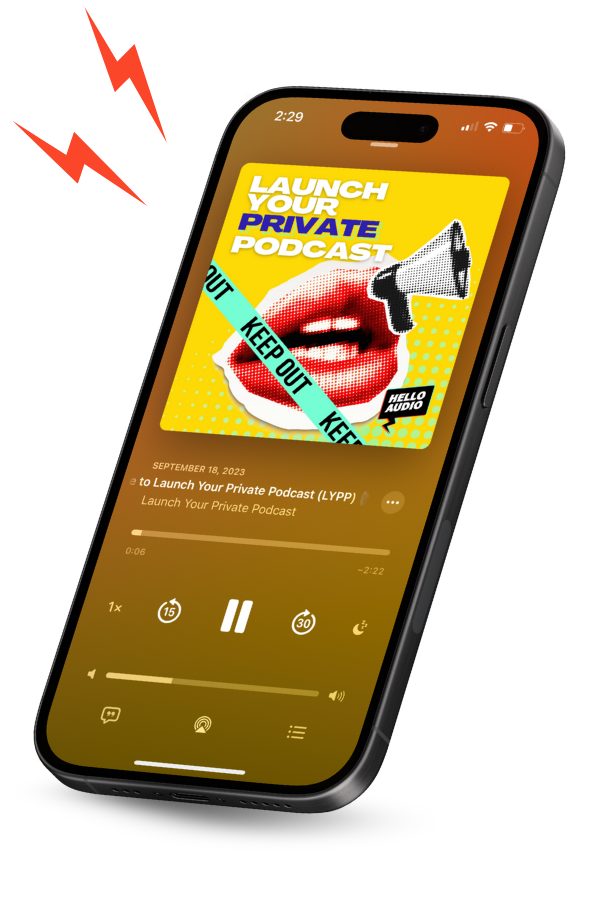
This is why many creators use Hello Audio. It is a private podcast platform that lets you turn existing content like course modules, coaching calls, and membership content into private podcast feeds. It provides clear, listener-level analytics to track exactly how your audience engages with every episode.
Sign up with Hello Audio to know now.
How Listener Analytics Work for Private Podcasts
Let’s see how listener analytics works for private podcasts:
Unique RSS Feeds for Each Listener
Podcasts are delivered using RSS feeds, which tell podcast apps where to find the audio files. In public podcasting, everyone uses the same feed. In private podcasting, each listener gets their own unique feed, so you can tell exactly who accessed the content.
This also helps you recognize the same listener over time, so their activity is tracked across sessions instead of being counted as separate plays.
Authentication and Access Control
Before a podcast app can load a private feed, the system checks whether the listener has permission to access it. Since each request is verified and tied to a specific user, you can track who is listening and connect every interaction back to that person.
This is what allows you to move beyond anonymous data and see individual listening behavior.
Tracking Listens Instead of Just Downloads
Public podcast analytics often rely on download requests, which only show that an audio file was delivered to a device. With private podcasts, you can track actual playback activity, like how long someone listened, whether they finished the episode, and how often they came back.
This gives you a much clearer picture of real listening instead of estimated listening.
Centralized Analytics Across Listening Apps
With public podcasts, listening happens across multiple apps like Apple Podcasts, Spotify, or Overcast, and each one reports data differently.
When it comes to private podcasts, everything is tracked through the feed itself, so you can see all listener activity in one place instead of pulling data from different platforms.
User-Level Engagement Data
Because each listener has their own feed, you can see how individuals interact with your content instead of just looking at overall numbers.
This makes it easier for you to spot who’s active, who dropped off, and who keeps coming back to new episodes, which is especially useful if you have to deal with memberships, courses, and internal communications.
Secure Tracking for Restricted Content
Since only approved listeners can access your podcast, all activity happens within a controlled environment.
This means the data you see, like plays, completion rates, and listener activity, is tied to real users, giving you more reliable insights into how your content is being used.
How to Choose the Right Private Podcast Listener Analytics Solution
The analytics features can vary quite a bit between private podcast platforms, so it’s worth looking closely at what each one actually offers. Choosing the right solution helps ensure you can track listener activity clearly and reliably.
Here are a few factors to consider:
- Level of detail in analytics: Some platforms only show downloads, while others show how each listener uses an episode. If metrics such as completion rate, active listeners, or repeat plays are important to you, choose a platform that can track and report them clearly.
- Ease of use: The analytics should be easy to understand without digging through a lot of settings. You should be able to upload audio, manage listeners, and see what’s happening without needing extra tools.
- Real-time analytics: Some platforms update analytics instantly, while others have a delay. If you’re using your podcast for active programs, having near-real-time data can help you quickly see how listeners are responding.
- Integrations and automation: If your podcast connects to a course, email list, or membership, analytics should connect too. Linking listener activity to your CRM, email platform, or course software makes it much easier to see how your content fits into the bigger picture.
- Scalability: As your audience grows, your analytics should continue to provide clear data without becoming harder to manage. A good private podcast platform should handle small groups, large memberships, and internal teams without changing how analytics are reported.
- Reporting and insights: You should be able to easily interpret and act on the analytics you gained. A good platform will give you clear insights into listener behavior, drop-off points, and trends over time, so you can make data-backed decisions.
Frequently Asked Questions (FAQs)
Below are a few common questions about private podcast analytics and how they work:
How Accurate is Private Podcast Listener Data Compared to Web Analytics Tools?
Private podcast analytics are most accurate for measuring listening, while web analytics tools are designed to track on-page activity.
The private podcast data you get is based on authenticated access and playback, so it provides valuable insights, such as who listened and how much audio was actually consumed.
When it comes to web analytics, it can only track visits and clicks; it doesn’t show whether someone actually listened to the content.
How Secure Are Private RSS Feeds from Unauthorized Access?
Private RSS feeds are restricted to approved listeners and usually protected with unique links or login-based access.
This means that only verified users can access the feed, and if you find any shared or misused links, you can easily revoke access or restrict them to prevent unauthorized listening.
Can Private Podcast Analytics Track Individual User Progress Across Multiple Episodes?
Yes. Private podcast platforms can track listener activity across episodes, allowing you to see who listened, how often they return, and how far they progress through the content.
Are Private Podcasts Suitable for Enterprise Teams?
Yes. Private podcasts are commonly used for internal training, onboarding, and team communication because you can control access and track listener engagement.
Conclusion
You can utilize private podcast listener analytics to the fullest when the platform is built for private content. You’ll then be able to gain listeners’ behavior, like who’s listening, how far they get, and where they drop off. Once you have that insight, it becomes much easier to tell what’s working and what needs fixing.
Hello Audio is designed around this kind of workflow, making it simple to turn existing content into private podcast feeds while still getting clear analytics on how listeners interact with every episode.
If you want to manage private podcasts and track listener engagement without a complicated setup, sign up with Hello Audio today.