


You’ve started your show and posted a few episodes, and your audience is growing weekly.
But do you have hard data on what’s working and what’s not? Is your show genuinely great, or is there a reason it hasn’t taken off yet?
You can get answers to these (and other questions) by monitoring podcast metrics.
This blog covers the 10 key metrics and why they matter. It also provides practical tips for optimizing your stats.
Let’s dive in.
TL;DR – Top 10 Podcast Metrics to Track
In a hurry?
Here are all the podcast metrics you should keep an eye on. We will cover them in detail later in the blog.
- Conversions
- Social media shares
- Website Traffic
- Number of listeners
- Number of subscribers (or followers)
- Audience engagement
- Total downloads
- Downloads over time
- Downloads per episode
- Downloads by the time of day
The easiest way to access detailed private podcast analytics is with Hello Audio. Our platform lets you get the full picture of your listener analytics per private podcast episode.
All you have to do is start our 7-day trial — no credit card is required.

Why Podcast Metrics Matter
Should you be measuring your podcast analytics?
Let’s examine the four reasons you should pay attention to your metrics.
Understand Your Listeners
Podcast tracking reveals everything—the number of listeners, the region they’re listening from, the devices used, listening duration, top-ranked episodes, and more.
Armed with in-depth information, you can generate content ideas that resonate with your audience, ultimately boosting your podcast’s success rate.
Track Your Podcast Growth
Every podcaster’s number one goal is to grow their podcast. Reviewing your analytics regularly can help you understand your podcast’s performance.
For example, increased downloads, listener numbers, and subscriptions could indicate that your podcast is doing well.
Once you’ve gathered actionable insights, use them to better your podcast and build your audience.
Evaluate the Earning Potential
Podcasting is an excellent way to build an online community with your audience and increase brand awareness. By leveraging your podcast stats, you can create highly targeted ads.
Still, the analytics provide valuable data to attract potential sponsors to partner with you. So, the listeners’ demographics will allow you to monetize your podcasts and earn revenue.
Align Your Marketing Goals
Once you can see what’s working and what isn’t, you can change your podcast marketing strategies.
For example, you can analyze the impact of various podcast ads and make informed decisions, such as adjusting your podcast schedule and changing the ad placement.

Why Engagement Signals Matter More Than Raw Download Numbers
Downloads are often treated as the ultimate measure of podcast success. They’re easy to track and look impressive on a dashboard. But on their own, they don’t tell you how your podcast is actually performing.
A download only shows that an episode was requested. It doesn’t tell you whether someone has actually listened, how long they stayed, or whether the content resonated with them.
That’s where you need engagement signals to get the full idea.
Engagement metrics reveal how your listeners are interacting with your podcast and whether they truly can connect with your content. These signals matter more because they reflect attention, interest, and loyalty, not just reach.
Here’s why engagement matters more:
- Downloads don’t equal listens: If you see just a download, it means the episode has been accessed. You won’t be able to confirm whether someone pressed play, listened all the way through, or dropped off after a few minutes.
- Engagement shows content quality, not just reach: Metrics such as completion rates and retention indicate whether your listeners find your episodes valuable enough to stick around.
- Engaged listeners are more likely to return: A strong engagement signal often correlates with repeat listens, subscriptions, and long-term audience growth.
- High engagement leads to better conversions: Listeners who are actively engaged with your content are more likely to click links, respond to calls to action, or even purchase promoted products.
- Sponsors care about attention, not just audience size: Advertisers increasingly look for proof that listeners are paying attention, not just downloading episodes.
- Engagement highlights what’s working and what isn’t: These signals help you identify which topics, formats, or episode lengths resonate most with your audience.
Think of downloads as the invite list to a party. Engagement shows who stayed, who joined the conversation, and who’s excited to come back next time.
As link6616 mentioned on Reddit:
“I love podcasts. I am subscribed to about 40 of them. How many podcast Twitter accounts do I follow? 4. And that’s only after listening to those podcasts for months.”
10 Key Podcast Metrics to Track
Not sure what metrics are worth tracking?
Here’s a full breakdown of the top 10 key metrics that match your specific goals, such as improving traffic to your site, building your community, or selling a product.
Podcast Advertising Metrics
So, what metrics measure the impact of podcast advertising?
Take a look at four podcast performance metrics you should track:
1. Conversions
You should check your podcast-related sales to monitor your podcast ads’ performance.
For instance, you can track purchases directly from podcast promos and discount codes.
With this data, you’ll see the products that appeal to your listeners, measure your ROI, and make informed future decisions.
2. Social Media Shares
If your ad campaign aims to reach new audiences or build awareness of your brand, you should monitor the trends in brand mentions and sentiment.
Check the number of social shares, comments, and likes your posts receive.
A consistent increase in these numbers shows your podcast is gaining popularity. You’ll also get an idea of the content that resonates with your listeners.
3. Website Traffic
You might consider paid promotion to drive traffic to your podcast site and draw in new leads.
Check your traffic data using tools like Google Analytics and monitor the visitors from your podcast ads. This metric will help you monitor how your engaged audience grows.

Podcast Audience Metrics
We’ve outlined three metrics to determine your listeners’ habits and preferences:
4. Number of Listeners
One of the most important metrics is the total listens. As mentioned above, potential sponsors are more likely to partner with you when your podcast has more listeners.
Plus, you’re likely to earn more with a vast audience.
5. Number of Subscribers (or Followers)
On the same note, the number of subscribers is another audience metric.
These are the active and loyal listeners who subscribe to your show. Plus, they receive a notification every time you publish a new episode.
Use the analytics tools your podcast platform provides to measure your podcast followers.
When the number of subscribers rises, your content is entertaining, while losing followers might mean your show has become less engaging.
6. Audience Engagement
Audience engagement measures the number of people who listened to your podcast.
For example, Apple Podcasts shows the number of people who listened to your episode for at least 20 minutes.
Podcast Download Metrics
Wondering how to see how many downloads a podcast has?
Check out these four metrics below:
7. Total Downloads
One of the easiest podcast success metrics to track is the total downloads. It shows the number of downloads an episode has received since you published it.
This metric helps you determine the top episodes and adjust your content accordingly.
8. Downloads Over Time
Tracking your episode downloads lets you understand the lifespan of your content and shows how your podcast has grown over time.
For example, if an episode receives steady downloads long after publication, your content has a long shelf life.
This metric provides you with detailed information on the content that is evergreen and the content that has become outdated.
9. Downloads Per Episode
These are the unique times each of your podcast episodes is being downloaded to a tablet, computer, or mobile device. This metric helps you know the average podcast downloads per episode.
With this data, you’ll know if your podcast format and content are engaging for your target audience.
10. Downloads by the Time of Day
These are the most popular days and times your show gets the most downloads.
You will get insights on the best day and when your audience is most active. Thus, you can set a publishing schedule when your listeners expect your podcast.
Use any of these metrics to know how your podcast show is doing and what you can improve. In the next section, we’ll talk about how you can monitor these ten metrics.

What Analytics Help Identify Your Most Engaged Listeners?
Engaged listeners are the ones who stay, respond, and even come back after hitting play. And if you want to spot them, you need analytics that go beyond downloads and show behavior over time.
Here are the key metrics that show you what your true engagement is:
- Engaged listener count (platform-defined engagement): Platforms like Apple Podcasts provide a report showing the number of listeners who’ve played a significant portion of an episode, usually at least 20 minutes or 40% of the episode. That’s a built-in gauge of genuine attention.
- Completion rate: This analytic measures how much of an episode a listener has actually consumed. When you have a high completion rate, it means that your content holds attention to the end, the strongest sign of engagement.
- Average listening duration: Shows how long listeners stay before dropping off. This helps identify weak openings, slow segments, or episodes that are too long.
- Listener retention: This is how you can track whether your listeners have returned for your future episodes. If you find consistent repeat listens, it signals loyalty and habit formation.
- Unique listeners vs downloads: Here, the unique listeners represent real people, while downloads can include either repeat or automatic downloads. When you have strong engagement, it usually shows up as healthy, unique listener growth paired with retention.
- Drop-off and skip behavior: There are some analytics tools that let you map where listeners drop off or skip ahead. These patterns tell you which segments are resonating and which are losing attention.
- Listener feedback and actions: Reviews, social shares, emails, and messages are qualitative signals that listeners are actively thinking about your content.
- Subscriber and follower trends: Subscribers have opted in to receive new episodes, which often correlates with a more committed audience.
How to Track Podcast Metrics
How you measure your podcast performance will depend on where you host your podcast.
Here are three common ways to track your podcast stats:
1. Your Hosting Platform
Typically, hosting platforms store your video and audio files and publish them on listening platforms like Spotify, Apple Podcasts, and Overcast.
Let’s say you host your private podcast on Hello Audio. Our platform lets you get comprehensive data, like the listeners’ play time and your most liked private podcasts.
2. Podcast Distribution Platforms
Distribution apps like Google Podcasts and Spotify provide a different set of analytics. So, if you want platform-specific statistics, you can monitor metrics from their built-in analytics dashboard.
For example, if your podcasts are on Spotify, you can measure metrics like listens, play count, audience retention, and impressions displayed on the Spotify for Podcasters analytics dashboard.
Further Reading: Check out our in-depth guide on ‘how to distribute a podcast.’
3. Third-Party Analytics Tool
Use dedicated podcast analytics tools to get more detailed data. Podtrac, for example, analyzes podcast data like downloads. It also doesn’t require switching hosts and comes with a ranker to show some of the best podcast shows.
It also compares your show against the industry podcast benchmarks. Remember, there are both free and paid options.
Now that we’ve discussed the three ways to measure metrics, let’s examine the five tips for optimizing your metrics in the next section.

How to Optimize Podcast Metrics
You can use insights from the podcast metrics to elevate your podcasting game.
Check out these five strategies:
- Create content your listeners love: Use data like the average listening time and downloads per episode to develop content that resonates with your listeners.
- Boost listener retention: Once you understand the percentage of listeners dropping off your show, you can adjust your content to keep them engaged.
- Improve engagement: You can boost interaction with your audience by asking them to leave reviews, comment, and share on social media.
- Measure qualitative data: Remember that qualitative podcast stats, such as your reviews, mentions, likes, and shares, are meaningful, too.
- Use the right platform: Choose the Hello Audio platform, where you can create, publish, and receive in-depth listeners’ analytics on each of your private podcast episodes.
5 Challenges to Address When Measuring Podcast KPIs
KPIs inform your decisions and fuel your podcast growth, but there’s a catch.
You must address these five challenges first:
- Researching your audience and defining your goals: To draw excellent conclusions from your data, you must first conduct in-depth research on your audience and define your goals.
- Choosing the right KPIs: Although several metrics are available, you must select only the ones that align with your podcast goals.
- Reviewing your metrics regularly: Another challenge is choosing specific and tailored metrics for different contexts. So, review your metrics and adjust them accordingly when implementing new marketing strategies.
- Making data-driven decisions: It’s easy to collect abundant data and do nothing with it. Ensure you use your analyzed insights to make informed decisions.
- Leveraging the best analytics tool: Obtaining clear and understandable podcast statistics is another challenge. Use analytics platforms like Chartable to collect and analyze your podcast data.
Top 3 Podcast Analytics Tools
When choosing the analytics tool that best fits your podcast, consider the metrics it provides, scalability, and whether it offers hosting.
Check out our list of the three powerful podcast analytics tools you can try:
1. Hello Audio
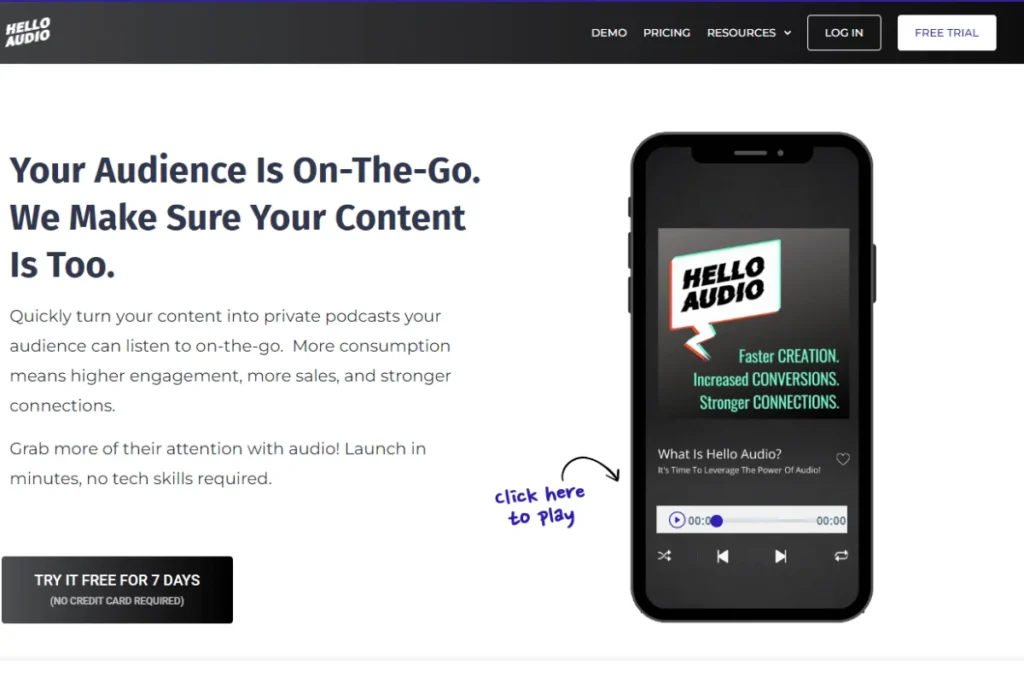
With Hello Audio, you can effortlessly convert your existing video and audio files into private podcasts. Our incredibly easy-to-use platform lets you launch and publish your private podcasts directly on distribution platforms like Spotify in minutes.
Additionally, you can access comprehensive listener analytics for each private podcast.
Watch our free demo to see how Hello Audio can help you better understand your audience.
2. Podtrac
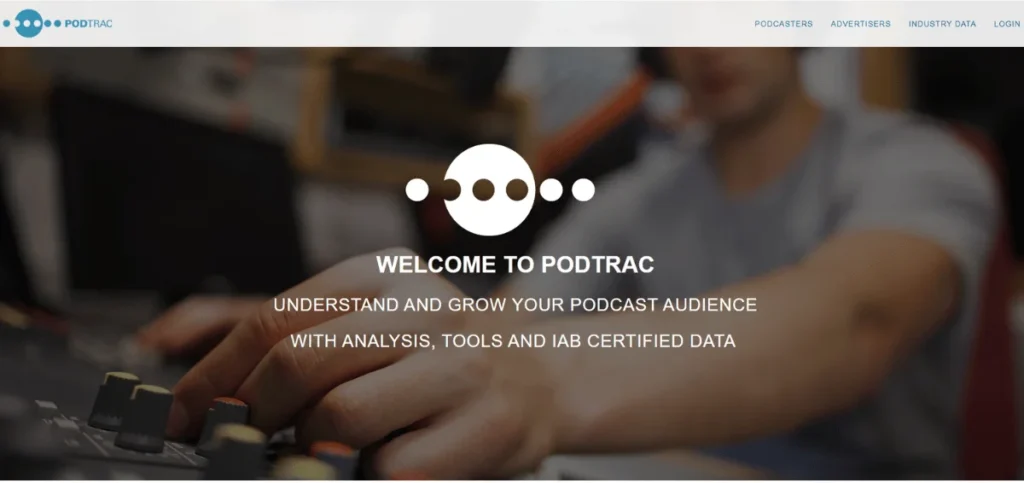
Podtrac is another podcast analytics tool.
Its dashboard reflects your audience’s insightful data and daily podcast growth. This tool also offers podcast trends on all the listening platforms on which your show is hosted.
3. Chartable
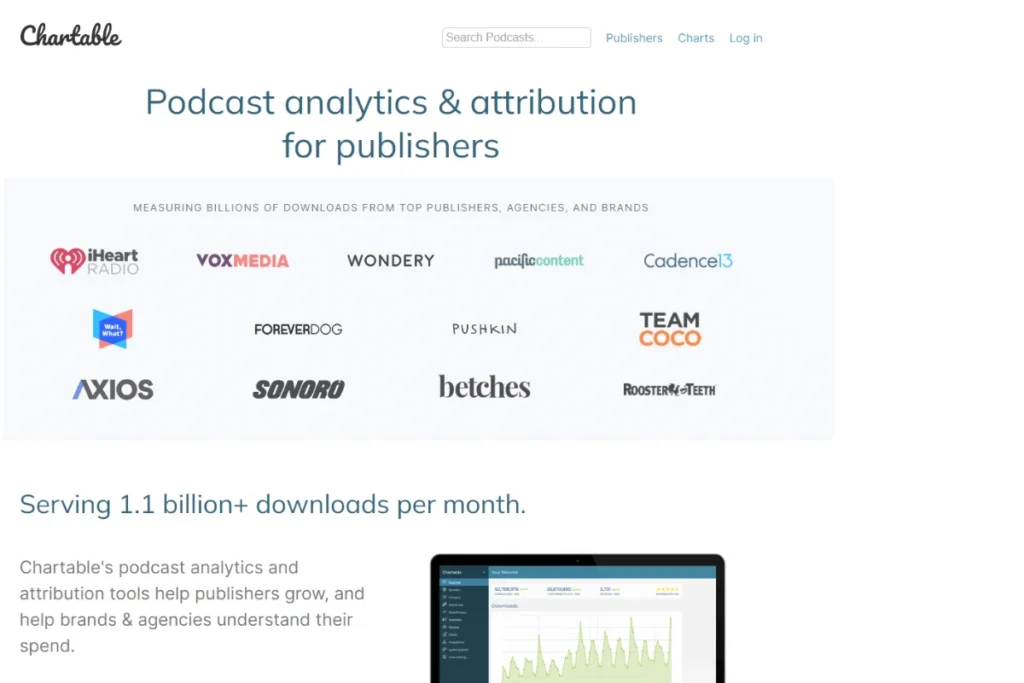
Another analytics tool on our list is Chartable.
One of its features is SmartLinks, which offers insights into the marketing channels working for your podcast. It also has the SmartPromos feature, which tracks the performance of your podcasts and ads.
Additionally, it has the Smart Ads feature to track the effectiveness of your ad campaigns.
Frequently Asked Questions (FAQs)
Below, we’ve answered the common questions about measuring podcast success:
How Often Should I Check My Podcast Metrics?
You might have to analyze some metrics daily, like the performance of your podcast episode. You can check other metrics, such as your episodes’ ranking, number of followers, and downloads per episode over time, monthly or annually.
The exact time for reviewing metrics would depend on the specific goals and metrics you’re monitoring.
How Do I Calculate the ROI of My Podcast Based on Metrics?
If you want to determine the return on investment (ROI) you get from your podcast, you should analyze the following:
- The sales or revenue your podcast generates.
- Engagement from your listeners, like comments, feedback, and social shares.
- The downloads, unique listeners, subscribers, social media followers, and website traffic.
Ultimately, the metrics you use to measure your ROI depend on your goals.
Are Downloads Still Relevant for Measuring Podcast Success?
Yes, but only when you use it as a baseline metric.
Downloads show you what your reach is, but hide the engagement rate. They’re especially very useful for tracking visibility and growth, but they don’t indicate whether listeners actually consumed or valued your content. To measure real success, downloads should always be paired with engagement metrics.
What is a Good Average Consumption Rate for Podcasts?
A good average consumption rate is 75–80%.
Rates in this range indicate that most listeners are staying through the majority of an episode. Higher rates usually reflect strong content relevance, pacing, and audience alignment.
What is the Best Engagement Metric for Private Podcasts?
Completion rate is the most reliable engagement metric for private podcasts.
Since private podcasts focus on a specific audience, success is better measured by how fully episodes are consumed rather than how many times they’re downloaded.
Conclusion – How To Measure Podcast Success
As we wrap up, measure your show’s growth using the ten podcast metrics discussed above.
But you don’t have to crunch numbers by yourself.
Hello Audio is an all-in-one platform for launching, managing, and growing your private podcasts. Plus, you can access in-depth data on your listener’s habits within our platform.
Get started with our 7-day trial for free and gain crucial insights on how to grow your private podcasts.