


If you’re planning to create and distribute audio content, the platform you choose directly affects how that content is experienced. Some tools are built to support public or subscription-based podcasts. Others are designed to deliver audio as part of a course, program, membership, or paid offering.
Hello Audio and Supercast fall into these two different categories. While both use private podcast feeds and work inside familiar podcast apps, they’re built with different priorities in mind.
This guide breaks down Hello Audio vs. Supercast in plain terms, so you can see which platform fits how you want to use audio, and how you want to charge for it.
TL;DR – Hello Audio vs. Supercast
If you’re short on time, here’s the high-level comparison that captures the real difference between Hello Audio and Supercast:
| - Private and public podcast feeds - Built-in access control, gating, and listener management - Drip releases, expiring content, and structured delivery - Easy repurposing of existing audio and video content - Flat pricing with unlimited listeners | - Built specifically for paid podcast subscription - Simple listener checkout and subscription flow - Supports multiple paid feeds and bundles - Uses your own Stripe account |
| - Pricing increases as you move into advanced plans - Private podcasting may require light listener education | - Pricing scales with subscriber count - Limited flexibility beyond subscription podcasting - No tools for content dripping or expiring access |
What is Hello Audio?
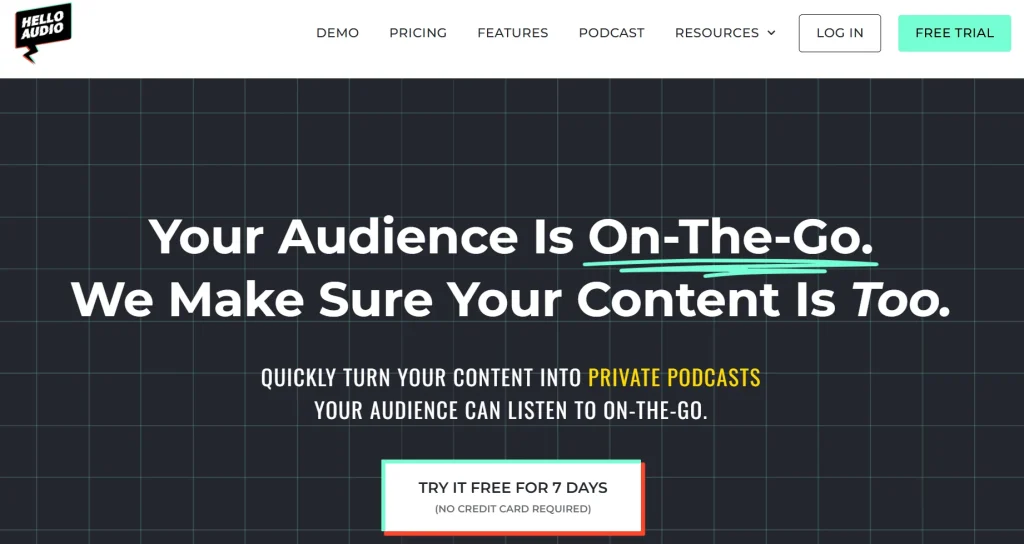
Hello Audio is a private podcasting platform built for creators and businesses who want their content to actually get consumed. Instead of locking audio inside course dashboards, membership portals, or file libraries, Hello Audio delivers content through private podcast feeds that listeners can follow in the apps they already use, like Apple Podcasts, Spotify, and Overcast.
The key difference is intent. Hello Audio isn’t trying to help you grow a public podcast audience. It’s designed to help you deliver structured, gated, or paid audio in a way that fits naturally into your audience’s daily life.
You control who gets access, how long they have it, and how content is released. That makes Hello Audio a strong fit for courses, memberships, coaching programs, internal teams, and premium content libraries where completion and engagement matter more than download numbers.
Rather than asking people to log into yet another platform, Hello Audio meets listeners where they already are and removes friction from the listening experience.
Many creators have shared how this works in practice. One Reddit user, easypeasymuonsqueezy, explains:
“We do this at HelloAudio.fm, which mainly focuses on private podcast features. You get unlisted feeds with a unique link for each listener. You can sync up signups with your email list to automatically add folks to both if you’d like.
And you can create your public podcast in the same account when you’re ready. If it’s the same content, you can copy the episodes across feeds to not repeat the work.”
Hello Audio Features
Hello Audio’s features are designed around controlled delivery, engagement, and ease of use for both creators and listeners.
Key features include:
- Private podcast feeds: Create invite-only podcast feeds that listeners can access through their preferred podcast apps. Access is fully controlled by you and can be granted or revoked at any time.
- Public podcast feeds: Alongside private feeds, Hello Audio also supports public podcasts, giving creators flexibility to run both public and private content from one platform.
- Video-to-audio conversion: Upload audio or video files and automatically convert them into podcast episodes. This makes it easy to repurpose existing content like workshops, recorded calls, or course videos without extra tools.
- Simple listener access: Listeners receive a unique link that opens directly in their podcast app. No new logins, dashboards, or passwords required.
- Drip scheduling and expiring content: You can release episodes over time or set your content to expire after a certain date. This is very useful if you run cohorts, time-bound programs, or subscriptions that end.
- Built-in monetization: Sell access to private feeds directly through Stripe. Payments, access, and revocation are handled within Hello Audio, without the need for a separate membership tool.
- Listener management and tagging: Track your listeners at an individual level, apply tags, and manage access based on specific programs, purchases, or engagement.
- Dynamic and personalized delivery: You can customize your intros, outros, and content delivery logic, which will help you create different listening experiences for different audiences.
- Integrations and automation: Connect Hello Audio with tools like Zapier, email platforms, and course software to automate access and workflows.
- Audio remastering: Improve sound quality with built-in audio enhancement powered by Dolby.io, included with each plan.
Together, these features focus less on publishing and more on making audio easy to follow. Book a demo and start private podcasting today.
Hello Audio Pricing
Hello Audio offers a 7-day free trial with no credit card required, so creators can explore the platform before committing.
Pricing is based on features and the number of feeds, not listener counts. All plans include unlimited listeners, unlimited episodes, and unlimited storage.
Here’s a snapshot of the main plans when billed annually:
Starter – $14/month
- 1 private feed + 1 public feed
- Unlimited episodes and listeners
- Convert video-to-audio automatically
- Listener signup pages with Stripe
- Zapier steps and core integrations
- Monthly audio remastering credits
Pro – $39/month
- Everything in Starter
- 3 private feeds
- Dripped feeds and expiring content
- Listener tagging and advanced release controls
Powerhouse – $81/month
- Unlimited private feeds
- 2 public feeds
- Unlimited transcripts
- Dynamic content and automated actions
- Custom branding and priority support
Every plan includes core listener management, feed control, and delivery tools. Audio remastering credits are included each month, with the option to purchase more if needed.
Hello Audio Use Cases
Hello Audio works best when audio is part of something that provides a broader experience, not just a standalone podcast.
Here are some common use cases:
- Courses and programs: You can easily turn your course lessons, workshops, and recordings into private podcast feeds so students can listen on their own schedule and actually finish the material
- Memberships and communities: Deliver exclusive audio to members without requiring them to navigate dashboards or content libraries.
- Coaching and masterminds: If you want to share your private calls, replays, and bonus content with clients, you can do that through a controlled audio feed.
- Paid or premium podcasts: Sell access to private audio series or premium content without building a custom paywall system.
- Cohorts and time-bound offers: Drip content week by week, with access automatically expiring when a program ends.
- Internal team podcasts: Private feeds make it simple to share onboarding materials, training, and leadership messages securely within your organization.
- Content repurposing: Convert all your existing video, webinars, or long-form content into audio to extend its lifespan and reach.
In short, Hello Audio is best when you want audio to be a delivery format for the value you already create and sell, and when listener engagement matters more than public visibility.
What is Supercast?
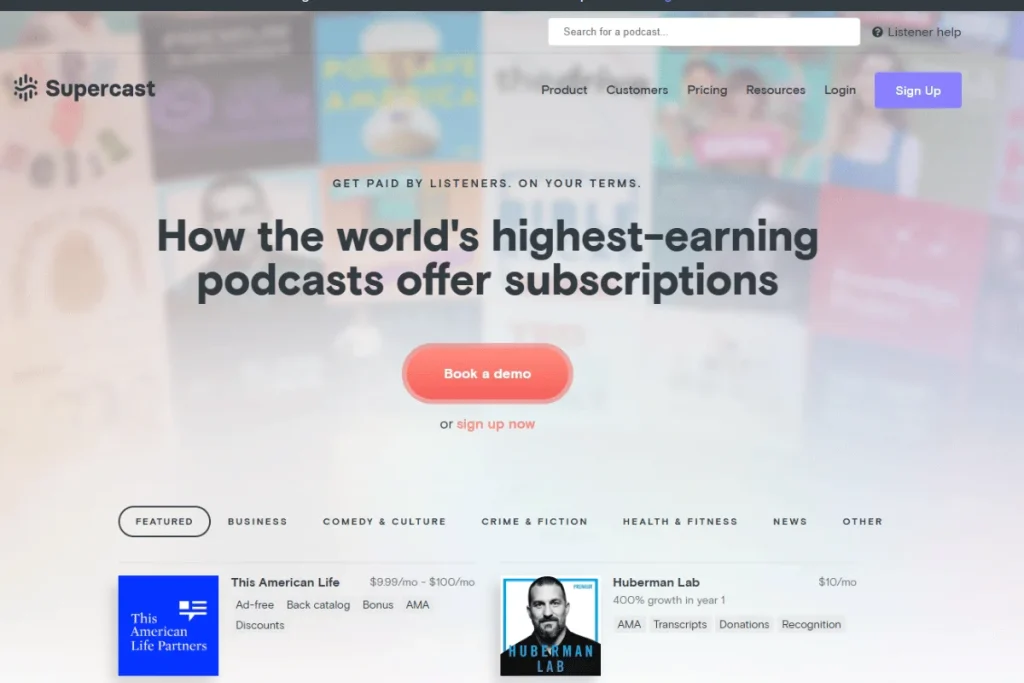
Supercast is a subscription-focused podcast platform that allows creators to charge for private, premium content. Instead of public podcasts aimed at wide distribution, Supercast focuses on helping podcasters monetize their audience by offering paid feeds that work in apps like Apple Podcasts, Spotify, and Overcast.
The platform is designed for podcasters who already have an engaged audience and want a straightforward way to sell subscriptions without building a separate membership system. It handles subscription management, payments, and private feed delivery, but doesn’t include advanced content management or engagement features.
Supercast Features
Supercast provides the basic tools needed to run a subscription podcast:
- Private feed delivery: Paid episodes are distributed through private RSS feeds that listeners can subscribe to using familiar podcast apps.
- Subscription management: You can set monthly or annual subscription plans, offer free trials, and manage multiple shows or bundled subscriptions.
- Landing pages: Simple storefront pages that let you describe subscription options and capture sign-ups.
- Analytics: Track revenue, subscriber counts, and basic engagement metrics.
- Integrations: Works with Stripe for payments and integrates with email or membership tools to streamline workflows.
While it covers the essentials for a paid podcast, Supercast doesn’t offer tools for content dripping, expiring episodes, advanced audience segmentation, or audio enhancements. It’s a solution aimed primarily at content monetization, not full content engagement.
Is Supercast Free?
No. Supercast does not offer a free plan. Instead, pricing is based on the number of paying subscribers: $0.59 per subscriber per month, plus Stripe processing fees.
This subscriber-based pricing model keeps the entry simple for small audiences, but costs scale with your paying listeners. While there’s no free plan for creators, you can offer free trials to prospective subscribers as a way to introduce them to your content.
Supercast Pricing
Supercast’s pricing is straightforward but can become expensive as your audience grows:
- All-In Plan: $0.59 per subscriber per month (plus Stripe fees). Includes private feed delivery, subscription management, landing pages, and analytics.
- Custom solutions: For larger creators or networks, Supercast offers tailored plans with bundled shows or additional support.
Because there’s no flat monthly fee, costs are directly tied to your subscriber count. There are no built-in extras like content dripping, audio remastering, or dynamic content delivery; what you pay for is mainly for the subscription infrastructure.
Supercast Reviews
Supercast is designed to help podcasters monetize their audience, and it works reasonably well for that purpose, but it comes with some limitations.
What users like:
- Simple setup for private, paid feeds.
- Works in major podcast apps, so listeners don’t need new software.
- Easy subscription management and integration with Stripe.
Points to consider:
- Subscriber fees can become costly as the listener list grows.
- There are very few tools to help with content delivery, engagement, or customization.
- Limited advanced features like dripped content or personalized listening experiences.
- Some users have reported support and billing issues.
- Trustpilot rating: 3 out of 5, reflecting mixed feedback on support and platform usability.
Real-world feedback also highlights some challenges with Supercast. One Reddit user, self_depre_kate, shared:
I’ve had nothing but issues. Subscribed to my first show on Monday, but it won’t update in my feed or on my Podcast app, and it’s been a week since I emailed help and have heard nothing.”
Detailed Comparison Between Hello Audio and Supercast
When deciding between Hello Audio and Supercast, the key differences come down to how your content is delivered, how you manage subscribers, and how you monetize your shows. The table below breaks down the main features and shows what each platform really means for creators:
| Content Delivery & Listening Experience | Private and public podcast feeds through major apps. Supports dripped episodes, expiring content, and personalized delivery, so listeners can follow programs on their own schedule. | Paid private feeds delivered via major apps. Simple delivery with no drips or expirations; content is mostly “set it and forget it.” |
| Monetization & Payments | Built-in Stripe integration lets you sell subscriptions, run time-bound offers, and manage payments without extra tools. | Subscriptions handled via Stripe; pricing is per subscriber. No options for one-off purchases or dynamic offers. |
| Access Control | Full subscriber management. Tag listeners, control access per feed, and revoke access if needed; ideal for multiple programs or cohorts. | Access is limited to paid subscribers. No advanced tagging or segmentation; everyone with a link gets the same access. |
| Integrations | Works with Zapier, email platforms, and course software to automate workflows and communications. | Very limited integrations. Mostly relies on Stripe, with a few automation options. |
| Analytics & Listener Insights | Offers detailed listener-level data and engagement metrics so you can see who’s consuming your content and how. | Basic subscriber and revenue tracking. No listener-level insights or engagement metrics. |
| Branding & Customization | Custom branding, personalized intros/outros, and dynamic content options help create a tailored experience for different audiences. | Minimal branding. Feeds are functional but largely uniform, with limited customization for landing pages or experience. |
| Pricing | Flat-rate plans based on features and number of feeds: Starter $14/mo, Pro $39/mo, Powerhouse $81/mo. | Per-subscriber pricing: $0.59 per paying subscription/month + Stripe fees. |
Similarities and Differences
When comparing Hello Audio and Supercast, it helps to first understand what they share in common and where they diverge. Below is the breakdown of the key similarities and differences so you can see which platform aligns better with your goals.
Hello Audio and Supercast Similarities
Even though Hello Audio and Supercast are built for slightly different goals, they share some basic functionality:
- Private podcast feeds: Both platforms let you create private feeds that your subscribers can access through known podcast apps. This is the core feature needed for gated content.
- Audio hosting and delivery: Each one of the platforms hosts your audio files and delivers them reliably to Apple Podcasts, Spotify, and other popular apps.
- Subscriber management basics: You can manage who has access to your content, although the level of control differs.
- Monetization integration: Both work with Stripe to handle payments, making it simple to charge for private feeds.
- Support resources: Both offer guides, help centers, and customer support to help creators get started.
In short, if you just need a private feed to distribute audio and accept payments, both platforms can do the job.
Hello Audio and Supercast Differences
This is where the platforms really diverge, and your choice comes down to how you want to deliver, engage, and monetize your content:
- Content experience: Hello Audio offers options like dripped content, expiring episodes, and personalized delivery. Whereas Supercast delivers all the episodes at once without giving you these options, which does make it simpler but less flexible.
- Access control: Hello Audio lets you tag subscribers, manage multiple programs, and revoke access if needed. Supercast’s control is limited to paid subscriptions; everyone with the link gets the same access.
- Integrations: Hello Audio connects with email platforms, course software, and Zapier for automation. Supercast has a few integrations, relying mostly on Stripe.
- Analytics and insights: Hello Audio provides listener-level data and engagement metrics so you can see how your audience consumes content. Supercast only tracks basic subscriber counts and revenue.
- Branding and customization: Hello Audio lets you customize feeds, intros/outros, and dynamic content. Supercast is functional but minimal in branding and presentation.
- Pricing model: Hello Audio offers flat-rate plans with unlimited listeners, while Supercast charges per paying subscriber, which can get expensive as your audience grows.
Which Platform is Right for You – Hello Audio or Supercast?
At the end, choosing between Hello Audio and Supercast comes down to how you want your audience to consume the content you create and how much control you want to have over it.
When Hello Audio Makes More Sense
Hello Audio is built for creators, coaches, and businesses who want their content to actually get consumed, not just hosted. It’s a better fit if you’re:
- Delivering courses, programs, or memberships, and want your content to be easy for people to follow along on their own schedule.
- Selling private or paid audio, like premium podcasts or client-only content, without juggling multiple tools.
- Repurposing video or long-form content into audio so your audience can listen on the go.
- Running time-bound programs or cohorts where content needs to drip over time or expire after a set period.
- Managing multiple audiences and needing control over who gets access to what, and when.
- Focused on engagement and completion, not just the number of subscribers.
In short, Hello Audio works best when audio is a delivery mechanism for value you already provide, not just a way to distribute episodes.
When Supercast Might Be Enough
Supercast works if your goal is simple: you just want to deliver a private, paid podcast feed and handle subscriptions. It is very straightforward and does the basic tasks for you, but it lacks flexibility in content delivery, branding, and engagement.
You get a private feed with Stripe payments, but little else in terms of automation, analytics, or subscriber management.
The Bottom Line
Supercast covers the basics: private feeds and paid subscriptions, but it offers limited features beyond hosting and payments. Hello Audio goes further, turning your content into a consumable experience with dripped and expiring content, subscriber management, video-to-audio conversion, and integrations with email and course platforms.
Many users report measurable results: one creator saw student success rates increase by 400% when lessons were delivered via Hello Audio.
If you want to ensure your audience actually consumes your content, Hello Audio lets you control delivery, engagement, and access.
Try it free for 7 days and transform your material into an audio experience that your listeners finish.
Frequently Asked Questions (FAQs)
To help you decide, here are some of the most common questions creators have about Hello Audio and Supercast.
Is Hello Audio Better for Course Creators Than Podcasters?
Yes. Hello Audio is specifically designed to help creators deliver structured, private audio content that audiences actually finish. It works exceptionally well for course creators, coaches, and membership programs who need features like dripped content, expiring episodes, and subscriber management.
Public podcasters can use it too, but its strengths shine when audio is part of a larger learning or engagement experience.
Does Supercast Support Multiple Paid Podcast Feeds?
Supercast allows multiple private feeds, but each feed typically needs its own setup and subscription plan. While it works for creators managing more than one podcast, it doesn’t offer the same flexibility or automation tools that Hello Audio provides for handling multiple audiences or programs.
Which Platform Has Better Customer Support?
Hello Audio offers email and live chat support, an extensive knowledge base, and an active community, making onboarding and troubleshooting faster and easier. Supercast provides support as well, but user reviews suggest it can be slower to respond and less comprehensive when it comes to advanced setup or integrations.
Is Hello Audio Suitable for Enterprise Teams?
Yes. Hello Audio works well as an internal communications strategy, as well as providing training, onboarding, and leadership updates to the team. Private feeds ensure content is delivered only to the intended audience, and features like tagging, dripped content, and analytics make it scalable for enterprise use.