

Introduction
Ever pour hours into a course, a membership, or a coaching program, only to watch most of your audience never reach the end? The content is good. The problem is consumption.
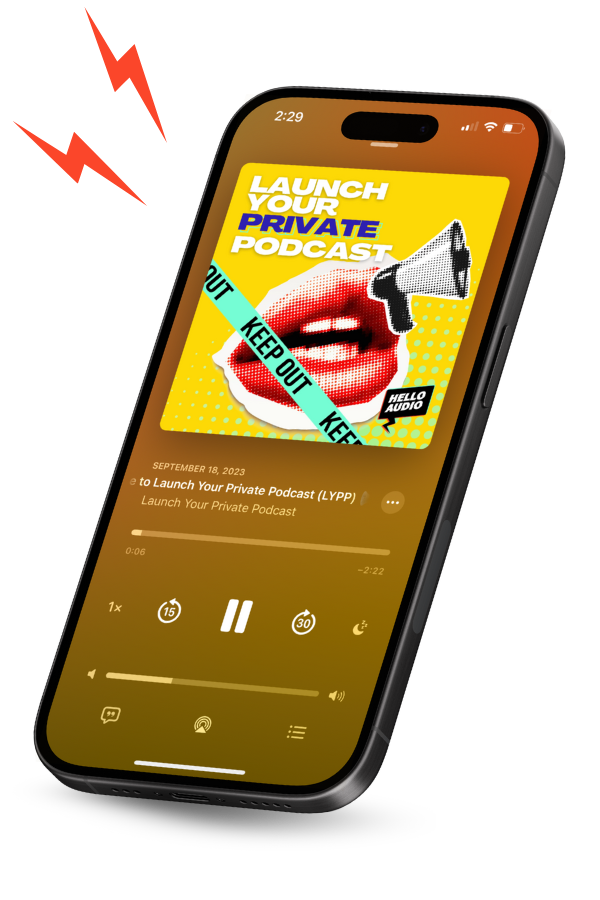
I’m Nora, one of Hello Audio’s co-founders, and it’s the problem we built the platform to solve. A private podcast drops your member-only audio straight into the podcast app your audience already opens. No logins, no downloads, no portal to remember.
Patreon can hand members a private feed too. So the real question is which one fits the job you’re trying to do. Here’s how they compare.
TL;DR: Hello Audio vs Patreon for Private Podcasts
Here is the short version before the details:
- ●Hello Audio: A private podcast platform built for one job: delivering gated audio your audience actually finishes, with per-listener feeds, tagging, and drip control.
- ●Patreon: A membership and community platform where a private feed is one perk beside tiers, posts, and chats.
- ●Delivery: Both hand listeners a private feed for their podcast app, and only Hello Audio adds per-listener feeds plus listen-level tracking.
- ●Fees: Patreon takes a percentage of your membership revenue, while Hello Audio charges a flat platform subscription and lets you collect payments through your own checkout.
- ●The pick: Choose Hello Audio when gated audio is the product and consumption is the goal. Choose Patreon when you want a full community and audio is a bonus.
What a Private Podcast Needs to Do
Before comparing two tools, it helps to name the job. A private podcast has a short job description.
It delivers an unlisted, secure feed only your invited or paying listeners can reach. It plays inside the podcast apps people already use, so there is no new habit to learn. It makes new episodes easy to add, even from a long recording or a video. And it shows you who is actually listening, so you can tell consumption from a login.
That last point matters more than most creators expect. Reaching your audience through audio is now mainstream, and according to Edison Research’s Infinite Dial, 55% of Americans age 12 and older are monthly podcast consumers. Your members already listen to podcasts. Meeting them there removes the friction that keeps content unfinished.
If you want a fuller primer on the format itself, here is how private versus public feeds compare and when each one fits.
How Hello Audio and Patreon Approach Private Podcasts
Both platforms can produce a private feed, and they come at it from opposite starting points, one from the audio and one from the membership.
Hello Audio Starts With the Audio Feed
Hello Audio is purpose-built for private podcasts. You upload audio or video, the platform converts it, and each listener gets a private feed they add to Apple Podcasts, Pocket Casts, Overcast, or the app of their choice. Around that feed sits a set of listener tools: you can see who is listening, tag individuals to control which episodes they can reach, drip or expire content on a schedule, and trigger an action when someone activates a feed or finishes a specific episode. Hello Audio calls this Listener Relationship Management, and it is the piece traditional hosting leaves out.
The platform reports tens of thousands of private feeds and tens of millions of listens to date, and it credits its own data with roughly three times higher engagement than traditional content.
Patreon Starts With the Membership
Patreon is a membership and community platform first. Creators sell tiers, publish posts, run chats, and offer perks, and one of those perks can be a private audio feed. When a member joins, Patreon generates a unique RSS link tied to their pledge that they add to a podcast app. If the pledge lapses, the feed stops updating. It is a capable feature, and it lives inside a much broader tool built around community and recurring payments, with the audio as one part of the mix.
That difference in starting point shapes almost everything below.
Hello Audio vs Patreon at a Glance
Here is how the two line up on the dimensions creators ask about most:
| Capability | Hello Audio | Patreon |
|---|---|---|
| Primary design focus | Private podcasts for creators | Membership and community platform |
| Where members listen | Their own podcast app, or Hello Audio’s player | Their own podcast app, or on Patreon |
| Private RSS feed | Core feature, one unique feed per listener | Supported, one member feed tied to a pledge |
| Access control | Tag listeners to control episode access | Access tied to membership tier |
| Listener-level tracking | See who listens, episode by episode | Limited to membership and post activity |
| Content pacing | Drip and expiring feeds built in | Post scheduling, no native drip or expiring feeds |
| Automations | Trigger actions on feed activation or specific listens | Membership and post workflows, not listen-based |
| How you get paid | Your own checkout, platform takes no cut of sales | Patreon takes a percentage of membership revenue |
| Best for | Gated audio where consumption is the goal | A paid community where audio is one perk |
The table shows the shape of the decision. The sections below walk through the parts that carry the most weight: delivery, access, pacing, fees, and ownership.
Where Hello Audio and Patreon Differ
Feature lists blur together fast, so here are the differences that actually change your day-to-day:
Delivery and the Listener Experience
Both platforms deliver a private feed to a real podcast app, and that already beats asking members to log in to a portal. Apple Podcasts for Creators documents how premium and subscriber audio is delivered by RSS. Independent apps accept the same private feeds, so your audience keeps using whatever they already open.
The gap shows up in personalization. On Patreon, a member’s feed reflects their tier. On Hello Audio, you can build personalized podcast feeds per listener and change what each person hears based on what they do. Two members can hold different feeds from the same library, which is hard to pull off when the feed is a byproduct of a membership tier.
Access Control and Listener Tracking
Patreon ties access to the pledge. Someone pays, the feed works. They cancel, it stops. That is clean for a straightforward paid membership.
Hello Audio gives you finer control. You tag listeners to open or close specific episodes, so one feed can serve a free lead magnet, a paid course, and a coaching tier without spinning up separate products. You also see listening at the individual level, which turns a vague sense of engagement into something you can act on.
Knowing that a member stalled on episode three is the kind of signal that lets you follow up before they quietly drift away.
Content Types and Pacing
If your content unfolds over time, pacing matters. Hello Audio has drip and expiring feeds built in, so a course can release week by week and a limited-time challenge can close on schedule.
Patreon centers on posts and tiers, so you set up timed release by hand, and there is no native drip or expiring feed to handle it for you.
Fees and What You Keep
This is where creators often feel the difference most, so it is worth being precise.
With Patreon, the platform takes a percentage of what your members pay you. New creators are on a flat 10% platform fee on membership income, plus payment processing on every charge, and creators who joined earlier can sit on older rates. Those percentages come off the top of your revenue every month.
With Hello Audio, the model is different. You pay a flat subscription for the platform, and you collect membership or course payments through your own checkout and email tools. The platform delivers the audio; it does not take a slice of your sales. For a creator with a growing membership, keeping the full value of each payment adds up.
Because pricing on both sides changes, confirm the current numbers for your situation before you decide. The structural point holds either way: one model charges a percentage of your revenue, the other charges a flat rate for the delivery platform.
Content Ownership and Portability
On Patreon, your audio and your audience live inside Patreon’s walls. That is convenient while you are there and less convenient the day you want to leave. Hello Audio keeps the audio and the listener relationship in your hands, connected to your own payment and email stack, so your content stays yours to move.
Hello Audio was built for exactly this job, so the listener tools come standard: a private feed for each listener, tagging that controls who hears which episodes, and drip and expiring feeds for content that unfolds over time. The quickest way to judge the fit is to watch it run.
Watch the instant demo and see how a private feed comes together.
When to Choose Hello Audio
Pick Hello Audio when private, gated audio is the actual product and getting people to finish it is what drives your results.
That usually means you run a course, a coaching program, a mastermind, or a paid community, and you would rather have members listening on the go than logging in to a portal. It means you care about consumption and want listener tools built around the feed. And it means you would rather keep the full value of each payment and run your own checkout.
The payoff is real when delivery improves. One membership owner, Dani Sheriff, cut membership churn to about 1% after replacing video replays with a private podcast for community support. Results like that vary by creator and audience and are not typical, but they show what happens when finishing the content gets easier.
If memberships are your focus, here is how creators deliver membership content as audio and keep people engaged month after month.
When to Choose Patreon
Pick Patreon when a private podcast is one piece of a bigger community.
Patreon fits when you want tiers, posts, chats, and other perks in one branded home, with audio as a bonus alongside them. It fits when you are building a broad membership around recurring support and you want the platform to handle payments, the community feed, and discovery in one place. If the private feed is a nice extra on top of your core delivery, Patreon’s all-in-one approach can save you from stitching several tools together.
The trade-off is the one covered above: less control over the listening experience, no listen-level tracking or drip and expiring feeds, and a percentage of your revenue going to the platform.
How to Move a Private Podcast From Patreon to Hello Audio
If you decide Hello Audio fits better, moving over is straightforward.
It comes down to four steps:
- 1Export your audio: Gather the audio files you already publish on Patreon. Hello Audio also converts video, so a back catalog of recorded calls or workshops can come along without a re-record.
- 2Build your feeds and set access: Upload your files, create the feeds you need, and use tagging to control who reaches which episodes. A single library can now serve several offers under one roof.
- 3Connect your payments and email: Point your own checkout and email tool at Hello Audio so new buyers get their private feed automatically when they join, and lose access when they leave. Your revenue flows through your own stack.
- 4Invite your members: Send existing members their new private link. They add it to the same podcast app they already use, and your content keeps playing right where their other shows live.
Frequently Asked Questions
A few of the questions creators ask most when weighing these two:
Can I Run a Private Podcast Without a Public Page on Hello Audio or Patreon?+
Patreon is built around a public creator page and membership tiers, so the private feed lives inside that structure.
Hello Audio is built for gated audio first, so a private feed can stand entirely on its own with no public presence.
Do My Listeners Need an Account to Listen on Hello Audio or Patreon?+
On Patreon, the private feed is tied to an active pledge, so listeners are members of your Patreon.
With Hello Audio, listeners just add a private link to their podcast app, connected to whatever membership or course tool you already use.
Does Hello Audio or Patreon Take a Cut of My Membership Revenue?+
Patreon does. New creators pay a flat platform fee on membership income plus payment processing, and some earlier creators are on legacy rates.
Hello Audio charges a flat subscription for the platform instead of a percentage of your sales. Confirm current pricing on both sides before you decide.
Can I Move My Private Podcast From Patreon to Hello Audio?+
You can. Export your audio, rebuild your feeds in Hello Audio, connect your own payments and email, and send members their new private link.
Hello Audio also converts video, so recorded calls and workshops can come along.
Which Podcast Apps Do Private Feeds Work In?+
Private feeds play in standard apps like Apple Podcasts, Pocket Casts, and Overcast.
Listeners subscribe with a unique link and hear new episodes right alongside the other shows they follow.
Conclusion
Both tools can run a private podcast, so the winner is the one built for the job in front of you.
If you want a paid community with tiers, posts, and perks in one place, and audio is a welcome extra, Patreon’s all-in-one home is a natural fit. If private, gated audio is your product and you care about members finishing it, keeping the full value of each sale, and seeing who listens, that is the job Hello Audio was made for.
We built Hello Audio to turn content you already have into a private podcast your audience can finish on the go, with a private feed for every listener, listener tracking built in, and no cut taken from your sales. Most of our new users publish their first feed within 24 hours.
Start your free 7-day trial, no credit card required, and listen to your own content the way your audience would.