

Choosing a podcast host can have a big impact on how your show grows. From publishing and analytics to monetization and recording tools, the platform you choose shapes much of your workflow.
Podbean and Spreaker are two of the most popular podcast hosting platforms. Both offer hosting, distribution, analytics, and ways to earn money from your content.
The differences become more apparent once you look at pricing, recording tools, monetization options, and the overall experience of using each platform.
In this guide, we’ll compare Podbean vs. Spreaker across the features that matter most and help you determine which platform is the better fit for your podcast.
TL;DR: Podbean vs. Spreaker
Before diving into the details, here’s an overview of what each platform does well and where each one falls short:
Built-in recording and AI tools Multiple monetization options Video podcast support Lower starting price | Strong advertising tools Live broadcasting capabilities IAB-certified analytics Collaboration features for teams |
Dashboard can feel crowded as you add more features | Steeper learning curve Editing tools are relatively basic |
Keep reading for a closer look at how Podbean and Spreaker compare in practice.
How Podbean and Spreaker Works
Both Podbean and Spreaker are podcast hosting platforms. They store your audio files, generate an RSS feed, and distribute your episodes to listening apps like Apple Podcasts and Spotify.
Here’s how both platforms work:
How Podbean Works
Podbean is a podcast hosting platform with built-in tools for recording, analytics, and monetization.
Here’s how it works:
- Upload or record your episodes through the Podbean dashboard or mobile app.
- Podbean stores your audio files and generates an RSS feed for your show.
- Connect your feed to podcast directories like Apple Podcasts and Spotify.
- Publish new episodes and let Podbean automatically distribute them.
- Use the platform’s analytics and monetization tools to track performance and earn revenue.
Because many of these features are built into the platform, creators can manage most of their podcast workflow from one place.
How Spreaker Works
Spreaker is a podcast hosting platform that combines publishing, audience analytics, and advertising tools.
Here’s how the process works:
- Record or upload your episodes through Spreaker.
- Add titles, descriptions, cover art, and other episode details.
- Spreaker hosts your files and creates an RSS feed for your podcast.
- Distribute your show to podcast apps and schedule future releases.
- Use built-in advertising and analytics tools to grow and monetize your podcast.
Its feature set is geared toward creators who want to publish and monetize audio content from a single platform.

Key Feature Differences in Podbean vs. Spreaker vs. Hello Audio
Podbean and Spreaker share many of the same core capabilities. Both platforms let you host, distribute, and monetize podcasts, which is why choosing between them often comes down to the details.
Hello Audio serves a different purpose. Along with public podcast hosting, it focuses on private feeds and making audio content easier for listeners to consume.
The table below highlights some of the biggest differences between the three platforms:
Podbean vs. Spreaker Pricing Compared
Podbean and Spreaker both offer free plans, but they take different approaches once you move to paid tiers.
Here’s how both platforms compare in terms of pricing:
Podbean Pricing
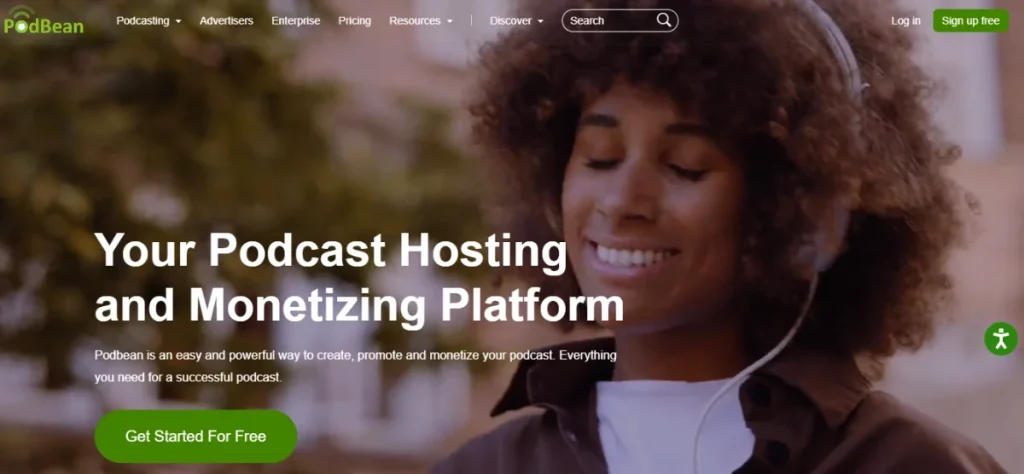
Podbean’s free plan gives new creators a way to get started before committing to a subscription. From there, the platform offers four paid plans:
- Unlimited Audio starts at $12/month (billed annually) and is geared toward audio-only creators.
- Unlimited Plus starts at $29/month and adds video podcast support.
- Network starts at $79/month and is designed for creators managing multiple shows.
- Business starts at $99/month and includes private podcasting, team management, and enterprise features.
The range of plans makes it easy to upgrade as your podcast or network grows.
Spreaker Pricing
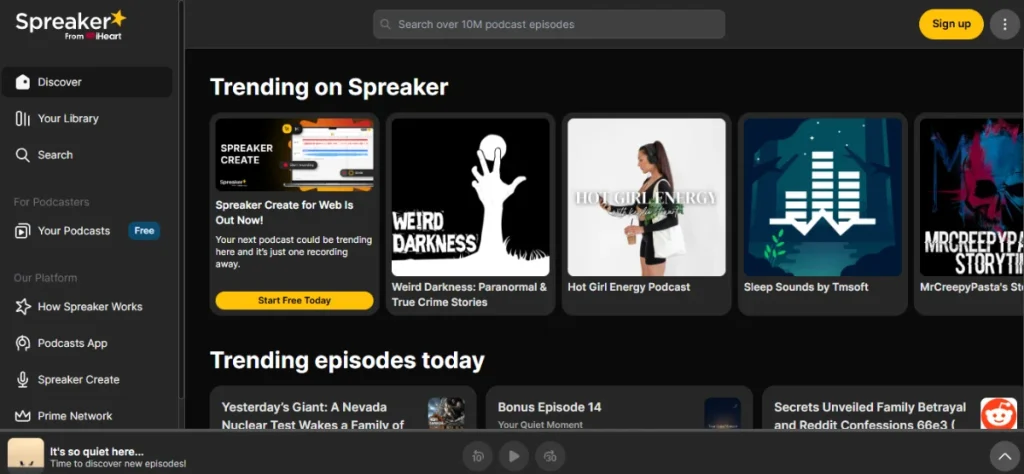
Spreaker also offers a free plan and three paid options:
- Broadcaster starts at $20/month and includes monetization tools, advanced statistics, and unlimited podcasts.
- Anchorman starts at $50/month and adds collaboration features and full analytics.
- Publisher starts at $250/month and is aimed at larger publishers that need advanced advertising tools and team capabilities.
Compared with Podbean, Spreaker has a more streamlined pricing structure.
Looking at both side by side, Podbean gives creators more ways to grow without making a large leap in price. Spreaker has fewer plans, and its higher tiers are aimed at teams and publishers that need more advanced tools.
Monetization Options in Podbean vs. Spreaker
Podbean and Spreaker give you several ways to monetize your podcast. The difference lies in how those tools are packaged and who they’re built for.
Let’s dive deeper:
Podbean Monetization
Podbean gives creators a few different ways to generate revenue:
- Ads Marketplace: Podbean helps match eligible podcasts with advertisers, making it easier for smaller creators to find sponsorship opportunities without pitching brands themselves.
- PodAds: Dynamic ad insertion allows creators to place ads in pre-roll, mid-roll, and post-roll positions. Since ads can also be inserted into older episodes, the back catalog can continue generating revenue over time.
- Patron Program: Listeners can support a show through recurring monthly payments in exchange for perks such as bonus episodes or ad-free listening.
- Apple Podcasts Subscriptions: Creators can offer subscriber-only episodes and premium content directly through Apple Podcasts.
By combining these options, creators can earn money through sponsors, paid subscriptions, and listener support instead of relying on a single source of income.
Spreaker Monetization
Spreaker’s monetization tools revolve more heavily around advertising:
- Ad Exchange: Creators can enable pre-roll, mid-roll, and post-roll ads directly from the dashboard. Spreaker handles the ad insertion process, making it relatively easy to start running ads.
- Spreaker Prime: Podcasts with at least 10,000 monthly downloads in the U.S. can apply for this program. It provides access to a larger pool of advertisers and support from an ad sales team to help secure sponsorship deals.
- Supporters Club: Fans can pay a monthly fee in exchange for exclusive content and ad-free listening, giving creators another source of recurring revenue.
Both platforms support ads and subscriptions. The difference is that Podbean spreads its focus across several revenue sources, while Spreaker places more attention on advertising and offers additional opportunities for larger podcasts.

The User Experience of Podbean vs. Spreaker
Although Podbean and Spreaker offer many of the same features, they don’t necessarily feel the same to use. From the dashboard layout to recording tools and day-to-day management, each platform caters to a slightly different type of creator.
Here’s how they differ:
Podbean User Experience
Podbean aims to keep most of the podcasting process under one roof:
- Easy to get started: Podbean’s interface is relatively intuitive, making it a good fit for first-time podcasters.
- Strong mobile app: Creators can record, edit, publish, and monitor their shows directly from the Podbean app.
- All-in-one workflow: Recording tools, AI features, analytics, monetization, and podcast websites are all accessible from the dashboard, reducing the need for third-party services.
- Feature-heavy interface: With so many tools built into the platform, the dashboard can feel busy as your podcast grows.
- Limited multi-show support on lower plans: Creators managing several podcasts may need to upgrade sooner.
Spreaker User Experience
Spreaker focuses more on publishing and monetization:
- Simple publishing workflow: Uploading episodes, scheduling releases, and distributing content are handled from a single dashboard.
- Built for live audio: Spreaker Studio supports recording, mixing, sound effects, and live broadcasts.
- Integrated ad management: Monetization tools are closely tied to the publishing workflow, making it easy to manage ads from one place.
- Detailed analytics: IAB-certified reporting provides metrics that advertisers and sponsors recognize.
- Slightly steeper learning curve: New podcasters may need more time to become comfortable with the interface.
- Basic editing capabilities: Creators who need advanced production features often rely on separate editing software.
The experience that you’ll like comes down to what you value most. Podbean keeps things relatively straightforward, while Spreaker gives creators more control over publishing and monetization.
Who Should Use Podbean vs. Spreaker
By now, you understand the different features both platforms offer. The podcast platform you need depends on what matters most to you.
There are different situations where each platform fits better:
Go With Podbean If
- You’re launching your first podcast: The platform is easier to navigate and doesn’t require much of a learning curve.
- You want most tools in one place: Recording, AI features, analytics, monetization, and website tools are all built into the platform.
- You prefer to grow gradually: Podbean’s pricing tiers make it easier to move up as your needs change.
- You plan to experiment with different revenue streams: Ads, listener support, and premium subscriptions can all be used together.
- You want video podcast support: Podbean supports both audio and video podcasts on higher-tier plans.
Go With Spreaker If
- Advertising is a major part of your strategy: The platform places a strong emphasis on ad monetization and offers additional opportunities through Spreaker Prime.
- You host live shows: Spreaker Studio supports live broadcasting and audience interaction, making live hosting seamless.
- You manage multiple podcasts: Unlimited podcasts are available across paid plans.
- You need advertiser-friendly reporting: Its IAB-certified analytics provide metrics that sponsors recognize and trust.
- You’re already comfortable with podcasting tools: Spreaker offers plenty of flexibility, though it may take longer to learn than Podbean.
What About Hello Audio?
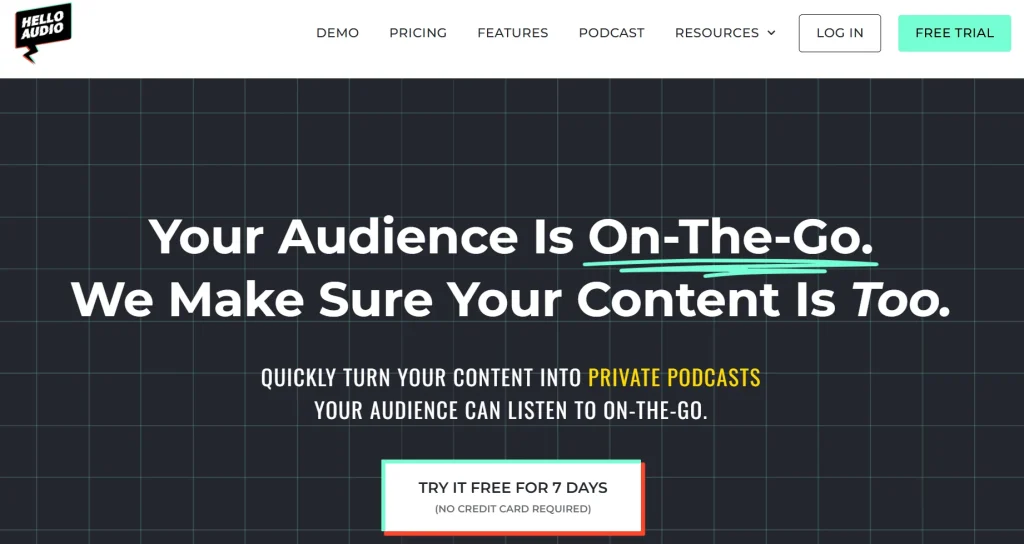
If your goal is to run a traditional public podcast, Podbean and Spreaker both offer plenty of tools for hosting, distribution, and monetization.
Many creators, coaches, and educators face a different challenge.
They already have content. The goal is to make it easier for people to consume.
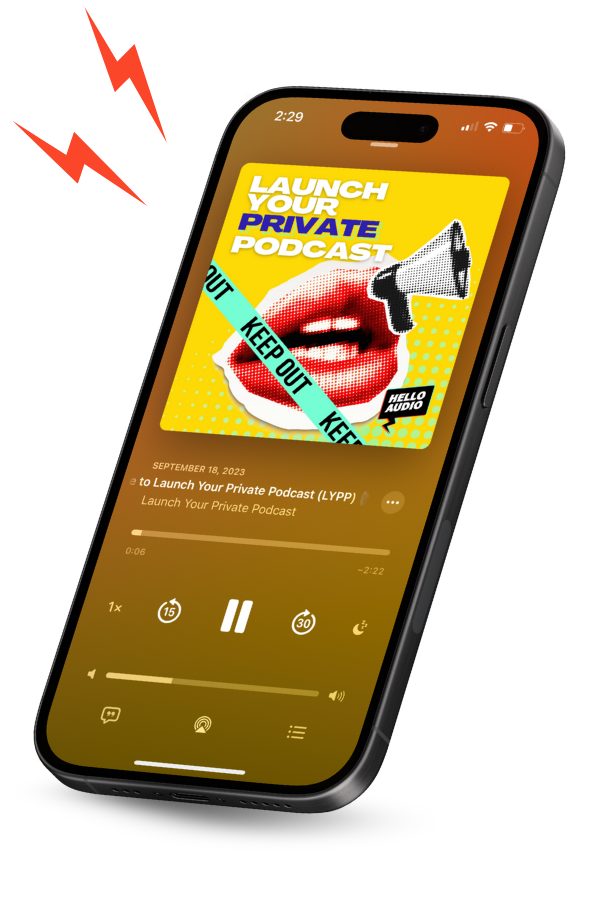
Instead of focusing primarily on downloads and advertising, Hello Audio is built around helping people consume content wherever they are. That could mean turning a course into a private podcast, delivering weekly coaching lessons through audio feeds, or giving members an easier way to access content on the go.
Some of the features that set Hello Audio apart include:
- Private podcasts: Create subscriber-only feeds for courses, memberships, coaching programs, communities, and internal communications.
- Video-to-audio conversion: Turn webinars, training, and videos into podcast feeds without creating separate audio files.
- Drip and expiring feeds: Release content over time or automatically revoke access when needed.
- Listener tagging and dynamic content: Deliver different messages and promotions based on who is listening.
- Automation and integrations: Connect with tools like ConvertKit, ActiveCampaign, Thinkific, and Stripe to automate access and workflows.
- Built for content businesses: Hello Audio is used by creators, educators, and businesses to improve engagement and make existing content easier to consume.
If your priority is delivering private audio experiences, repurposing content, or helping clients and students consume more of what you create, book a demo today.
Frequently Asked Questions (FAQs)
Before making a decision, here are a few questions that often come up when comparing Podbean and Spreaker.
Is Podbean Safe?
Yes. Podbean is a well-established podcast hosting platform used by thousands of creators worldwide. It provides secure podcast hosting and supports private podcasts with content protection features.
For organizations with more advanced requirements, Podbean also offers SSO login and SOC 2-certified security on its Business plan.
Does Podbean or Spreaker Have Better Customer Support?
Both platforms provide customer support, but the experience varies depending on your plan.
Podbean offers email support across its plans and live chat support for paid users. Spreaker provides in-app support on lower tiers and priority support on higher-tier plans.
Can You Migrate from Spreaker to Podbean Without Losing Your Episodes?
Yes. Podbean provides an RSS import tool that allows creators to transfer their podcasts from another hosting provider, including Spreaker.
As long as the migration is handled properly and redirects are configured correctly, your existing episodes, subscribers, and podcast directories should remain intact.
How Many Listeners Can You Have on Podbean and Spreaker?
Neither platform places a limit on the size of your audience.
Podbean’s paid plans include unmetered bandwidth, while Spreaker supports unlimited episodes and listener growth across its plans. In practice, the number of listeners you can have depends more on how successfully you grow your podcast than on restrictions imposed by either platform.
Conclusion
When it comes to Podbean and Spreaker, they both are strong podcast hosts. The right choice comes down to how you plan to create, distribute, and monetize your content.
Podbean is easier to grow with because of its all-in-one approach, while Spreaker is especially appealing for creators who put a heavier emphasis on advertising and live audio.
If your goal goes beyond running a traditional public podcast, consider Hello Audio as an option. From private podcasts and content dripping to video-to-audio conversion and automation integrations, the platform helps creators, coaches, and businesses turn existing content into an experience listeners can take anywhere.
Ready to make your content easier to consume? Start your free trial with Hello Audio today.