
If you’re responsible for onboarding new customers, whether you’re a founder or a program manager, you’ve seen this pattern play out.
A customer signs up, excited. You send them the welcome email, the guides, and the videos. And then engagement drops off before they ever reach their first real win.
The issue isn’t effort or intent. It’s that onboarding usually asks for focused screen time from people who are already busy.
A personalized onboarding podcast gives you a different way to guide new customers. Instead of asking them to log in and sit down, you deliver onboarding through private audio feeds they can listen to on the apps they already use, while they’re commuting, walking, or working through their day.
In this guide, let’s walk through how to plan, structure, and run a personalized onboarding podcast, and how tools like Hello Audio make delivering private onboarding audio simple at scale.
What is a Personalized Onboarding Podcast?
Unlike a standard podcast, a personalized onboarding podcast is quite unique. These particular shows cannot be located in the public directories of Spotify or Apple Podcasts. You cannot search for them.
These are private audio feeds created specifically for your customers.
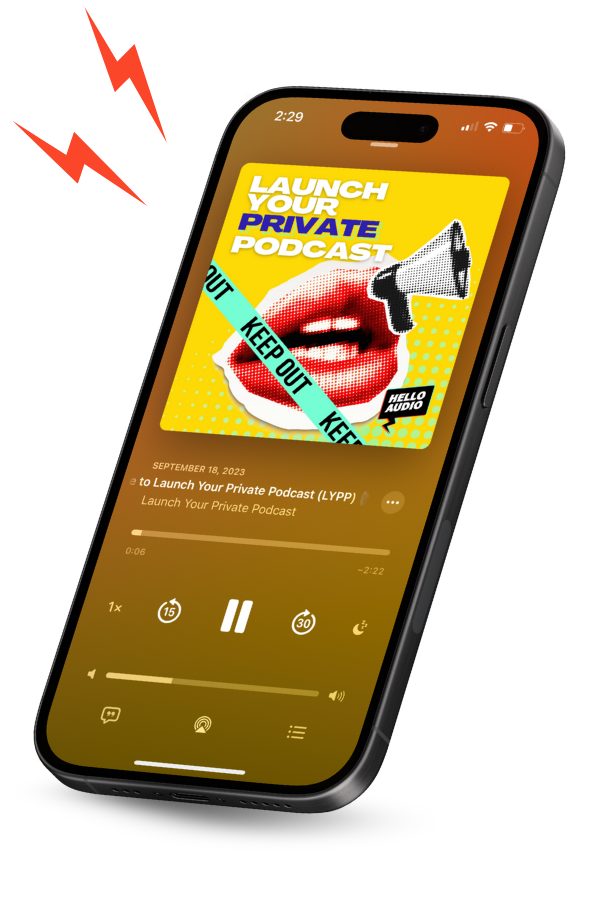
Whenever a customer purchases your product or service, they are given a special link. This link allows them to add a private feed to their podcast player of choice (which can be Apple Podcasts, Overcast, or Pocket Casts).
The content they hear is tailored to them.
The goal isn’t entertainment or audience growth. Its activation.
It replaces the boring PDF manual and long Loom videos that nobody watches. Instead of forcing them to stare at a screen, you are giving them the freedom to learn while commuting, cooking dinner, or working out.
Hello Audio founder Lindsay identified the problem of unfinished content, so she built the platform to deliver audio experiences that actually stick.
There are two main ways to “personalize” this:
- The Cohort Model: Customers are grouped by program, plan, or start date, and each group receives a dedicated feed. For example, a Q1 enterprise rollout or a new coaching cohort.
- The Dynamic Model: Audio intros or messages are customized using the customer’s name, company, or plan, creating a one-to-one feel without manual work.
The goal is simple. You want to reduce the friction of learning. You want to fit into the gaps of their day.
Why Use a Podcast for Customer Onboarding
You might be thinking that you already have a help center, you have a YouTube channel, so why do you need a podcast?
The answer lies in consumption rates.
Video requires 100% of your attention. You cannot watch a tutorial video while driving on the highway. You cannot read a help article while folding laundry. Video and text are “high-friction” formats. They force the user to stop their life to consume your content.
Audio is the only “secondary” medium. It allows your customer to multitask.
Here is why this matters for onboarding:
- Higher Completion Rates: People listen to podcasts for an average of 20-40 minutes at a time. They rarely spend 30 minutes reading a help doc. You have a better chance of explaining your value proposition in an audio series.
- Building a Human Connection: Text is cold, but audio feels intimate. When a new customer hears your voice, they feel a connection. They feel like they know you. This builds trust faster than any email sequence ever could.
- Accessibility: Your customers are not always at their desks. By giving them a mobile-first option, you meet them where they are.
- Different Learning Styles: Some people are visual learners; others are auditory learners. If you only offer video and text, you are ignoring a huge segment of the population that learns best by listening.
Who Should Use a Personalized Onboarding Podcast?
Personalized onboarding podcasts work the best for teams that onboard people regularly and want a consistent experience every time.
Here are the types of teams and organizations that benefit most:
B2B SaaS Companies
If your software has a steep learning curve, you need this. Use the podcast to explain the strategy behind the features. Don’t just tell them where to click. Tell them why they should use a feature. Share use cases and success stories from other clients.
Coaches and Consultants
If you run a mastermind or a group coaching program, onboarding is crucial. You need to set expectations. You need to explain the culture of the group. A private podcast from the founder is the perfect way to welcome new members and make them feel special.
Enterprise Sales Teams
When you close a deal with a Fortune 500 company, you are often handing off the product to a team that didn’t sign the contract. They don’t know why their boss bought this tool. A “Welcome to [Product Name]” audio series can help win over the internal champions.
Remote and Hybrid Organizations
Hybrid onboarding outperforms fully in-person or fully self-serve approaches. Podcasts support this model by offering flexible, asynchronous guidance while still feeling personal. New hires or customers can listen on their own schedule without falling behind.
action_lawyer_comics, a Reddit user mentions:
“I’m actually for the idea as long as employers respect their new employees’ time. I think it’s a great way to power through information that is dull and prevent days of having your mind numbed because all you’re doing is new employee orientation.”
How to Plan a Personalized Onboarding Podcast
A successful onboarding podcast isn’t improvised. It’s a structured learning tool designed to guide new users or employees from signup to their first meaningful win.
A Reddit user, hootandwhole, says:
“It’s great for new employees/candidates because it’s a window into how our CEO thinks, and hopefully reinforces the “constant learning” idea for company culture.”
Here’s a clear step-by-step process:
Step 1: Start with a Clear Onboarding Objective
Before you start scripting, define what you’re trying to achieve through this podcast.
Try finding answers to these questions first:
- What does success look like for a new customer or employee?
- What key action or understanding should they achieve first?
Having a structure not only helps you plan a better onboarding, but it also helps your employee understand where they are headed.
Step 2: Understand the Listener’s Context
Good onboarding isn’t one-size-fits-all; it’s tailored.
Collect basic context about the audience, about their role or job function, the level of skills or any prior experience, and any tools they’ll need on day one.
This will reflect how effectively your training programs will map content to real needs rather than dumping generic material.
Step 3: Structure the Journey Around Key Themes
With the goal and audience in mind, outline the journey that leads your employee there.
Treat each episode as a stepping stone: start with a warm welcome, follow with practical guidance, then share a story that brings the concepts to life.
Each piece that you add should be built on the last step. This will turn confusion into clarity, helping your listener gain confidence every step of the way.
Step 4: Script for Clarity and Relevance
Each episode should have a clear purpose, and you should speak directly to your listener. Focus on one idea per episode and make it actionable.
To do that, you need to keep your podcast scripts:
- Short and focused (one concept per episode)
- Concrete (example‑driven, not abstract)
- Relevant to the role or use case
This will nicely align with the instructional design principles that need to put emphasis on clarity and learner relevance.
Step 5: Make It Portable but Practical
Modern onboarding supports multimodal learning by combining audio with other supports, such as transcripts or show notes.
Include:
- Links and guides: Add all the resources that clarify or expand on what you just said.
- Checklists or cheat sheets: This will help listeners implement what they have just heard.
- Transcripts or visuals (optional): It is very useful for complex instructions or for those who prefer reading.
Audio excels for conversational context and narrative, but learners retain more when audio is paired with reference materials.
Step 6: Plan a Delivery Schedule
How you release episodes affects engagement. A good schedule helps listeners absorb content without feeling overwhelmed.
There are two ways:
- Day-One Bundle: Give all episodes at once for self-paced listeners.
- Drip Series: Spread episodes over several days or weeks to maintain momentum.
An effective onboarding podcast is spread across multiple episodes. Not a big chunk of information dumped in one episode.
Step 7: Invite Feedback and Iterate
You can only improve your podcast by listening to what your listeners say. Collect insights and refine content to improve onboarding effectiveness.
Collect feedback through:
- Short surveys linked in the show notes
- Follow‑up messages asking what helped most
- Analytics on who listened and how far they got
Tracking engagement allows continuous improvement, a key part of structured onboarding strategies.
Tips to Structure Your Onboarding Podcast
A good onboarding series follows a narrative. Think of it as a story that guides your listener from first impression to confidence. Here’s how to structure it effectively:
- The “Welcome” Episode: This is the most important episode. Keep the energy high, and validate their purchase decision. Give them a quick roadmap of what they will learn in the next few episodes.
- Focus on the Right Mindset: Use one episode to guide listeners on how to think about your product or program. For software, highlight the habits that make it effective; for coaching, share the philosophy that drives results. This will help them succeed with everything that follows.
- Be Honest About Common Pitfalls: If you follow transparency, it builds trust. Highlight where new users often struggle and show them how to avoid those challenges. A clear warning early on shows you care about their success, not just the sale.
- Deliver Quick Wins: Give them something actionable that they can try right away. Giving them some early wins will build a form of momentum and confidence that’ll keep them encouraged to keep going.
- Use Stories to Make Concepts Stick: Stories that include customer examples, team experiences, or real-life anecdotes make lessons memorable. They turn abstract ideas into practical takeaways.
- Keep It Flexible and Engaging: Variety keeps listeners interested. Alternate between solo episodes, interviews, and casual conversations to make onboarding feel human, not like a lecture.
Our Favorite Tool to Run an Onboarding Podcast
To run a successful onboarding podcast, you need a platform that supports private, secure feeds with individual access control.
Our top recommendation for this is Hello Audio.
It was built for creators and businesses who need to deliver private audio quickly and easily. With Hello Audio, you can upload your onboarding episodes and instantly generate unique subscribe links for each listener, no extra apps, logins, or complicated setups required.
Here is why it works for onboarding:
- Private, secure feeds: Only those people whom you invite can have access to the episodes.
- Works on familiar apps: Customers can listen on familiar podcast platforms like Apple Podcasts, Overcast, Spotify, and more; no new app is required.
- Automated distribution: Just tag a customer in the CRM you use, and Hello Audio will send your private feed automatically.
- Flexible delivery: Release all your episodes at once, or you can drip them over time to keep engagement high.
- Quick setup: You need no tech expertise to start podcasting. Hello Audio helps you get started in minutes.
When onboarding is simple, personal, and measurable, Hello Audio is the fastest path from recording to listener engagement.
Start your private podcast with Hello Audio today and give your customers an experience they’ll actually listen to.
Best Practices for Running Sustainable Onboarding Podcasts
Creating the content only gets half the work done. You have to make sure people actually listen to it. Follow these best practices:
1. Sell the “Why” in the Email
Don’t just send a link that says “Listen to our podcast.”
Sell the benefit:
- Bad: “Here is our onboarding audio.”
- Good: “Want to get set up in 10 minutes while you cook? Click here to listen to the Quick Start guide.”
2. Use “Audio Drip.”
Do not overwhelm them with 20 episodes at once.
Release the content over time:
- Day 1: Welcome + Quick Win.
- Day 3: Advanced Feature Deep Dive.
- Day 7: Case Study.
This keeps them engaged without causing burnout.
3. Ask for Feedback in the Audio
At the end of the series, ask them to reply to your email or fill out a survey.
“Hey, this is the last episode. Did you find this helpful? Send me a quick email and let me know.”
4. Authenticity Over Production Value
Do not worry about having a professional studio setup.
A clear voice recorded on a decent USB microphone is fine.
In fact, a slightly “raw” feel can make it seem more personal and authentic. It feels like a voice note from a friend rather than a corporate production.
5. Make it easy to follow along
Pair the audio with show notes, transcripts, or add links to key resources.
Even a simple cheat sheet helps the content stick and gives listeners a quick reference when they need it.
6. Track engagement and iterate
Track how people listen using your hosting platform, like Hello Audio.
See which episodes get finished and where listeners drop off, then use that insight to adjust episode length, content, or timing over time.
Small improvements like this are what keep an onboarding podcast effective and sustainable.
7. Balance teaching and storytelling
Mix practical instructions with stories, examples, and case studies.
Stories help listeners connect emotionally and retain information better than dry instructions alone.
Frequently Asked Questions (FAQs)
Here are the most commonly asked questions about using podcasts for onboarding:
How Long Does It Take to Launch a Personalized Onboarding Podcast?
If you want to keep it simple (5 episodes, 5-10 minutes each), you can script, record, and edit in about two days.
70% of Hello Audio users have launched their first audio feed in less than 24 hours.
How Much Does It Cost to Run a Private Onboarding Podcast?
The cost of running a private podcast isn’t the same for everyone.
A simple onboarding podcast launch can be as little as $100, which covers a basic microphone and free editing software.
If you want to sound more professional, then you need better editing, branded audio, or more advanced automation; costs can reach $5,000 or more.
Ongoing expenses are usually low. Private podcast hosting typically costs $14–$81 per month, making audio far more affordable than video or live onboarding sessions.
What File Formats Work Best for Private Onboarding Podcasts?
Stick to MP3. It is the universal standard.
Use a bitrate of 96kbps or 128kbps mono.
Since this is voice only, you do not need the massive file sizes required for music. Keeping the files smaller makes them download faster for your customers, which improves the experience.
Can Onboarding Podcasts Be Used for Enterprise Customers?
Absolutely. In fact, they are even more effective for an enterprise.
They help align large teams, explain the “why” behind the product, and support internal champions without repeating the same onboarding calls. Because the content is private and easy to access, it scales across teams while still feeling personal.
Conclusion
Onboarding is where momentum is either built or lost.
If you leave your new customers alone to figure things out, they will get frustrated. If you overwhelm them with emails, they will tune out.
A personalized onboarding podcast offers a third way. It allows you to be helpful without being intrusive. It allows you to guide them through the complexity of your product while they are working.
It turns a “user manual” into a relationship.
What makes this work at scale is the delivery. With Hello Audio, you can send each customer a private podcast feed, automate access through your CRM, and see exactly who listened and how far they got.
You can refresh episodes anytime without breaking access, release them on a schedule that keeps listeners engaged, and deliver a personal onboarding experience without lifting a finger.
Start by recording your first onboarding episode. Set up a private feed with Hello Audio. Deliver guidance that your customers will actually finish. Sign up today!