

If you sell courses, run programs, or deliver client work through audio, you’ve likely faced this problem: people buy the content, but don’t listen to it when it matters.
Unlimited or lifetime access sounds appealing, but in practice, it often leads to procrastination. When there’s no clear end date, there’s no real reason to start.
That’s where time-limited audio access comes in.
By setting a defined access window, you create structure around when listening should happen. Learners are more likely to engage, complete the material, and actually apply what they hear, rather than treating the content as an endless archive.
In this guide, we’ll break down how to provide temporary access to audio series in a way that feels clear for listeners and manageable for you.
Why Offer Time-Limited Access to Audio Series
When audio content is available forever, many listeners treat it like a backlog they’ll “get to someday.” In contrast, a defined access window creates urgency and focus, a major reason why private podcasts consistently increase engagement and completion.
Time limits also make pricing easier. Instead of asking for a large upfront payment, creators can offer shorter access periods that feel lower risk and easier to commit to.
As Reddit user Sudoaptupdate puts it:
“As a customer, monthly subscription seems more trustworthy than lifetime access. Also, I’d rather pay $10/month to see how I like the product vs paying $200 upfront for something I don’t even know I’d like or use.”

Common Use Cases for Time-Limited Audio Series
Time-limited audio works best when access is tied to a specific phase, outcome, or decision point in the listener’s journey.
Some of the most effective use cases include:
Client Onboarding and Service Delivery
Audio is an excellent way to reinforce onboarding instructions, frameworks, or expectations.
Offering temporary access ensures clients can revisit key guidance during the engagement without creating long-term access obligations, which is beneficial for 1-1 services, consulting, or short-term programs.
Membership Trials and Subscriptions
Time-limited access gives new members a set period to experience the audio before they decide whether to continue.
This lowers the commitment pressure and keeps expectations clear, which makes it best for trials and subscriptions.
Launch Content and Promotional Series
Many creators use temporary private audio feeds for launch-specific content, such as behind-the-scenes lessons, bonus trainings, or replay audio.
Because access expires, listeners are more likely to engage while interest is high, which makes time-limited audio an effective marketing strategy to sell more during product launches.
Events, Workshops, and Summits
Audio replays from live events are most effective when access is time-limited. A clear expiry encourages attendees to listen while the content is still relevant, without turning replays into a forgotten archive.
This is why private podcasts are commonly used to drive higher engagement for summits, events, and bundles.
How to Provide Temporary Access to Audio Series
Once you understand where time-limited audio makes the most sense—whether for courses, client onboarding, launches, or events—the next question is how to set it up in a way that’s clear, scalable, and easy to manage.
Here’s a step-by-step approach to providing temporary access to an audio series:
Step 1: Define the Purpose and Duration of Access
Start by defining what the audio is for and how long listeners will have access:
- 7–14 days for trials or previews.
- 30–90 days for challenges or structured programs.
- 6–12 months for courses or memberships.
Step 2: Choose How Listeners Gain Access
Next, determine what triggers access to the audio series. Access should be granted automatically when the trigger occurs, like:
- A purchase or subscription
- Program enrolment
- Event registration or email opt-in
Step 3: Decide Whether You’ll Offer Tiered Access
Many creators offer multiple access tiers instead of a single option. Lower tiers may include shorter access, while higher tiers unlock extended access or bonus audio.
As one Reddit user, Wordsbyrachael, points out:
“You could also have tiers – so a low, mid and high price point to give people at different stages different levels of access tailored to their specific needs; it’s much easier to retain a client than acquire one.”
Step 4: Deliver Audio Through Individual Listener Access
Deliver audio through listener-specific access rather than shared links. This lets you:
- Track progress
- Auto-revoke access
- Modify permissions when needed
- Secure your content
Step 5: Set Clear Expiration Rules
Decide what happens when access ends: will you be removing access fully or offering renewal options?
Clear rules set expectations and avoids confusion later on.
Step 6: Automate Access Removal and Follow-Ups
Let the system auto-revoke access once the time window ends.
This eliminates manual work and creates a natural opportunity to offer renewals, upgrades, or ongoing programs.

Key Features to Look for in a Temporary Audio Access Solution
Not all audio platforms handle time-limited delivery. If temporary access matters to your business, the platform should support it natively.
Look for these core features:
- Listener-specific access control: Tie access to one single listener so that you can easily grant and remove access when needed.
- Flexible expiration rules: Set access durations based on triggers like enrollment date and pricing tier.
- Listening insights: See how listeners engage with your audio so you know what’s working and when to follow up.
- Automated access removal: When access expires, it should end automatically. This protects your content, reduces admin work, and prevents awkward conversations with listeners.
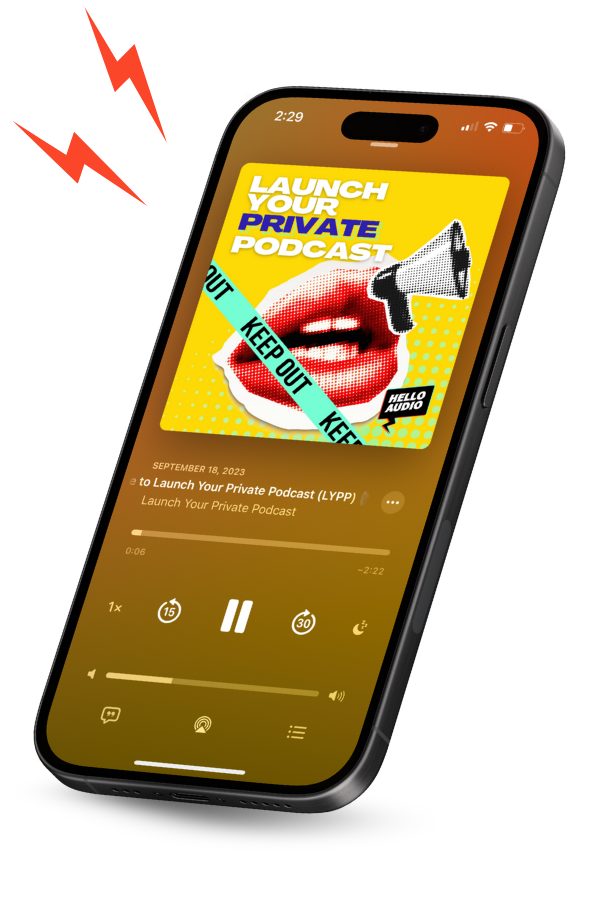
Hello Audio includes all of this by default. It’s built for private, time-bound audio delivery, with access control and expiry handled automatically.
If you want to see how time-limited audio access works in practice, you can explore it with an instant demo.
Common Challenges and How to Avoid Them
While time-limited audio offers clear benefits, it can create friction if not implemented thoughtfully.
A few challenges when implementing time-based audio systems are:
Unclear Access Timelines
One of the most common challenges is listeners not knowing exactly when their access starts or ends. This leads to confusion, support requests, and frustration.
How to avoid it: Clearly mention access duration at the point of sign-up and repeat it inside welcome emails or onboarding audio.
Low Engagement Despite Time Limits
Simply setting an expiration doesn’t guarantee that listeners will engage with your content. Without reminders, many people still postpone listening until it’s too late.
How to avoid it: Pair expiration with reminders and pacing. Morgan, founder of Build The Course, clearly explains this:
“I typically recommend an ‘expiration’ to the course material as well. This adds some urgency to the self-paced stuff that people often buy and then let sit — and it increases completion rates, especially if you have a drip sequence of ‘hey your access expires in 1 week’ type notes.”
Manual Access Management
Manually granting and revoking access quickly becomes unmanageable as your audience grows.
How to avoid it: Use systems that automate access expiration so that rules are enforced consistently without relying on memory or admin work.
Overpromising Access
Offering vague “lifetime” access without clear definitions can create long-term obligations and limit your ability to scale the content.
How to avoid it: Define access windows very clearly, even for long-term offers. Frame them around the program’s lifecycle rather than permanence.
Best Practices for Delivering Time-Limited Audio Series
Delivering time-limited audio successfully is less about restriction and more about intentional structure.
Some best practices to create a positive experience for both creators and listeners are:
- Set expectations upfront: Tell people how long their access lasts, what happens once it ends, and whether they can renew or extend it.
- Use pacing to support completion: Drip schedules, recommended timelines, and milestone reminders lower the chances of procrastination.
- Send gentle reminders: Send simple check-ins when the access is halfway completed or almost over, without overwhelming them.
- Design expiration as a transition: Point people toward the next step once the access is over. This can be a renewal, an advanced program, or an ongoing membership.
- Automate wherever possible: Automation ensures access rules are applied consistently and removes unnecessary operational overhead, allowing you to focus on content and outcomes instead of administration.
Frequently Asked Questions (FAQs)
Below are answers to some common questions about delivering, managing, and expiring access to time-limited audio content:
Is It Possible to Pause and Resume Time-Limited Audio Access?
Yes, listeners can pause and resume audio playback at any time. However, pausing playback does not automatically pause the access timer unless the platform is specifically built to support that logic.
In many systems, the access period continues to run based on the original start date, regardless of whether a listener pauses, skips days, or listens intermittently. This keeps access rules simple and predictable for both creators and listeners.
Can You Offer Different Access Durations for Different Pricing Tiers?
Yes. Many creators structure their audio products with multiple pricing tiers, each tied to a different access duration. For example:
- A lower-priced tier can include 30 or 60 days of access.
- A mid-tier option can offer 6–12 months.
- A premium tier can include extended or ongoing access.
Can You Track Listener Progress Before Access Expires?
Yes. Listener progress can be tracked while access is active, as long as the platform is built for private or gated audio delivery. This allows creators to see how content is being consumed before access expires and make informed decisions about follow-ups, extensions, or future offers.
However, progress tracking is not a default feature of all audio tools. It must be intentionally designed into the system and tied to individual listener access rather than shared public links.
What is the Ideal Access Duration for Audio Courses?
The ideal access duration depends on the course structure and learning goals, but learners generally prefer long-term access.
Many creators offer “lifetime access,” which in practice means access for as long as the course is actively maintained. To set clear expectations, this is often paired with a guaranteed minimum, such as 6 or 12 months, so that learners know exactly how long they can access your content.
Conclusion
Time-limited subscriptions help you bring structure to how people access your course. A clear access window motivates listeners to begin listening, keep going, and complete the content.
It also lets you set clear boundaries, avoid long-term content obligations, and deliver a focused listening experience.
If you’re ready to deliver time-bound audio without manual work or technical friction, Hello Audio makes it easy. You can:
- Upload your audio
- Set who can listen and for how long
- Deliver through regular podcast apps
Sign up on Hello Audio today to deliver focused audio experiences that listeners actually complete.