

If you’re a coach, educator, or course creator running a cohort-based course, you already know this part is hard: keeping learners engaged between live sessions. People show up for the calls, but the momentum often fades once they log off.
That’s why most online courses only see about a 12% to 15% completion rate. The drop-off usually doesn’t happen during the live sessions. It happens in between.
A podcast series helps fill that gap. Audio lets learners stay connected to the course while they’re commuting, walking or taking a break from screens, without losing the shared pace that makes cohort work.
This guide breaks down how to create a podcast series for cohort-based courses.
What Makes Podcast Series Ideal for Cohort-Based Courses?
Cohort-based courses (CBCs) bring a group of learners through the same journey together. Unlike self-paced courses, they follow a shared timeline, with live sessions and collaborative activities designed to build engagement, accountability, and momentum.
Podcasts are a natural fit for this course model because they combine two important things for learners, which are flexibility and structure. Learners can access content anytime, even during a commute, a workout, or a quiet break, without losing the shared experience that makes a cohort thrive.
One Reddit user, fighterpilottim, mentions:
“Podcasts while driving is one of my luxury time items – and I use luxury time to learn (total nerd, cough). So this would work for me.”
Here’s why podcasts work so well for CBCs:
- Flexible, on-the-go learning: Learners can listen to the episode when it fits into their day. Maybe during their walk, a commute, or between meetings. It makes it easy to prepare for live sessions.
- Engaging, memorable content: Storytelling, expert interviews, and case studies make complex topics easier to grasp and more interesting than traditional lectures.
- Built-in community touchpoints: Regular episodes keep the cohort aligned and spark conversations in live sessions or discussion forums.
- Step-by-step progression: Each episode can build on the last, giving learners a clear path to apply what they’ve learned and stay motivated.
Types of Podcast Content That Work for Cohort Courses
Not all podcast content works well inside a cohort-based course. Your goal shouldn’t be to replace your live teaching or dump long lectures into audio form. The most effective podcast series supports the cohort rhythm: learn something, apply it, then talk about it together.
Here are the types of podcast content that consistently work well in cohort settings:
Short, Tactical Episodes
Quick, focused episodes work especially well between long live sessions. Think something between 5 and 15 minutes where you’ll be covering one idea, one decision, or one next step.
These episodes help learners take action without feeling overwhelmed and provide concrete material to bring into group discussions.
As one Reddit user, normal_ness, mentions:
“Short episodes were ideal for me when I worked on a university campus. Could finish an episode while walking between buildings to meetings.”
Walkthroughs and Case Studies
Audio is a great medium for breaking down real examples. Walking your learners through how something works in practice or unpacking a real scenario helps connect theory to their reality. These episodes, when combined with assignments or live workshops, work really well, especially where students get to apply what they’ve just heard.
Q&A Episodes
Answering common questions from the cohort keeps the content timely and personal. It also reassures learners that their challenges are normal. These episodes often become some of the most replayed because they address real friction points as they come up.
Coaching Recordings
Sharing anonymized coaching conversations or feedback sessions adds depth without adding complexity. Even when the advice is directed at one person, the rest of the cohort learns by listening in. It reinforces the feeling that the course is active and responsive, not static.
Reflective Episodes
Occasional narrative-style episodes help learners zoom out. These might include lessons from experience, behind-the-scenes decision-making, or reflections on common mistakes. They’re especially useful for helping students make sense of what they’re learning and stay motivated.
Live-Session Prep or Follow-Ups
Short audio episodes are a great option if learners want some pre-work before a live call or as reinforcement afterward. Here you’ll be covering core ideas in audio, freeing up live time for discussion, questions, and hands-on work, which is where cohort-based courses really shine.
This kind of content works because it matches how people actually learn in a cohort. It reduces screen fatigue, improves retention, and supports the learn–do–discuss rhythm that keeps learners engaged.
Tools like Hello Audio make this easier to execute in practice. In fact, over 70% of creators launch their first private audio feed within 24 hours, which removes friction on the instructor side while giving learners instant, app-based access to course audio right where they already listen.
How to Create a Podcast Series for Cohort-Based Courses
Creating a podcast series for a cohort-based course isn’t the same as launching any public podcast. Here, you won’t be building an audience from scratch. You’re just supporting a learning journey that already has a structure, timeline, and expected outcomes.
Here’s how you should approach it:
Start With The Cohort
Before you start thinking about microphones or episode titles, get a clear idea about what will be on the course itself. What transformation is the cohort meant to achieve? What does a learner need to understand, practice, and reflect on each week to get there? Your podcast series should follow that same progression.
Think of the audio as a companion to the course, not the main event.
Design The Podcast Around the Course Timeline
Cohort courses run on fixed schedules, and your podcast should too. Map your episodes to the well-established program weeks or milestones. Your first episode should introduce a concept before your live call begins, while another should reinforce key ideas afterward.
This kind of scaffolding helps learners build confidence week by week instead of feeling overwhelmed.
Choose Formats That Support Learning
You don’t need any flashy formats or long-form episodes. What you need is solo explanations, walkthroughs, case studies, and short reflections that work best because they’re easy to produce and even easier to apply. You need to aim for clarity over a polished episode.
Most cohort-based podcast episodes land well in the 10–20 minute timeframe, which is long enough to add value, short enough to fit into real life.
Record Simply, But Intentionally
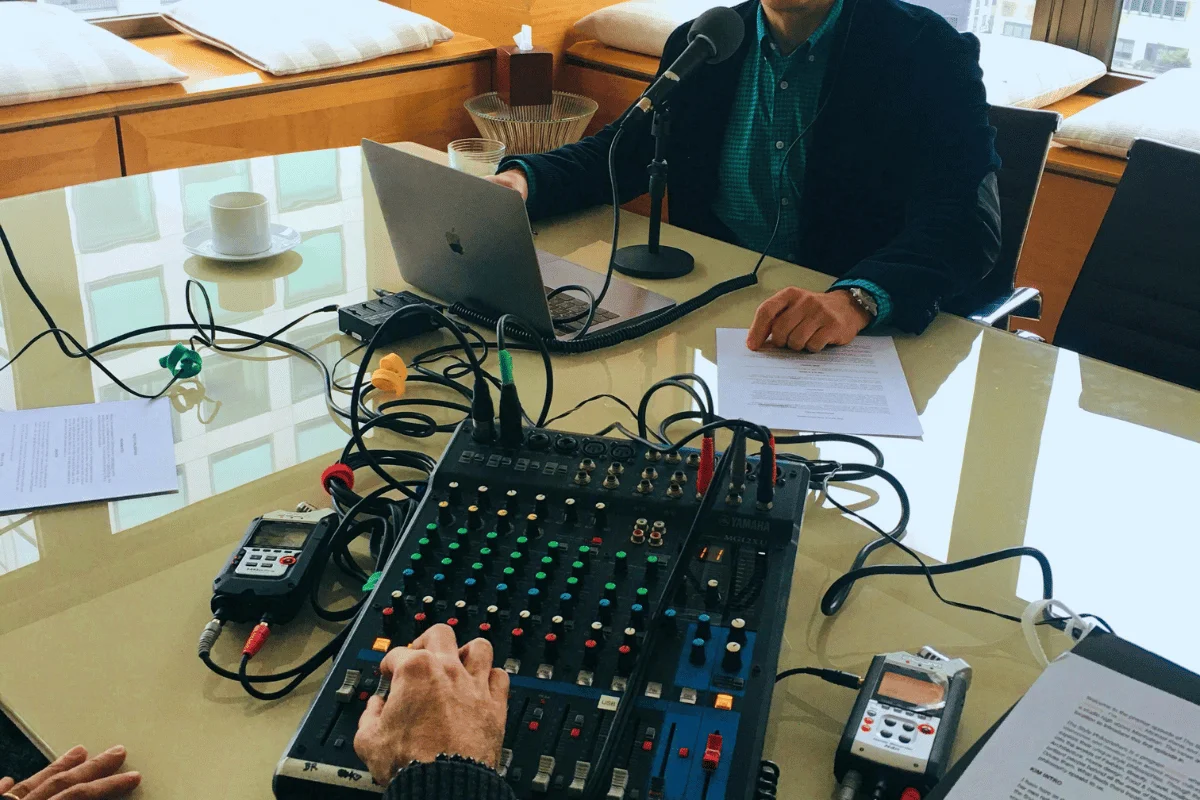
Good audio sure matters, but you don’t need a studio. A decent microphone, a quiet space, and basic editing are enough. What matters more is consistency and structure. Record with a clear purpose, trim distractions, and focus on helping learners take the next step.
Many creators record episodes in batches to stay ahead of the cohort schedule.
Deliver Audio Where Learners Already Listen
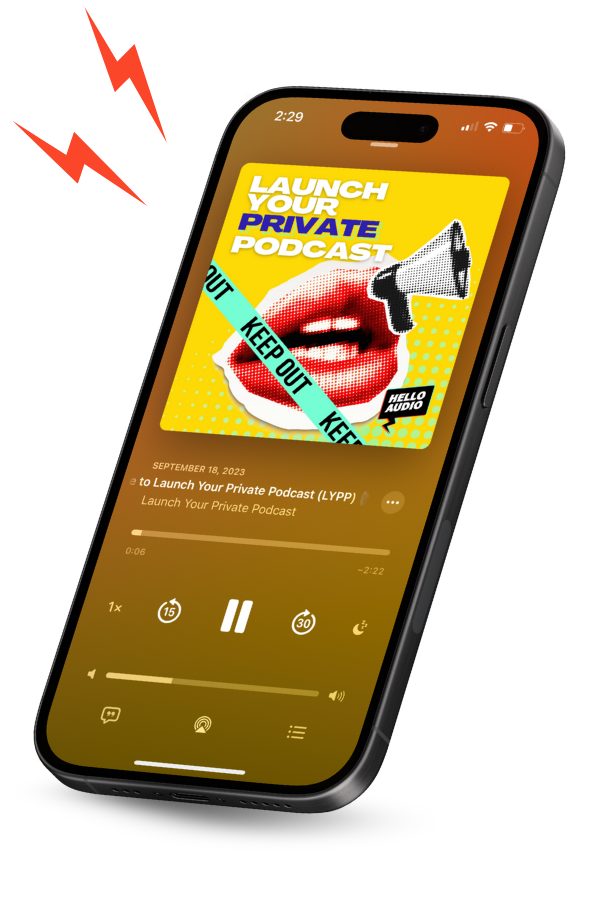
Instead of asking learners to log into another platform, deliver episodes through private podcast feeds that they can access in their favorite podcast apps. This removes friction and makes it easier for learners to stay engaged throughout the course.
This is where tools like Hello Audio come in. Instead of adding another system for learners to figure out, you can turn course lessons, coaching calls, or recordings into private podcast feeds they can listen to in the apps they already use, without dealing with technical complexity.
Tie Audio Back to Action and Discussion
Every episode you create should point somewhere: an exercise, a reflection, or a live discussion. Audio will only work for your course when it drives action, not when it stands alone.
When learners listen, apply, and then talk about what they learned together, the podcast becomes part of the course engine rather than just extra content.

How to Choose the Right Podcast Delivery Method
Choosing how to deliver your podcast content is a strategic decision in a cohort-based course. The right method supports engagement and structure. The wrong one creates friction that quietly pulls learners out of the experience.
Here’s what to think through:
- Reduce friction for learners: The easier it is to access your audio, the more likely learners will listen to it. Delivery methods that require multiple logins, manual downloads, or navigating course dashboards tend to break momentum. Audio works best when it fits naturally into daily routines.
- Support the cohort’s shared timeline: Cohort courses depend on shared pacing. Your delivery method should let you control when episodes are released so learners move through the material together. This is especially important if episodes are meant to prepare learners for live sessions or reinforce what was covered afterward.
- Maintain control over access: Your podcast is part of the course, not the public web. You want only enrolled students to get it, maybe by releasing episodes gradually and closing access at the end. Doing this through the right platform makes it simple.
- Think about the listening experience, not just storage: Uploading audio files to a course platform technically works, but it’s rarely ideal. Learners can’t easily pick up where they left off, listen offline, or integrate listening into their day. A good delivery method supports how people actually listen.
- Plan for scale and reuse: Many cohort creators reuse or refine their content across multiple runs of a course. While choosing a delivery method, make sure that you can easily update episodes, reuse audio, or adjust timing, which will save time and effort as your program evolves.
Why Hello Audio makes this easy: With Hello Audio, you can turn course lessons, coaching calls, or recordings into private podcast feeds that learners access directly in their favorite apps.
You maintain full control over access and release schedules, upload both audio and video content, and get detailed analytics on engagement, all without needing technical expertise. It’s essentially a plug-and-play solution that keeps your cohort connected, on schedule, and engaged throughout the course.
Common Challenges and How to Avoid Them
Even with a good plan, adding podcasts to your cohort course poses real-world hurdles. Here’s what usually trips people up and how to handle it:
- Engagement drops mid-course: Even the most motivated students of yours can skip episodes if they don’t see the value. To tackle this issue, make each episode feel essential by linking it to upcoming live sessions or assignments.
- Overloading learners with content: It’s tempting to pack in everything you know in one episode, but long or even frequent episodes can overwhelm busy learners. Keep things short and release episodes in sync with the course schedule.
- Learners struggle with tech: Even simple private podcast feeds can confuse some participants. So you need to include some quick tutorials, screenshots, or a short video guide during onboarding to smooth the learning curve.
- Creating consistent content is challenging: Recording, editing, and scheduling episodes can be time-consuming. Batch-record multiple episodes before launch or set up a simple production workflow to stay ahead.
- Episodes feel disconnected from the course goals: Audio that doesn’t directly tie back to your course can feel like an unwanted filler. Plan episodes around lessons, exercises, or key milestones so they reinforce what learners are actually doing.
- Passive listening without application: Podcasts are easy to consume, but easy listening doesn’t always mean active learning. End episodes with a reflection question, exercise, or discussion prompt to keep learners engaged.
- Maintaining audio quality on a budget: Inconsistent sound or background noise can be distracting for learners. A basic USB or dynamic mic and a quiet recording space usually solve most issues without needing a studio.
Frequently Asked Questions (FAQs)
Podcasts in cohort courses raise a few common questions. Here’s what works:
Are Podcast Series Effective for Non-Technical Cohort Courses?
Absolutely.
You don’t need to be tech-savvy to benefit from podcasts. As long as learners can access the audio feed, they can tune in anywhere without any fancy or additional equipment. If you think, it is actually an ideal choice for non-technical cohorts because it lowers barriers and lets students focus more on content than on tools.
Do Learners Prefer Audio Over Written Course Material?
Many actually do, especially when they’re juggling busy schedules. Podcasts let learners absorb material while commuting, exercising, or doing chores. That said, if you use a mix, it works the best. Pair audio with short readings or transcripts to reach both auditory and visual learners.
How Long Should Podcast Episodes Be for Online Courses?
Shorter is usually better. Aim for 15–20 minutes per episode. That’s enough time to convey a key concept, walk through an example, or share a reflection, without feeling overwhelmed. If you need more depth, split the content into two focused episodes instead of a long one.
Can Podcast Series Improve Course Completion Rates?
Most definitely.
Structured audio keeps learners on track because they can listen whenever it works for them. It reinforces what you teach, helps them prep for live sessions, and gives the course a steady rhythm so no one gets left behind.
Conclusion
Podcasts aren’t just extra content for your course; they’re a way to help your learners actually stay on track. Podcasts give them flexibility, allowing them to listen on the go, prep for live sessions, or revisit tricky lessons. The course just works better for everyone.
With Hello Audio, turning your lessons, coaching calls, or videos into private podcast feeds is simple. You control who gets access, when episodes drop, and you can see how your cohort is engaging, all without wrestling with tech.
If you want your course to feel smoother, more connected, and more engaging, start your private podcast with Hello Audio today and give your learners a smarter way to learn.